
mon-fri 9-13 / 14.30-18.30

Soft seat for playrooms and kindergartens. Versatile and comfortable. Dimensions: 40 x 40 x 40 cm. Available in different colors.

Small flower soft pouf for children. Dimension: h 30 x w 50 cm. Material: non-toxic and washable colored imitation leather upholstery, hypoallergenic polyurethane granule padding.

Padded bean bag chair with a minimal design and soft lines. Dimensions: h 60 x w 90 cm. Material: eco-leather cover and polyurethane granules padding.

Colorful soft flower pouf for children. Size: h 30 x w 105 cm. Material: non-toxic imitation leather cover and non-allergenic polyurethane granule padding.

Red cube-shaped seat for nursery school with melamine internal structure. Dimensions 430 x 430 mm.
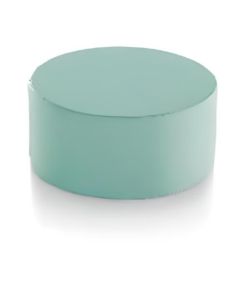
Cylindrical pouf for nursery school h681_49 in fire-retardant and stain-resistant eco-leather, with expanded polyurethane padding for maximum comfort. Dimensions: Ø 40 x h 20 cm.
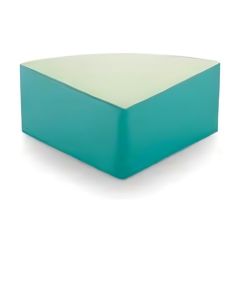
Soft corner pouf for nursery, ideal for children 0-3 years. Dimensions: 40 x 40 x h 20 cm. Polyurethane foam padding, fire-retardant eco-leather upholstery.
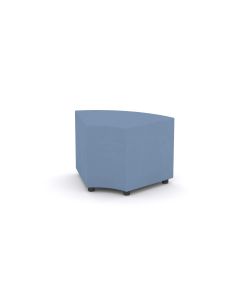
Soft kindergarten seat in blue faux leather with internal melamine structure and high-density foam padding. Dimensions: Long side length: 70 cm. Short side length: 27 cm.

Soft pouf h681_46 for children aged 0-3 years, with polyurethane foam padding and fireproof, stain-resistant, and antibacterial eco-leather upholstery. Dimensions: W 40 x D 40 x h 20 cm.

Soft armchair h681_43 with fire-retardant, antibacterial, and antifungal eco-leather upholstery, perfect for children’s school environments. Dimensions: W 45 x D 57 x h 24/41 cm.
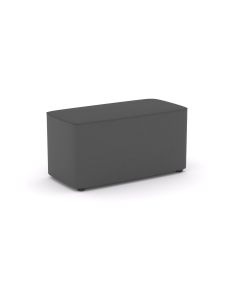
Soft nursery armchair in graphite color with melamine structure. Dimensions: L. long side 860 mm x L. short side 430 mm.

Soft small armchair h681_45 for children 0-3 years, made of stain-resistant and fire-retardant eco-leather, with expanded polyurethane padding. Dimensions: W 35 x D 40 x h 20/40 cm.

Soft armchair h681_51 in fire-retardant and stain-resistant eco-leather, with polystyrene and polyester padding. Dimensions: W 60 x D 79 x h 33/57 cm.
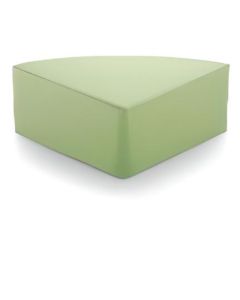
90° corner pouf h681_47 in fireproof eco-leather, soft and safe, ideal for children from 3 to 6 years old. Dimensions: W 60 x D 60 x h 32 cm.

Soft seat for kindergarten. Dimensions: 60 x 60 x h. 32 cm. For children aged 3-6 years. With expanded polyurethane padding and fire-retardant eco-leather upholstery.
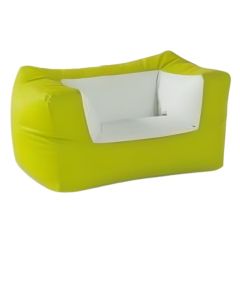
Soft armchair with armrests h681_44, made of fireproof, antibacterial, and antifungal eco-leather. Internal structure in polystyrene microgranules and polyester fiber. Dimensions: W 70 x D 50 x h 22/46 cm.

Soft sofa for nursery school. Dimensions: 70 x 40 x h 20/40 cm. Age of use: 0-3 years. Flame-retardant eco-leather upholstery and polyurethane foam padding.
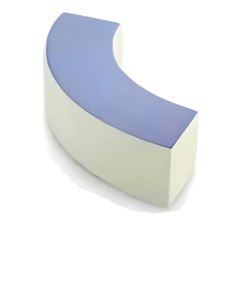
Padded curved bench for kindergarten, in class 1IM fire-retardant eco-leather, with stain-resistant and antibacterial treatment. Dimensions: 127 x 48 x h 30 cm.
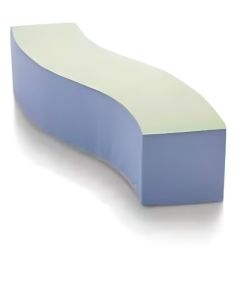
Soft bench for nursery school. Dimensions: 129 x 44 x h 30 cm. For kindergartens, nursery schools and playrooms.

Snail-shaped soft seat h681_48 for nursery school, with polyurethane foam padding and fire-retardant eco-leather upholstery. Dimensions: W 97 x D 30 x h 86 cm – Pouf: Ø 65 x h 30 cm.
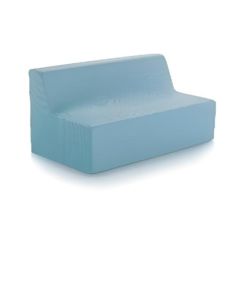
Soft sofa for kindergarten h681_50, made of fire-retardant, stain-resistant and antibacterial eco-leather. Removable cover and easy to clean. Dimensions: W 100 x D 60 x H 32/60 cm.

Soft four-leaf clover sofa, ideal for nursery schools. Dimensions: 160 x 160 x h 30 cm. Fire-retardant, stain-resistant, and antibacterial coating.
Setting up an area dedicated to relaxation and reading within educational contexts requires the integration of elements that promote physical well-being and sensory relaxation. The soft chairs and bean bags for nurseries represent the ideal solution for creating de-structured reception areas, where the child can experience seating free from rigid postural constraints. These furnishing accessories are designed to transform classroom corners into calm and protected spaces, fundamental for balancing the energy of dynamic play moments with phases of introspection or guided listening. The softness of the materials is not just a choice of comfort, but a tactile invitation to discover one’s body in relation to the surrounding space.
In a professional context, soft seating must meet higher technical requirements than domestic products, especially regarding structural durability and the non-toxicity of coatings. A bean bag intended for a nursery or a kindergarten must be able to absorb impacts, withstand continuous stress, and maintain its original ergonomic shape over time. The use of certified technical fabrics ensures that every element is hypoallergenic and safe for direct contact, allowing educators to configure versatile and stimulating “soft” zones. Choosing high-quality furnishings means ensuring a school environment that respects the biological rhythms of little ones, offering them a welcoming support that promotes spontaneous socialization and cognitive relaxation.
The integration of soft seating in childcare centers responds to the pedagogical need to offer “decompression” spaces where the child can feel contained and reassured. These furnishings completely eliminate the risk of injuries related to impacts against hard surfaces, making them perfect for growth phases where motor coordination is still being refined. A soft armchair or an ergonomic bean bag allows the child to assume natural positions, promoting the relaxation of the back muscles and stimulating concentration during the reading of a book or listening to a story. The lightness of these elements also allows children to move them independently, encouraging active management of the space and collaboration in reconfiguring the classroom.
From the perspective of facility management, professional soft seating offers the advantage of having completely removable and washable covers, an essential requirement for maintaining hygiene in collective environments. The absence of internal rigid parts or exposed hardware makes these products intrinsically safe, eliminating the need for periodic mechanical maintenance. The use of bright colors and shapes inspired by nature or geometry stimulates visual perception and helps to symbolically delimit areas intended for calm, distinguishing them from zones dedicated to desk-based educational activities. Investing in quality soft sections therefore means elevating the value of the educational offer, providing tools that support the emotional and relational development of minors in total protection.
The range of soft seating consists of a vast series of models designed for different educational and play functions. The square and cylindrical bean bags are the most versatile, as they can be used individually or placed together to create modular sofas or sensory paths on which children can walk or sit in groups. Alongside the classic shapes, innovative design proposes bean bags inspired by the floral or animal world, which transform the furniture into an element of symbolic play, stimulating the child’s imagination and making the classroom a magical and inviting place. These versions often feature petals or appendages that act as natural backrests, offering dynamic but safe support.
For more structured reading corners, monoblock soft armchairs are preferred, made of closed-cell foam that does not deform under the weight of the body, maintaining a composed but soft seat. There are also “large mats” or padded mats, ideal for psychomotricity and moments of collective relaxation, often equipped with non-slip bases to ensure maximum stability on linoleum or parquet floors. The covering materials are chosen from Class 1 IM certified eco-leather and water-repellent technical fabrics, available in a wide color palette ranging from relaxing shades of blue and green to warm and stimulating colors like orange and yellow, allowing for the customization of the style of every section or playroom.
The selection of the ideal soft seat must be based primarily on the specific intended use: for a nap or relaxation area, large and welcoming bean bags are preferable, while for a reading corner, models with a slight backrest that supports the back are more suitable. It is essential to verify that the internal material is high-density polyurethane foam, capable of returning to its original shape after use, preventing the product from “sagging” and becoming uncomfortable or aesthetically degraded over time. A discriminating technical criterion is the quality of the coating: it must be pleasant to the touch but extremely resistant to abrasions and, above all, equipped with protected or hidden zippers to avoid accidental scratches or opening attempts by children.
During the purchasing phase, the ease of sanitization must also be considered: in HoReCa or school contexts, the ability to clean the surface with a damp cloth and neutral soap is a minimum requirement, but for nurseries and daycares, it is preferable to choose models with antibacterial and antifungal properties. The size must be proportionate to the age of the users; a bean bag that is too high would be difficult for an infant to climb, while one that is too small would not offer the necessary support for a six-year-old. Finally, it is appropriate to evaluate modularity: choosing elements that can be joined via velcro or simply placed side-by-side allows for flexible management of the number of seats based on fluctuations in enrollment or the type of workshop activity planned during the day.
Soft seating for children must comply with strict international safety protocols, starting with the UNI EN 71-3 regulation on the migration of chemical elements, which guarantees the absence of heavy metals and toxic substances in dyes and fabrics. As these are padded furnishings, the fire reaction requirement is a priority: the products must be certified as fire-retardant, usually complying with Class 1 IM for Italy, ensuring they do not contribute to the spread of flames and do not emit dense smoke in case of emergency. REACH compliance also ensures that every component, from the internal microspheres (if present) to the external membranes, is free of phthalates and carcinogenic substances.
In addition to chemical and fire safety, the seats must be designed to avoid the risk of suffocation, with zippers equipped with safety locking systems that prevent involuntary access to the internal padding. Technical documentation must always certify that the product is hypoallergenic and anti-mite, fundamental properties for preserving the respiratory health of children in closed environments. Managers of educational facilities have the responsibility to demand certifications of conformity from suppliers, ensuring that every bean bag or soft seat placed in the classroom contributes to creating a healthy, protected environment that fully responds to the directives on accident prevention and the protection of the health of minors established at the European level.
Explore all the products in the category and compare the available solutions to find the one best suited to your operational context.
The internal padding is usually made of high-density closed-cell polyurethane foam. This material is chosen because it is lightweight, non-deformable, and ensures excellent shock absorption. In some bean bags, there may be virgin expanded polystyrene microspheres, which allow the seat to mold perfectly around the child’s body for maximum comfort.
Professional eco-leather seats are waterproof and can be sanitized daily with a soft cloth dampened with water and neutral soap or with diluted alcohol-based disinfectant solutions. It is important to avoid using abrasive sponges or aggressive solvents that could damage the non-toxic surface treatment and compromise color durability over time.
Absolutely yes. The professional products selected for nurseries are made with hypoallergenic and anti-mite coverings. Being non-porous materials, they do not allow dust to accumulate inside the padding, making them safe even for children suffering from asthma or respiratory allergies, ensuring a healthy environment during moments of relaxation and play.
Professional seats must pass much stricter resistance tests and possess mandatory fire-retardancy certifications for public places. Furthermore, the materials used are designed for intensive use and frequent washing cycles, ensuring superior durability and the total absence of toxic volatile substances, as required by current school regulations.
Although the seats are soft and free of sharp edges, educator supervision is always necessary, especially for the youngest children in the nursery. A child could slip or roll off the seat if they do not yet have full control of their torso. The bean bag must be placed on a flat surface and preferably on a soft rug for total safety.
Yes, many models of soft seating, particularly cube or cylinder bean bags, are perfect for creating psychomotor paths. Thanks to their solid yet cushioning consistency, they allow children to jump, climb over, and roll, developing balance and motor coordination in a free play context totally protected from impact trauma.
 English
  Italian
 French
 German
 Spanish