
mon-fri 9-13 / 14.30-18.30
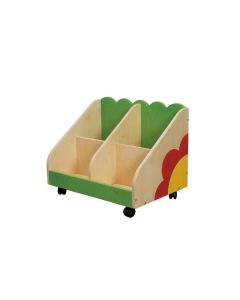
Kindergarten bookcase made of birch plywood. Dimensions: W. 53 x D. 38 x H. 41 cm.

Mushroom-shaped kindergarten bookshelf with compartments and shelves. Dimensions: W. 60 x D. 58 x H. 60 cm.

Kindergarten bookcase unit in the shape of an owl. Dimensions: W. 85 x D. 32 x h. 120 cm
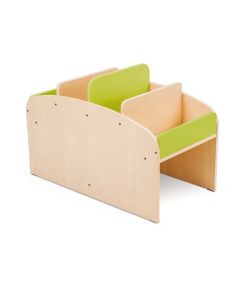
Nursery school bookshelf in melamine-faced wood conglomerate. Dimensions: W. 92 x D. 50 x h. 64 cm.
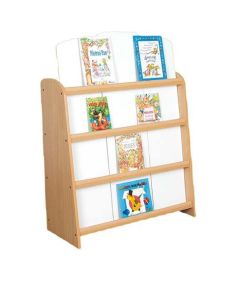
Nursery school bookcase. Structure in melamine-faced wood conglomerate. Dimensions: W. 90 x D. 40 x h.115 cm.
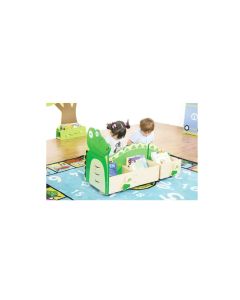
Kindergarten bookcase made of wood with 3 modules. Dimensions: W. 96 x D. 44 x H. 61 cm.
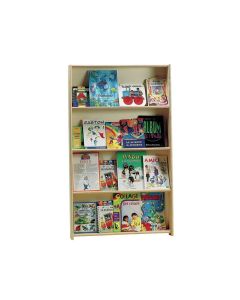
Nursery school bookcase made of birch plywood. Dimensions: W. 78 x D. 13 x H. 130 cm.

Apple-shaped preschool bookcase. Dimensions: W. 116 x D. 55 x h. 118 cm

Bookcase for nursery school. Shape: frog. Dimensions: W. 80 x D. 32 x h. 120 cm.
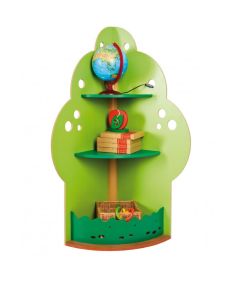
Preschool bookcase in laminated MDF. Dimensions: W. 65 x D. 65 x H. 150 cm.
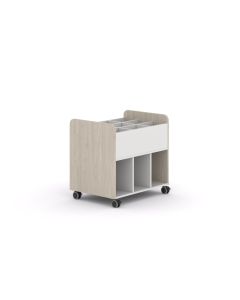
Preschool bookcase on wheels in 19 mm melamine, white body and colored sides. Dimensions: W. 840 x D. 600 x H. 800 mm.
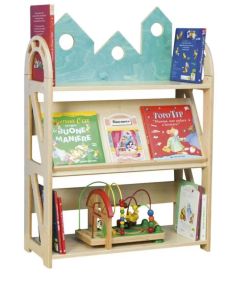
Preschool bookcase. Dimensions: 78 x 35 x h. 97 cm.
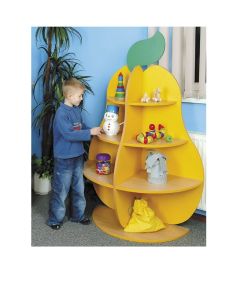
Pear-shaped kindergarten bookcase. Dimensions: W. 105 x D. 54 x h. 160 cm
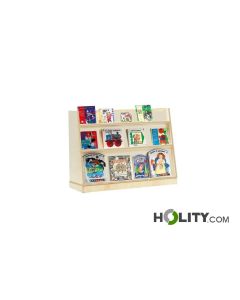
Nursery school bookshelf equipped with a base with plinth. Dimensions: W. 105 x D. 40 x H. 75 cm.
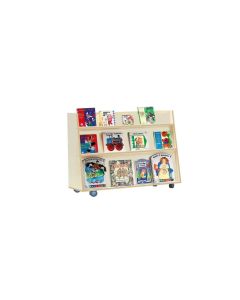
Nursery school bookshelf with 3 tilted shelves and 3 horizontal shelves. Dimensions: W. 105 x D. 40 x H. 75 cm.
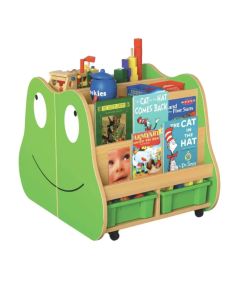
Frog-shaped nursery school bookcase. Dimensions: 60 x 75 x h. 60 cm
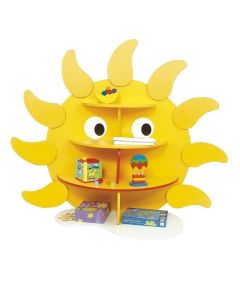
Kindergarten bookshelf unit. Shape: sun. Dimensions: W. 180 x D. 61 x h. 140 cm.
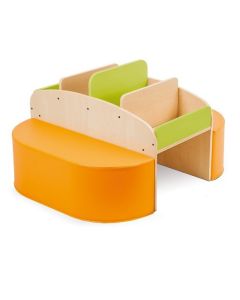
Preschool bookshelf with side ottomans. Dimensions: W. 92 x D. 30 x h. 30 cm.
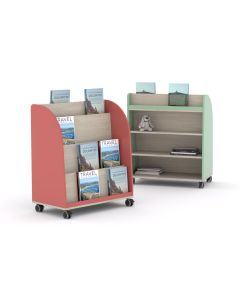
Melamine book display unit with wheels and brake. Body: oasis oak, side panels in various colors. Dimensions: W. 900 x D. 500 x h. 1050 mm.
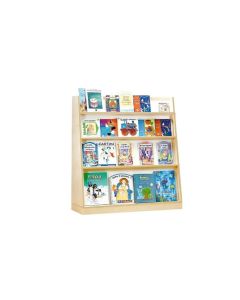
Nursery school bookcase with shelves and base with plinth. Dimensions: W. 105 x D. 40 x H. 110 cm.
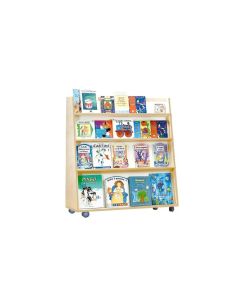
Kindergarten bookshelf equipped with wheels and shelves. Dimensions: W. 105 x D. 40 x h. 110 cm.
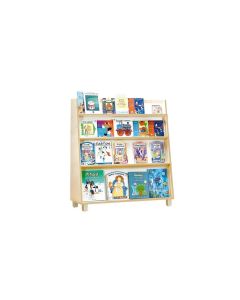
Nursery school bookcase with 4 inclined shelves and 4 horizontal shelves. Dimensions: W. 105 x D. 40 x H. 110 cm.
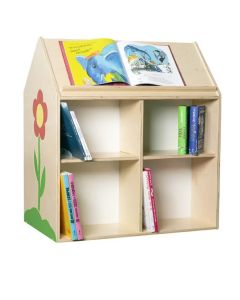
Bookshelf for nursery school in birch plywood. Dimensions: W. 78 x D. 50 x H. 87 cm.
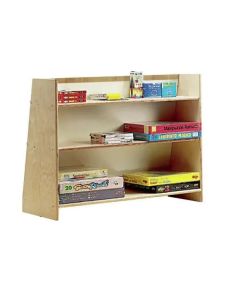
Preschool bookcase in birch wood. Dimensions: 100 x 40 x h. 75 cm.
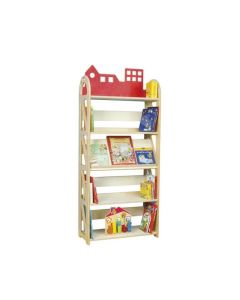
Preschool bookshelf equipped with 5 shelves (the 3 intermediate ones are tiltable). Dimensions: W. 78 x D. 35 x H. 167 cm.
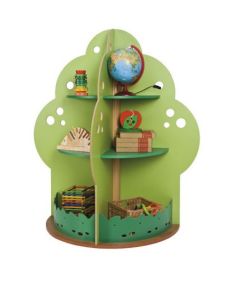
Tree-shaped children’s bookcase. Dimensions: W. 132 x D. 65 x h. 150 cm.
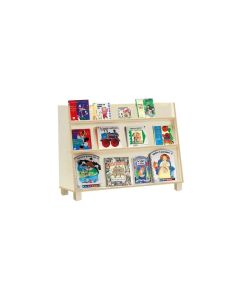
Bookcase for nursery school made of ecological melamine-faced chipboard panel. Dimensions: W. 105 x D. 40 x H. 75 cm.
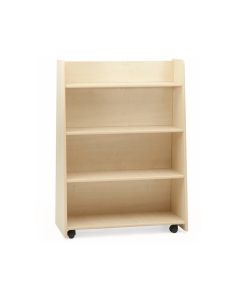
Mobile double-sided bookcase with 3 storage shelves and 3 display shelves. Dimensions: W 100 x D 45 x H 130 cm.
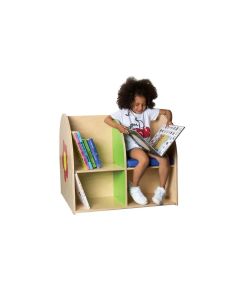
Nursery school bookshelf equipped with a small sofa and 4 compartments to arrange books. Dimensions: W. 78 x D. 74 x H. 70 cm.
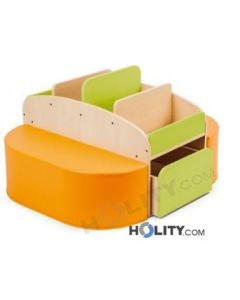
Reading island with book storage and side poufs. Dimensions 920x500x640 mm.
Setting up a dedicated reading corner represents one of the fundamental pillars in the design of a modern educational section. Preschool bookcases are not simple shelves, but real tools of cultural mediation that must invite the child to discover books independently and spontaneously. A professional bookcase is designed to display volumes frontally or accessibly, allowing young users to recognize covers without adult help, thus stimulating curiosity and the desire for visual exploration. The choice of specific furniture for early childhood ensures that the first approach to literature takes place in a context of total ergonomic comfort and structural safety.
Bookcases intended for professional contexts such as nurseries and kindergartens are distinguished by the robustness of the finishes and the ability to withstand intensive collective use. The integration of this furniture within the classroom allows for the definition of gathered thematic spaces, where storytelling becomes the center of the didactic activity. Using certified materials and non-toxic paints is an essential requirement to preserve children’s health, guaranteeing a healthy environment free from harmful volatile emissions. Choosing a technical bookcase means investing in a piece of furniture that combines the aesthetic value of attractive shapes with the rigorous regulatory compliance required for high-end school supplies.
The adoption of specific childhood bookcases within a school structure responds to the need to create a “child-sized” environment, where the height and arrangement of the shelves favor motor and decision-making autonomy. Unlike standard office or home models, these bookcases are designed to eliminate any risk of injury: every edge is carefully rounded and the fixing systems are enhanced to prevent accidental tipping, even in the event of sudden dynamic stresses. Structural stability is guaranteed by wide bases and calculated centers of gravity, ensuring that the furniture remains firm and safe even during the liveliest moments of play typical of playrooms.
Beyond physical safety, the use of professional bookcases actively supports the pedagogical path, facilitating autonomous tidying and care for the common good. The display of books at eye level encourages children to browse the volumes independently, promoting language development and abstraction skills. The use of scratch-resistant and easily washable surfaces is another crucial advantage: in a school context, maintenance must be quick and effective to ensure constant hygienic standards. Investing in a technical bookcase means guaranteeing your school a piece of furniture that does not deteriorate with frequent use, keeping its educational function and the vibrancy of the colors intact for many school years.
The range of bookcases for preschool is extremely varied, offering solutions ranging from classic wall shelving to furniture with an iconic and playful design. Front-facing (or Montessori) bookcases are among the most requested: thanks to the slanted shelves or those equipped with stoppers, they allow books to be displayed with the cover facing outwards, making them immediately recognizable to children who cannot yet read. Alongside these, we find double-sided bookcases, ideal for being positioned in the center of the classroom to divide spaces without blocking light, allowing access to volumes from both sides and maximizing capacity in limited space.
To make the environment more attractive, there are models with shaped forms that recall elements of nature, such as trees or animals, transforming book storage into a fantastic experience. Bookcases on wheels instead offer exceptional flexibility, allowing the reading corner to be moved to different areas of the school depending on the needs of laboratory activities. Materials vary from birch plywood, appreciated for its naturalness and resistance, to colored melamine panels with ABS edging, all chosen for their ability to resist humidity and detergents, ensuring superior longevity compared to cheap furniture not certified for collective use.
The selection of the ideal bookcase must begin with an accurate analysis of the number of volumes to be hosted and the average age of the users. For children in nurseries, it is preferable to opt for low and horizontal bookcases, which avoid the risk of dangerous climbs and are easily accessible even to those crawling or who have just started walking. A fundamental technical criterion is the depth of the shelves, which must be proportionate to the format of the picture books typical of childhood, preventing books from sliding to the back and becoming invisible. It is also necessary to evaluate the type of anchoring: if the structure is not self-supporting or weighted, wall fixing is an essential safety requirement to avoid tipping.
Another critical factor concerns the surface finish: in high-frequency environments, laminated surfaces or those treated with water-based polyurethane paints guarantee superior resistance to stains and scratches. Attention must be paid to the quality of the joints: screws and hardware must be recessed or protected by non-toxic screw covers to prevent scratches or tampering by the little ones. Finally, it is appropriate to consider the color harmony of the classroom: choosing bookcases in warm or pastel colors can help create a relaxed atmosphere in the reading corner, while more vibrant models can be used to stimulate attention in areas intended for group activities or multifunctional playrooms.
Bookcases intended for school use must comply with rigorous safety standards established at national and European level, including the UNI EN 16121 standard, which specifies the requirements for resistance, durability, and safety for storage furniture for collective use. This regulation ensures that the furniture has been subjected to load tests on the shelves and stability tests to prevent structural failure. It is essential that the wood materials used belong to Class E1 for low formaldehyde emissions and that all finishes comply with the EN 71-3 standard, guaranteeing the absolute non-toxicity of paints and plastic components in contact with children.
In addition to mechanical and chemical aspects, bookcases must respond to fire prevention regulations in school buildings, using materials that do not contribute to the rapid spread of flames. The presence of rounded edges with a compliant radius of curvature is an obligation to minimize trauma from accidental impact. Every professional supply must be accompanied by a detailed technical sheet and CE marking, offering school safety managers the guarantee of a tested and certified product. Compliance with these requirements is not only a legal protection for the school, but a necessary condition to ensure young pupils a protected growth environment, where culture and play can merge without hidden risks.
Explore all the products in the category and compare the solutions available to find the one best suited to your operational context.
Front-facing bookcases allow books to be displayed showing the cover instead of the spine. This is fundamental for preschool children, as it facilitates visual recognition of the volumes and stimulates autonomy in choosing the book, promoting a spontaneous and curious approach to reading without the necessary constant mediation of the educator.
For nurseries, the bookcase shelves should be positioned at a maximum height of between 60 and 80 centimeters from the ground. This measure ensures that even the smallest children can reach the books safely, preventing them from trying to climb the structure to reach volumes placed too high.
Yes, wall fixing is strongly recommended and often mandatory for all school bookcases that exceed a certain height or that do not have a certified anti-tip base. This precaution prevents serious accidents caused by the furniture tipping over if a child should hang from the shelves or exert excessive lateral pressure.
The most resistant materials are birch plywood and high-density melamine panels. These materials offer excellent resistance to impacts, scratches, and frequent cleaning cycles. Furthermore, they guarantee the structural stability necessary to support the weight of numerous books and the intensive use typical of playrooms and recreation centers.
For daily cleaning, it is sufficient to use a soft cloth moistened with water and a mild neutral detergent. It is important to avoid abrasive products or solvents that could remove the protective layer of non-toxic paint. For deep disinfection, diluted alcohol-based solutions can be used, drying the surfaces immediately to preserve the integrity of the wood.
It means that every sharp corner or sharp edge of the piece of furniture has been mechanically processed to obtain a radius of curvature that neutralizes the danger of impact. This requirement is provided for by European safety standards to prevent accidental cuts and head trauma during children’s lively movement within the classrooms.
 English
  Italian
 French
 German
 Spanish