
mon-fri 9-13 / 14.30-18.30
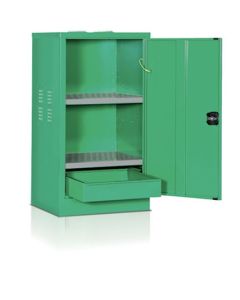
Monobloc cabinet for the storage of phytopharmaceuticals. Shelf load capacity: 50 kg. Capacity: 19 liters.
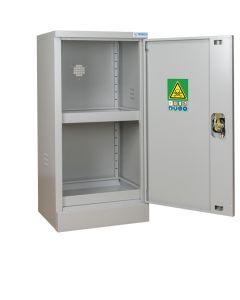
Cabinet for phytopharmaceuticals with key lock. Material: steel. Dimensions: W50 x D42 x H100 cm.
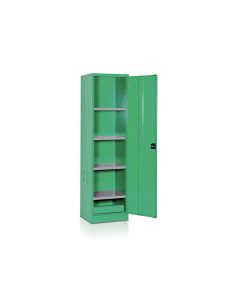
Monobloc cabinet for the storage of pesticides. With 4 shelves. Capacity: 19 liters.
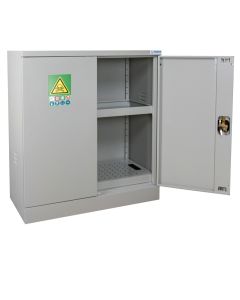
Steel phytosanitary cabinet. Dimensions: W92 x D42 x H100 cm.
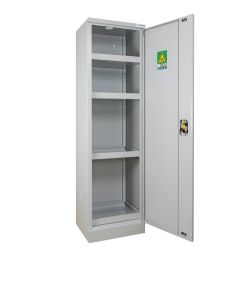
Safety cabinet for phytopharmaceuticals. Material: steel. Dimensions: W50 x D42 x H180 cm.
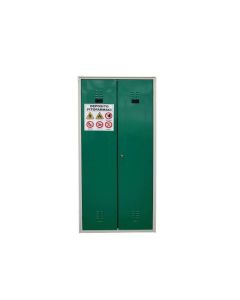
Safety cabinet for phytosanitary products with perforated shelves. W.80xD.40xH.180 cm
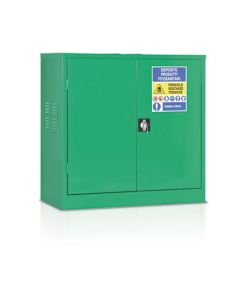
Cabinet for phytopharmaceuticals and pesticides. Shelf capacity: 100 kg. Capacity: 40 litres.
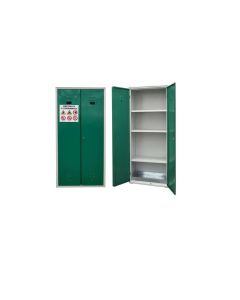
Pesticide cabinet length 100 cm. with 3 internal perforated shelves.
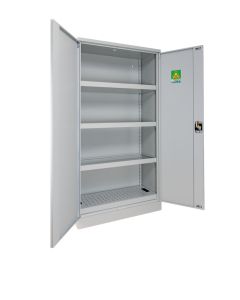
Cabinet for storage of pesticides and phytopharmaceuticals. With key lock. Dimensions: W92 x D42 x H180 cm.
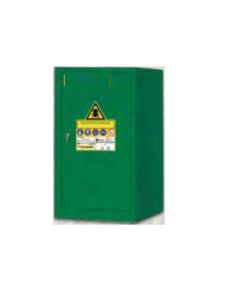
Safety cabinet for pesticides and phytopharmaceuticals. External dimensions: W.540xD.450xh.1000 mm
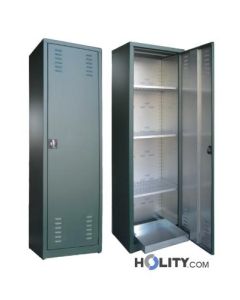
1-door pesticide cabinet in plastic-coated galvanized sheet metal, with key lock and 3 adjustable shelves. Dimensions: W.60 x D.45 x h.200 cm.
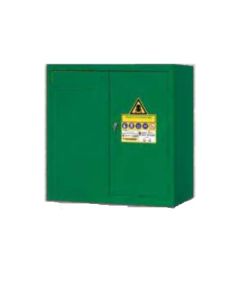
Safety bench cabinet for phytopharmaceuticals in steel. External dimensions: W.1000xD.450xH.1000 mm
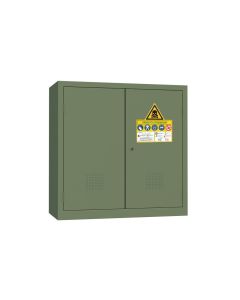
Monobloc steel pesticide cabinet 8/10 mm, 100x45x100 cm. Includes 28-liter collection sump and compliant ventilation holes.
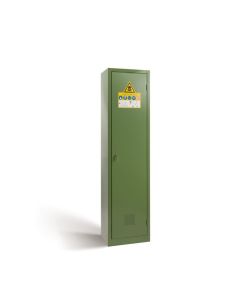
Monoblock pesticide storage cabinet in 8/10 mm steel, 54x45x200 cm. Includes containment sump and ventilation slots for compliant chemical storage.
Safety cabinet for phytosanitary products and pesticides. External dimensions: W.540xD.450xH.2000 mm

Safety cabinet for phytopharmaceuticals with louvered vents for ventilation. Dimensions: W.100 x D.500 x H.1000 mm. Certificate of Conformity.
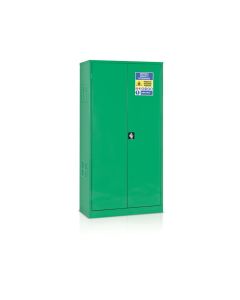
Monoblock cabinet for the storage of phytosanitary products. Equipped with 4 shelves. Capacity: 40 liters.

Low phytopharmaceutical cabinet in 8/10 steel, dim. 100x45x100 cm, with 32-liter collection trays and protected ventilation for safe storage.
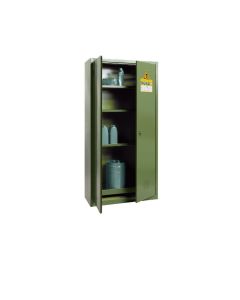
Safety cabinet for pesticides. Dimensions: W.100xD.45xH.200 cm
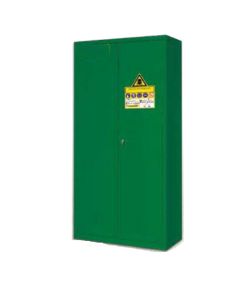
Safety cabinet for pesticides. External dimensions: W.1000xD.450xH.2000 mm
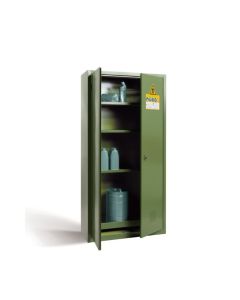
Monobloc cabinet for pesticides in 8/10 steel, 100x45x200 cm, with 28L collection tray and ventilation holes. Compliant with Legislative Decree 81/2008.
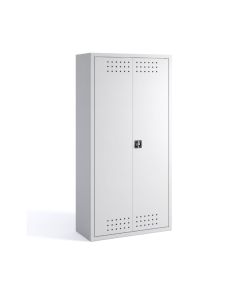
Tall cabinet for phytosanitary products in 8/10 steel, dim. 100x45x200 cm. With 56L collection sumps and natural ventilation for professional storage.
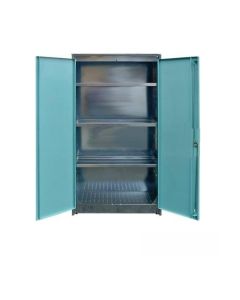
Cabinet for the storage of phytosanitary products in 10/10 galvanized sheet metal. Louvered vents for ventilation. External dimensions: 1000 x 500 x h2000 mm.
Pesticide storage cabinets represent an essential solution for the safe and compliant storage of pesticides, herbicides, and plant protection products in agricultural, nursery, industrial, and professional environments. These specialized cabinets guarantee the containment of any leaks through sump trays, access control via key or cylinder locks, and a construction structure resistant to atmospheric agents. Their compliance with European and national regulations makes them mandatory in many work situations, particularly when the quantity of chemicals stored exceeds certain levels. Choosing a suitable cabinet means simultaneously protecting the environment, operating personnel, and company assets from contamination and legal liability.
The use of cabinets dedicated to the storage of pesticides responds to concrete needs for safety and responsible management of the chemical product life cycle. These cabinets significantly reduce the risks of accidental contamination of the soil, groundwater, and workspaces, as well as personnel exposure to toxic vapors or direct contact with hazardous substances. The robust structure in painted steel or plastic-coated galvanized sheet metal guarantees durability over time, even in agricultural environments characterized by humidity, temperature fluctuations, and frequent cleaning needs. Thermal insulation and controlled ventilation (via louvered vents) preserve the chemical-physical integrity of the active ingredients, preventing premature degradation phenomena that would compromise the effectiveness of the treatments.
From a management perspective, these cabinets centralize storage and simplify company inventory, reducing the number of scattered storage points and improving internal control. The key or cylinder lock allows access to be restricted exclusively to authorized and trained personnel, contributing to a more aware and responsible work environment. Numerous winemakers, intensive growers, nursery facilities, and environmental service companies consider these investments not as costs, but as tools for compliance and corporate reputation.
The market offers several solutions differentiated mainly by external dimensions, volumetric capacity, the number and configuration of internal shelves, and the closing system. Compact monoblock cabinets (with capacities around 19-40 liters and dimensions from 50×42×100 cm to 100×45×100 cm) are suitable for small-to-medium scale operations, limited deposits, or situations where space is constrained. These models offer shelf capacities ranging from 50 to 100 kg and represent the ideal choice when the quantity of product stored remains contained. Cabinets with three perforated shelves (lengths from 80 to 100 cm, heights from 180 to 200 cm) guarantee greater versatility in vertical distribution and facilitate natural ventilation between the shelves themselves, a critical aspect for avoiding the accumulation of vapors inside. Finally, two-door swing cabinets combine a wider geometry (up to 100 cm in length) with significant heights (up to 200 cm), distributing the load over a wide base surface and facilitating the placement of containers and cylinders of various sizes.
An additional element of differentiation lies in the construction material: plastic-coated galvanized sheet metal (10/10 thickness) represents the most resistant solution to external conditions, ideal for open or semi-covered warehouses with direct exposure to rain and UV, while painted steel maintains a more balanced quality-price ratio for protected environments. The integrated collection tank or sump tray (capacity from 32 to 56 liters depending on the model) is a mandatory element for the containment of accidental spills: larger models include removable or fixed tanks, the latter being more practical for routine maintenance. Some cabinets also provide passive ventilation systems through louvered vents, complying with European technical specifications for internal humidity control.
The selection of the most suitable cabinet begins with an evaluation of the quantity and type of pesticides actually stored in the company. If the total volume remains within 20 liters (a common situation in small organic farms or green maintenance services), a compact 50 cm wide monoblock model fully satisfies legal and practical requirements; conversely, companies with diversified production portfolios and intense seasonal cycles require higher capacity solutions (40+ liters) with a height exceeding 180 cm. A frequent error consists in undersizing the available space, assuming a low cabinet is sufficient when operational reality involves vertical storage needs and frequent access during the work season. The depth (40-50 cm) influences the practicality of accessing containers further back: 40 cm models are preferable where internal logistics are already complex, while 50 cm guarantees better functionality without excessive bulk.
A second parameter concerns environmental compatibility: if the cabinet will be placed in an area with persistent humidity, frequent wetting and drying cycles, or contact with liquids (such as an area near irrigation systems), plastic-coated galvanized sheet metal becomes the essential choice. For protected indoor environments (covered warehouse, closed shed), painted steel offers equivalent performance at lower costs. The internal configuration (perforated shelves vs. standard shelves) is an element that is sometimes overlooked: perforated shelves improve vertical air circulation and reduce the accumulation of humidity, which is particularly important in continental climates or regions with widespread rain. Finally, consider the type of lock based on your management processes: a cylinder lock allows rapid access to authorized personnel during work shifts, while a traditional key lock offers an additional level of control but requires centralized key management.
In Italy, the storage of pesticides is regulated by Legislative Decree no. 150 of 14 August 2012 (implementation of Directive 2009/128/EC on the sustainable use of pesticides) and by the guidelines issued by the regions. At the European level, the reference standard is EN 14727, which specifies safety requirements for secondary packaging and containers for the storage of pesticides, including specialized cabinets. When the total quantity of pesticides present in the company exceeds certain thresholds (generally 1,000 liters in equivalents, but with regional variations), the use of dedicated storage structures, complying with specific construction standards, becomes mandatory. These standards include: impermeability of the base to avoid infiltration into the ground, containment capacity of at least 110% of the volume of the largest container stored (or 25% of the total quantity stored, if higher), adequate ventilation to avoid the accumulation of toxic vapors, and controlled accessibility via reliable closing systems.
Recurring compliance aspects also concern the minimum distance from wells, watercourses, and food crop areas (generally 50-100 meters depending on regional indications), clear labeling of containers inside the cabinet, and documentation of maintenance interventions. Many professional cabinets include a Certificate of Conformity documenting the verification of construction and safety requirements, an essential element in the event of inspections by competent bodies (ARPA, Asl, Forestry Police). The legal liability of the company in the event of an accidental spill or environmental contamination is direct; therefore, the adoption of compliant furniture not only respects the regulation but also protects the business from potential compensation claims by public bodies or damaged third parties. Always check with the local authority (municipality or region) for the specific local rules applicable to your context, as some provinces have more stringent regulations.
Explore all the products in the category and compare the available solutions to find the one most suitable for your operational context. Each cabinet is selected to guarantee regulatory compliance, structural durability, and daily practicality.
For a farm with an intense seasonal cycle, opt for cabinets with a minimum capacity of 40 liters and a height exceeding 180 cm. This allows for the simultaneous storage of herbicides, fungicides, and insecticides without occupying multiple locations. If the annual volume exceeds 100 total liters, consider double-width swing door models (100 cm).
Painted steel is sufficient for protected and dry indoor environments. Choose plastic-coated galvanized sheet metal if the cabinet will be exposed to rain, constant humidity, or placed in outdoor areas, even if partially covered. The 10/10 thickness guarantees superior corrosion resistance and a longer service life.
The EN 14727 standard requires a containment capacity at least equal to 110% of the volume of the largest container stored, or 25% of the total quantity if higher. Professional cabinets offer basins from 32 to 56 liters, which are adequate in most cases. Always check the documentation to confirm the sizing relative to your products.
No, regional regulations stipulate minimum distances of 50-100 meters from wells, springs, and watercourses. Consult your local administration to verify the specific requirements for your territory. Incorrect placement entails significant legal risks and compromises the environmental compatibility of the activity.
Perforated shelves promote vertical air circulation inside the cabinet, reducing the accumulation of humidity and vapors. They are preferable in humid climates or environments without mechanical ventilation. Solid shelves offer better stability for small containers but limit natural aeration.
Yes, it is strongly recommended to keep the Certificate of Conformity provided by the manufacturer, which certifies compliance with construction and safety standards. In the event of inspections by ARPA, Asl, or environmental authorities, this document represents tangible proof of your diligence in managing corporate risks.
It depends on the actual production portfolio. If you only store herbicides for routine maintenance and occasional treatments, then yes. However, if you carry out extensive treatments or use multiple active ingredients simultaneously, there is a risk of quickly saturating the capacity and being forced to resort to non-compliant scattered storage. Evaluate the overall annual volume.
Maintenance mainly consists of periodic cleaning of the collection basin, checking the condition of the lock, inspecting the paint (in case of wear), and cleaning the ventilation louvers. There are no fixed costs; it all depends on the intensity of use and environmental conditions. An annual preventive review is nonetheless recommended to extend the service life.
 English
 Italian
 French
 German
 Spanish