
mon-fri 9-13 / 14.30-18.30
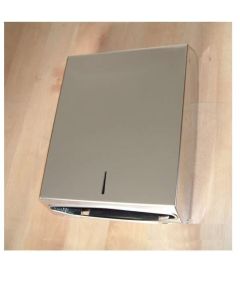
Dispenser asciugamani di carta in acciaio inox con serratura. Finiture lucida o satinata. Capacità 400 fogli piegati a "C" o "Z". Dimensioni: 280x120x360 mm.
Paper towel dispensers represent an essential solution in public and professional environments, ensuring hygiene, practicality, and consumption control. These devices integrate perfectly into the restrooms of hotels, restaurants, hospitals, offices, and accommodation facilities, where the operational efficiency of paper towels becomes a critical aspect of daily cleaning. The choice of the right dispenser directly affects waste reduction and user satisfaction, making it indispensable to carefully evaluate types, materials, and operating modes available on the market. Every environment has specific needs: from load capacity to dimensions, from wear resistance to ease of refilling and maintenance.
The market offers very diverse solutions, capable of adapting to high-traffic contexts as well as more contained spaces. From lightweight and economical plastic dispensers to vandal-resistant stainless steel ones, passing through automatic sensor models that completely eliminate manual contact, the possibilities are manifold. Investing in a good paper towel dispenser represents a strategic choice to maintain high hygiene standards, improve the guest experience, and significantly reduce paper waste through controlled dosing.
Managing paper towels in public facilities requires careful planning: the dispenser must be durable, easily refillable, and capable of holding a sufficient quantity of sheets without requiring too frequent refills. Furthermore, the aesthetic appearance contributes to the overall image of the environment, so the finish and design of the device are not secondary aspects.
The advantages of installing professional paper towel dispensers go beyond simple convenience. A good dispenser reduces waste by up to 30-40% compared to simply leaving rolls out in the open, allowing precise control over the amount of paper used for each use. In high-traffic environments such as public restrooms, restaurants, or healthcare centers, this reduction represents a significant saving in management costs, considering that paper towels are a consistent item in facility operating budgets. Additionally, the dispenser improves overall environmental hygiene: it prevents sheets from falling to the floor or users from touching the roll directly, reducing the risk of cross-contamination.
From an organizational standpoint, professional dispensers greatly simplify cleaning and maintenance. A well-designed system allows cleaning staff to quickly refill paper without the need for tools or complex procedures, minimizing downtime and reducing workload. Wall-mounting, common in most models, frees up valuable space in restrooms and maintains an orderly and professional appearance. Choosing a robust and reliable dispenser also minimizes breakdowns and extraordinary maintenance interventions, ensuring uninterrupted service to users and reducing overall management costs over the device's lifespan.
The perceptual aspect is also relevant: customers and guests of an accommodation or healthcare facility recognize the importance of hygiene and cleanliness also from the type of dispenser used. A modern, intact, and functional dispenser communicates professionalism and attention to detail, contributing positively to the facility's image. Automatic sensor models offer the added benefit of even superior cleanliness, completely eliminating manual contact with the device and being particularly appreciated in healthcare environments or during periods of high hygiene awareness. Investing in controlled dosing technologies and quality materials translates into a better user experience and a significant reduction in the cost per sheet distributed, a parameter often underestimated but fundamental in the economic evaluation of the purchase.
The paper towel dispenser market is divided into several categories, each with distinctive characteristics and preferred fields of application. ABS plastic dispensers represent the most economical and lightweight solution, ideal for offices, small businesses, or environments where space is limited. Made of durable but non-vandal-proof material, they offer ease of cleaning, lightness during installation, and variable colors that allow for aesthetic customization of the environment. Typical capacity ranges from 200 to 600 sheets, making these models suitable for premises with moderate traffic.
Stainless steel dispensers represent the premium choice, particularly appreciated in high-traffic environments and in contexts where vandalism is a real risk. Made of AISI 304 or AISI 316, they guarantee practically unlimited durability, resistance to corrosion even in humid environments, and an image of professionalism and solidity. These models are vandal-proof par excellence, capable of resisting impacts, tearing, and deliberate damage attempts, which is why they represent the standard in public, hospital facilities, and high-risk areas. The available satin or polished finish offers further possibilities for aesthetic customization.
Transparent or translucent polycarbonate dispensers constitute an intermediate category, offering good visibility of the fill level and a modern, tidy appearance. Scratch-resistant and easily cleanable, they are appreciated in accommodation facilities where aesthetics are highly important. There are also automatic sensor dispensers, equipped with rechargeable batteries, which automatically dispense paper at the wave of a hand, completely eliminating manual contact. The latter are particularly advantageous in hygiene-sensitive environments such as hospitals, clinics, or laboratories, although they require slightly more careful maintenance due to the presence of electronic components.
Regarding the type of paper supported, dispensers are divided into models for interfolded paper (single sheet), for C-fold, Z-fold, or M-fold paper, and for rolls, each designed for specific paper formats available on the market. The choice of dispenser type must always consider which paper format is already in use at the facility to avoid investments in incompatible refills and ensure a smooth transition to the new solution. Some more advanced models allow for the use of multiple formats, offering certain management flexibility over time.
Selecting the most appropriate paper towel dispenser requires analyzing several key factors, the first of which is the daily traffic volume of the environment where it will be installed. A public restroom frequented by hundreds of people a day needs high capacity (400-600 sheets) and a robust material like stainless steel to minimize daily refills and resist accelerated wear. A medium-sized office or accommodation facility, on the other hand, might find an ABS dispenser for 200-300 sheets more suitable, being sufficiently capacious without taking up excessive space. Evaluating refill frequency is essential for planning operating costs and supply logistics, an aspect often overlooked during the initial choice but which significantly impacts daily management.
A second critical aspect is the available space and installation method: if the facility has fragile walls or limited space, a lightweight plastic model might represent the best solution. If, on the contrary, solid walls and sufficient space are available, heavier steel models offer superior stability and a higher perception of quality. Compatibility with the paper format already in use at the facility should not be underestimated: purchasing a dispenser that does not accommodate the rolls or sheets that have already been ordered would lead to additional costs and significant operational inconveniences. Consulting your usual paper towel suppliers allows you to verify which type of dispenser guarantees logistical continuity without interruptions.
A third element of evaluation concerns the specific environment: restrooms in medical-healthcare facilities or luxury hotels require models with high hygiene and aesthetic standards, where transparent polycarbonate or satin steel represent winning choices. Industrial environments or those at high risk of vandalism, such as stations, public schools, or multi-social centers, require vandal-proof steel models with robust security locks. The choice of actuation type (manual, lever, automatic sensor) also depends on the hygienic-sanitary context: hospital environments or where hygiene is a priority benefit greatly from automatic sensor systems, which completely prevent direct contact with the device and reduce the risk of cross-contamination. The available budget naturally remains a constraint, but balancing initial cost with lifespan, management efficiency, and perceived quality ensures a more accurate overall economic evaluation.
Paper towel dispensers must comply with a series of technical standards and hygienic-sanitary standards, especially when installed in public or healthcare environments. In many regions, regulations establish minimum requirements for public and private restrooms, mandating the provision of suitable means for hand drying. In hospital and healthcare environments, regulations are even more stringent, recommending touchless drying systems to reduce the risk of hospital-acquired infections, making automatic sensor dispensers a strongly recommended choice.
For accommodation facilities, Privacy Codes and food safety regulations (HACCP) require restrooms to meet high standards of cleanliness and hygiene; using a professional dispenser compliant with international hygiene standards contributes to meeting these obligations. Technical specifications such as ISO standards provide guidance on paper dispensers and related delivery systems. In the hotel and catering sector, many facilities voluntarily apply international certification standards (e.g., ISO 9001 for quality management), which include strict criteria for restroom hygiene.
From a technical-functional point of view, the dispenser must ensure that the sheets are always protected from excessive humidity and contaminating factors, featuring closures and seals suitable for the environment of use. Models intended for public restrooms or hospital environments should include transparent or translucent level viewers, allowing cleaning staff to quickly check the refill level without opening the device, thus reducing the risk of contamination. Furthermore, if the dispenser is installed in particularly humid environments (such as saunas, indoor pools, or bathrooms with high steam concentration), it is advisable to choose models with materials specifically treated against corrosion and with internal drainage to prevent water accumulation. In ATEX environments (at risk of explosion) or with aggressive atmospheres, material compatibility with the environment must be verified with the supplier or specialized professionals.
Explore all products in the category and compare available solutions to find the one best suited to your operational context. The conscious choice of a paper towel dispenser aligns management efficiency, hygienic safety, and economic sustainability.
The stainless steel dispenser offers extreme durability, resistance to vandalism, and suitability for high-traffic environments. The ABS plastic one is lighter, more economical, and ideal for offices or small premises with moderate traffic. Steel guarantees a useful life of 10+ years; plastic 3-5 years under normal conditions.
 English
 Italian
 French
 German
 Spanish