
mon-fri 9-13 / 14.30-18.30
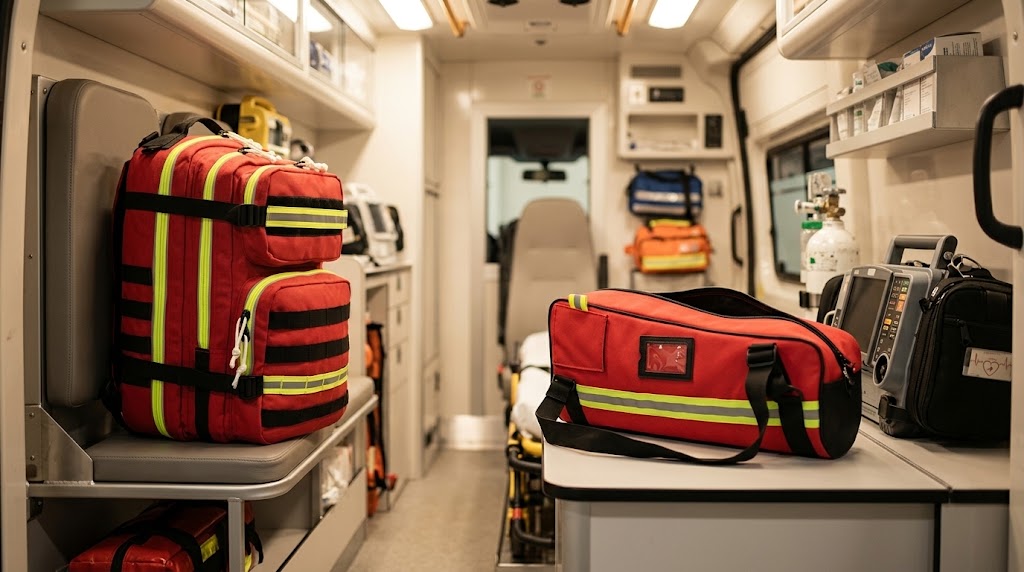
In healthcare, emergency medicine, civil defense, and workplace accident prevention, timely intervention is the key to safeguarding human life. Choosing the right first aid bags and backpacks isn't just about buying simple transport containers; it means designing a modular organizational system that ensures immediate access to medical supplies, medications, respiratory equipment, and dressing kits in high-stress situations. From the local rescue team to the company's first responder, a well-structured technical kit protects sterile materials from rain, dust, and accidental impacts, reducing the downtime needed to search for supplies to zero. This purchasing guide will guide you through the Holity.co.uk online catalogue, analysing the architecture of the internal compartments, the difference between bags, backpacks and trolleys, highly water-resistant materials and current regulatory frameworks.
The external shape of the container must be calculated based on the operators' range of action and the predominant mode of transport:
The professional solution of choice for mobile rescue and for intervention teams on foot.
Compact or high-volume horizontal transport systems equipped with grab handles and adjustable padded shoulder strap.
Based on the organization of the department or the purchasing protocol, the Holity.co.uk catalog allows you to choose between two basic variants:
The emergency environment requires the use of fabrics with high mechanical resistance, washable and sanitizable with virucidal chemical products:
The range available in our store covers the needs from the small pencil case to the large resuscitation bag, moving within a price range between €23.00 and €820.00.
The provision of first aid supplies in the workplace is regulated in Italy by Ministerial Decree 388/2003 (implementing Legislative Decree 81/2008), which divides companies into three risk categories (Group A, B and C) and identifies the minimum contents of the first aid kit or bag. Technical first aid bags and holdalls must guarantee a suitable space to contain the list of supplies required by law, ensuring that the case or bag is easily transportable to the site of the accident within the company premises. Furthermore, the materials used meet the requirements of the EC Regulation on Medical Devices (MDR 2017/745).
Equip your rescue teams, bring your company up to standard and guarantee rapid and safe emergency interventions with the professional solutions available on Holity.co.uk. Explore our online catalog to select the most suitable model: set the type (bag or backpack), define the variant (empty or complete) and select the millimetric dimensions suitable for your equipment.
Request a personalized quote today: our sales team is at your complete disposal to provide you with quoted technical data sheets, certifications of conformity and reserved offers for batch orders.
How does the internal coloured pouch system with Velcro fasteners speed up the operator's intervention according to the international colour code?
High-performance emergency backpacks and bags use an internal subdivision based on transparent pouches (pouches) that can be removed using Velcro strips. Each pouch has an identifying colour compliant with the international emergency standard: blue for airway management and breathing, red for circulation and haemorrhage control, yellow for diagnostics and trauma, and green for paediatric or pharmaceutical supplies. This system allows the rescuer to detach from the backpack and grab in a second only the pouch needed for the type of intervention, avoiding scattering the remaining material on the ground.
What washability and sanitisation characteristics distinguish a PVC/TPU fabric from traditional nylon for the prevention of cross-infections?
Traditional nylon or polyester fabric has a textile weave that can absorb biological fluids (blood, vomit, disinfectant solutions) by capillary action in the event of an accidental spill, making complete decontamination difficult. Fabrics coated in PVC or TPU (Thermoplastic Polyurethane) create a calendered coating that is completely non-porous. This smooth, water-repellent surface does not absorb any liquid and can be washed and sanitized directly on site using cloths soaked in bleach, sodium hypochlorite, or alcohol-based disinfectant sprays, restoring the bag's external sterility in just a few minutes.
How do you calculate the correct capacity in litres for a company first aid bag pursuant to Ministerial Decree 388/2003 for Group A and B companies?
Ministerial Decree 388/2003 requires Group A and B companies to carry a replenishment pack containing bottles of saline solution, povidone-iodine disinfectants, sterile gauze of various sizes, a tourniquet, sterile drapes, rolls of plaster, scissors, and a sphygmomanometer with stethoscope. To store this material without crushing it or bending the sterile packages, a bag with a useful capacity of between 18 and 25 liters is required. For companies with external operating offices or relocatable construction sites, a 25-30 liter bag is recommended, which allows for the addition of a 2-liter compressed oxygen cylinder or a semi-automatic AED defibrillator.
What shock-absorbing protection systems and reinforced rigid bases protect the oxygen cylinder and glass diagnostic devices?
During emergency travel, the bag or backpack may be subjected to violent impacts against the ground or the ambulance's bulkheads. Professional first aid bags integrate layers of high-density closed-cell polyethylene foam padding along the perimeter walls and internal dividers. Furthermore, the lower base is protected by a rigid, tub-molded thermoplastic base with non-slip rubber feet. This raised surface isolates the contents from water or mud on the intervention site and cushions a vertical fall, protecting the oxygen cylinder, pulse oximeter, and glass drug bottles.
How does the price range in the catalogue (€23.00 - €820.00) correlate with the variants with medical contents included and the manufacturing materials?
The price structure is determined by the volume, the presence or absence of medical devices, and the quality of the fabrics. The entry-level options (€23.00 - €80.00) include empty polyester bags and cases or basic boxes. The mid-range (€80.00 - €300.00) includes empty Cordura/PVC emergency technical backpacks with colored pouches or bags complete with equipment per Ministerial Decree 388/2003. The top-of-the-line prices (up to €820.00) are reserved for high-capacity professional resuscitation backpacks, made of waterproof TPU, equipped with an integrated trolley and equipped with advanced emergency medical equipment for healthcare and hospital use.
 English
  Italian
 French
 German
 Spanish