
mon-fri 9-13 / 14.30-18.30
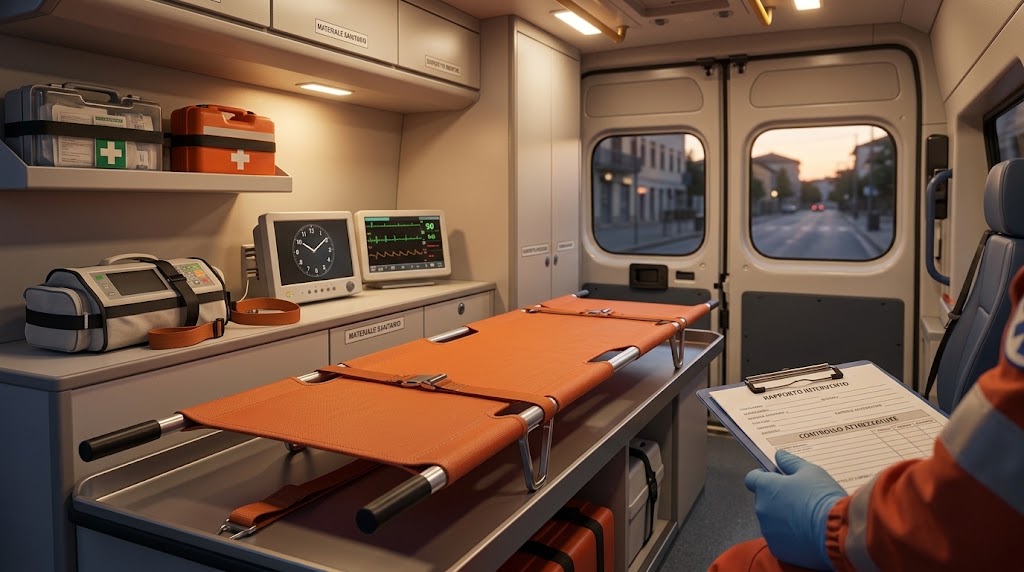
In pre-hospital healthcare, emergency medicine, Civil Protection, mountain/aquatic rescue, and corporate prevention, proper handling of the trauma patient represents the most critical moment of the intervention. Choosing the ideal emergency stretchers is not simply a matter of purchasing medical equipment; it means equipping first aid crews with stabilization and transport systems capable of eliminating the risk of secondary spinal cord injuries, preventing biomechanical strain on operators, and ensuring maximum speed of evacuation in any scenario. From the scoop stretcher for atraumatic patient loading on the ground, to the radiolucent spine board for vertebral immobilization, or the basket stretchers for air rescue, each device responds to specific clinical resuscitation protocols (PBTLS). This purchasing guide will guide you through the Holity.co.uk online catalogue, analysing construction typologies, useful capacities, radiolucent materials and European regulatory frameworks.
The device's architecture must be compatible with the intervention scenario (confined spaces, vertical escape routes, bodies of water or ambulance transport):
Essential device for the rigid immobilisation of patients with suspected spinal trauma.
Rigid device with separable longitudinal axes designed for atraumatic patient removal.
Highly portable systems designed for mass transport, confined spaces and rescue at height.
Perimeter containment shell with very high protection for complex recoveries in hostile environments.
The structural resistance must be calculated by evaluating the anthropometric variability of the population and the presence of medical equipment weighing on the stretcher:
Construction materials must guarantee maximum chemical-physical resistance and quick cleaning after use:
Stretchers intended for healthcare must meet rigorous legal requirements to guarantee the safety of the patient and operators:
The range available in our store covers purchasing needs from a single company device to the set-up of public rescue fleets, moving within a price range between €60.00 and €100.00. €3159.00:
Protect your staff, adapt your rescue team and equip your ambulances or your construction site with legally certified solutions. Explore the online catalog on Holity.co.uk to find the most suitable stretcher: set the type (spinal board, scoop, folding, basket or roll-up), define the useful load and select the complementary immobilization devices.
Request a personalized quote today: our sales team is at your complete disposal to provide you with quoted technical data sheets, CE/MDR certifications and reserved offers for batch orders.
How does the Scoop Stretcher allow for atraumatic patient loading compared to a spine board?
To position a polytrauma patient on the ground on a traditional spine board, the rescue team must perform the lateral rotation maneuver (Log Roll). The Scoop Stretcher eliminates this mechanical stress: the aluminum structure separates in the center into two longitudinal half-valves that are inserted with a stop under the patient's back lying on the right and left sides. When the two halves reattach at the ends, the stretcher cradles the patient without the spine or pelvis undergoing deviations or manual lifting, minimizing the risk of complications on compound fractures.
Why is the total radiolucency of the HDPE spine board a fundamental requirement in emergency rescue?
When a patient with suspected spinal trauma arrives at the Emergency Department In the emergency room or in the emergency room, it is essential to immediately perform emergency diagnostic tests (standard X-rays, CT scans or MRI) to identify internal injuries or hemorrhages. If the spine board contained metal components along the central axis, the metal would create artifacts and opacities on the radiological images, hiding the bone structures. Spinal boards made of high-density polyethylene (HDPE) without metal components allow the passage of X-rays, allowing radiologists to scan the patient while keeping them perfectly immobilized on the board.
What buoyancy and water-repellent characteristics must stretchers used for aquatic and pool rescue have?
In water rescue (sea, rivers, lakes, municipal swimming pools), the spine board must be able to support the weight of the injured patient and float independently on the surface of the water without sinking. Spinal boards for aquatic rescue integrate hollow cores within the expanded polyethylene shell. of air that provide a positive buoyancy. Furthermore, synthetic materials do not absorb salt or chlorinated water, avoiding an increase in the weight of the structure and allowing for rapid sanitization and perfect drying.
How is the useful load required for the management of bariatric patients in territorial and industrial rescue calculated?
In modern pre-hospital rescue, the percentage of interventions on bariatric patients or those with a high body mass is constantly increasing. Standard emergency stretchers tested for 150 kg could suffer from bending or structural failure if stressed by a heavy weight combined with the dynamics of rapid lifting. For the equipment of first response ambulances, industrial power plants or Civil Protection, it is recommended to equip themselves with spinal boards or basket stretchers with approved bariatric load capacities between 250 kg and 454 kg, guaranteeing maximum mechanical safety and the absence of permanent deformations of the frame.
How is the load range correlated? What are the prices in the category (€60.00 - €3159.00) with the types of devices, construction materials and immobilization kits included?
The price structure is determined by the mechanical complexity of the device, the materials used and the international certifications for helicopter rescue or bariatric use. The entry level range (€60.00 - €250.00) includes soft evacuation sheets, essential folding aluminum stretchers and basic monobloc spinal boards. The intermediate range (€250.00 - €800.00) includes telescopic scoop stretchers, highly radiolucent spinal boards with belt spider and head immobilizer included, and roll-up stretchers for confined spaces. The top-of-the-range prices (up to €3159.00) are reserved for polyethylene and titanium basket stretchers for helicopter rescue, stretchers bariatric lifts with very high capacity (up to 454 kg) and integrated systems complete with harnesses for vertical recovery contract.
 English
  Italian
 French
 German
 Spanish