mon-fri 9-13 / 14.30-18.30
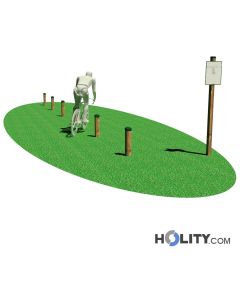
Mountain bike trail. Material: Nordic pine wood. Dimensions: 960 x 9 x h. 50 cm.
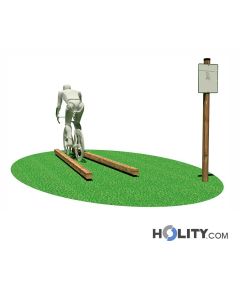
Ideal path for cyclocross tracks. Dimensions: 290 x 84 x h. 12 cm.
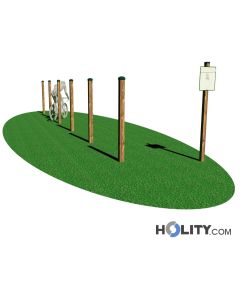
Equipment for skill parks. Dimensions: 960 x 9 x h. 150 cm.
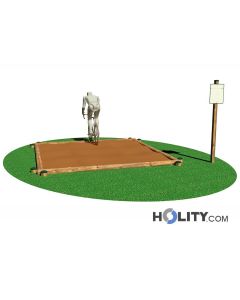
Cyclocross equipment. Dimensions: W. 345 x D. 324 x h. 15 cm.
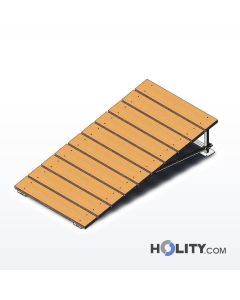
Jump ramp for skill parks. Dimensions: W. 151.3 x D. 80 x h. 35.2 cm.
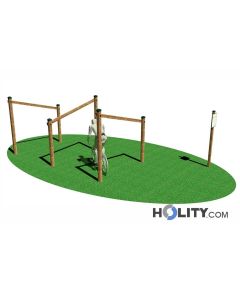
Ideal track for cyclocross circuits. Material: Nordic pine wood. Dimensions: 414 x 215 x h. 200 cm.
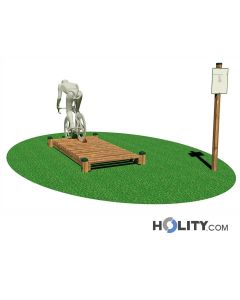
Cyclocross equipment. Dimensions: L. 235 x D. 119 x h. 22 cm.
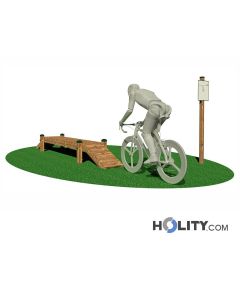
Equipment for cyclocross. Dimensions: L. 417 x D. 68 x h. 45 cm.
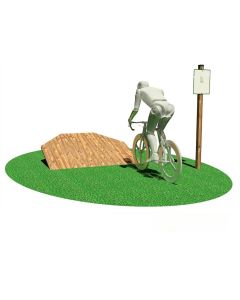
Equipment for skill park. Dimensions: 140 x 174 x h. 45 cm.
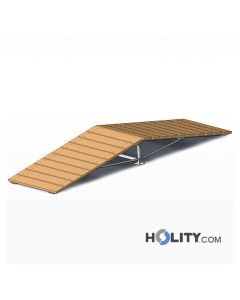
Equipment for cyclocross tracks. Dimensions: L. 305 x D. 80 x h. 35.2 cm.
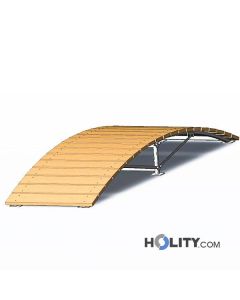
Adjustable bump arch for skill park, galvanized pine wood and steel. Modular obstacle for bike trials, adjustable height and width.
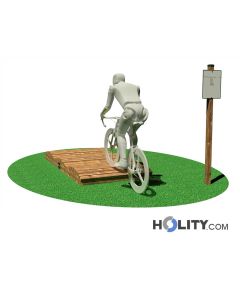
Skill park equipment. Dimensions: L. 255 x D. 120 x h. 21 cm.
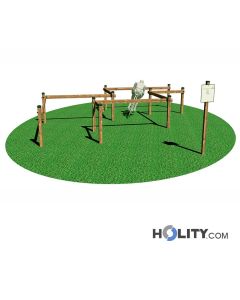
Skill park trail. Material: Nordic pine wood. Dimensions: 575 x 560 x h. 108 cm.
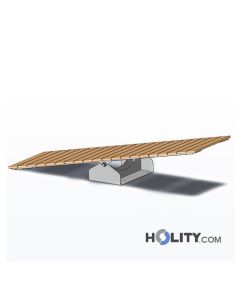
Seesaw for skill park. Dimensions: L. 304 x D. 80 x h. 65.3 cm.
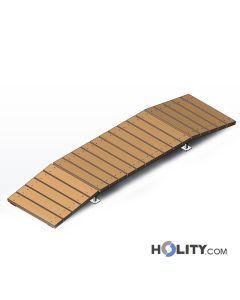
Skill park obstacle. Dimensions: W. 306 x D. 80 x h. 19.3 cm.
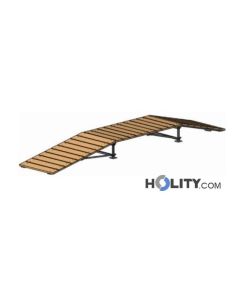
Ramp for skill parks. Dimensions: L. 412 x W. 80 x H. 34.8 cm.
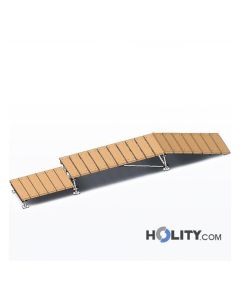
Drop for skill park. Dimensions: L. 343.3 x D. 80 x h. 34.8 cm.
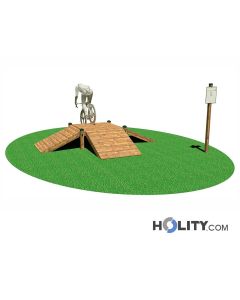
Skill park equipment. Dimensions: L. 360 x D. 355 x h. 55 cm.
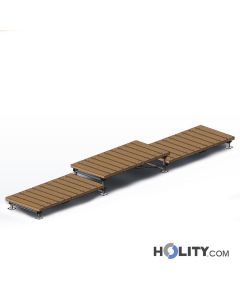
Course for cyclocross tracks. Equipped with three modules. Dimensions: L. 458 x D. 80 x h. 34.8 cm.
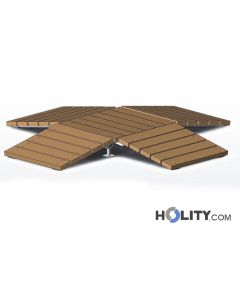
Pyramid course for cyclocross tracks. Dimensions: W. 240.8 x D. 234.3 x H. 19.3 cm.
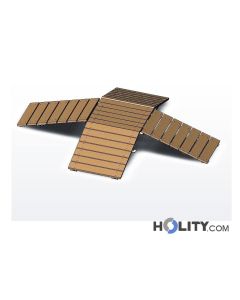
Pyramid trail for skill park. Dimensions: W. 297.1 x D. 290.6 x h. 34.8 cm.
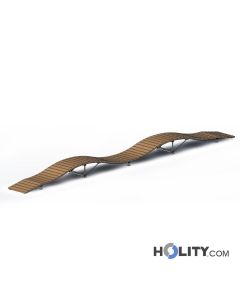
Hump for skill park. Material: pine wood and steel. Dimensions: 952.1 x 80 x h. 49.7 cm.
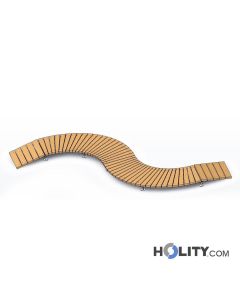
Cyclocross track course. Dimensions: 622.6 x 171.6 x h. 19.3 cm.
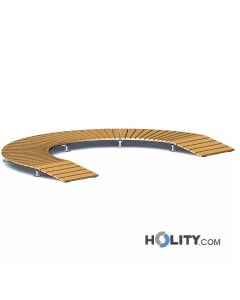
Course for cyclocross tracks. Dimensions: 404.5 x 278.3 x h. 19.3 cm.
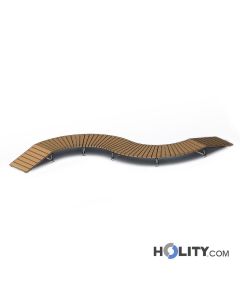
Skill park track. Dimensions: 663,3 x 204,8 x h.34,8 cm.
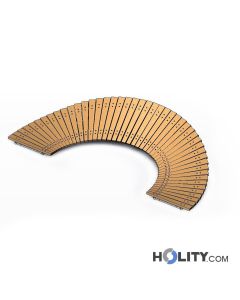
Course for cyclocross tracks. Dimensions: 424,5 x 254,1 x h.67,1 cm.
Cyclocross represents a cycling discipline that merges elements of road racing with technical mountain bike features, requiring articulated routes and specifically designed equipment to develop balance, climbing, and obstacle-clearing skills. Modern cyclocross tracks utilize a full range of wooden and steel structures that allow practitioners to train safely, improving riding technique and general athletic preparation. Each element of the track, from ramps to bumps to variable obstacles, is calibrated to offer gradual progression in difficulty, suitable for both beginners and experienced cyclists wishing to perfect their competitive performance.
Cyclocross track equipment plays a fundamental role in the development of the cyclist’s technical autonomy. Unlike road training, where motor gestures are less variable, track structures allow for the simultaneous exercise of balance, muscle power dosage, and coordination, crucial elements for competing effectively in cyclocross races. Modular routes also reduce the risk of injury compared to training on natural obstacles, as each element is built according to specific standards of stability and durability. Access to an equipped track allows cycling clubs, cycling schools, and sports centers to create structured preparation programs, adaptable to different skill levels and age groups.
On a practical level, investing in cyclocross equipment means offering athletes the opportunity to face conditions that replicate the complexity of official races, but in a controlled environment. Cyclocross requires the ability to transit over irregular surfaces, face side slopes, clear barriers, and maintain balance on muddy or sloping terrain: all these skills are best developed through systematic drills on dedicated structures. Furthermore, a well-equipped track becomes a unifying resource that promotes the sport at the youth and amateur levels, encouraging the participation of new practitioners and consolidating the local cycling community.
The cyclocross equipment catalog includes differentiated construction solutions, designed for specific targets and variable track configurations. Linear paths in Nordic pine wood represent the structural base, characterized by dimensions ranging from compact models of 960 x 9 cm up to more articulated structures of over 4 meters in length. These paths offer stable and consistent surfaces, ideal for developing fluidity in movement and allowing the cyclist to concentrate on technique without distractions due to surface irregularities. The materials used guarantee resistance to weathering and repeated foot traffic, indispensable in intensive training contexts.
Alongside linear paths, the offer includes specialized structures for overcoming obstacles: jump ramps, bumps, see-saws, and arches of various inclinations combine to create coherent educational progressions. Ramps vary significantly in ascent angle and useful depth, allowing the difficulty to be calibrated according to the athlete’s experience. Bumps and pyramidal structures represent transition elements, where the cyclist must simultaneously manage vertical thrust and lateral stability. Drops and wide obstacles instead develop precise control and quick decision-making skills in positioning the body on the bike. Each type is built in treated wood and steel, ensuring longevity even in outdoor environments exposed to humidity and thermal variations.
The selection of cyclocross equipment requires a preliminary assessment of training objectives and the technical level of the athlete base. If the intent is to build a multi-functional track for a club or a cycling school, it is advisable to opt for a balanced combination: intermediate length linear paths (400-600 cm) associated with 3-4 scalar obstacle elements for difficulty. For structures oriented towards pure competition, however, it is preferable to prioritize complex elements such as see-saws, asymmetrical bumps, and drops, capable of replicating the technical constraints of official competitions more faithfully. A common mistake consists in overestimating the difficulty in the first months of activity: the best progressions occur when practitioners master basic technique before facing high-complexity obstacles.
Critical aspects in the choice include the available track width space and the number of athletes who will use the facility simultaneously. Narrow elements (80 cm depth) are ideal for disciplining the track and for teaching precision in lines, while wider structures (280-350 cm) allow for multiple solutions and add variability to the exercise. Material quality and surface finish directly affect safety: paths with rounded edges, free of splinters, and with non-slip textures reduce risks of falls or injuries. Finally, consider maintenance time: exposed wood requires periodic treatments and inspections, especially in climates with high temperature fluctuations or persistent humidity.
Cyclocross track equipment must meet safety regulations that vary slightly depending on whether the structure is intended for recreational or competitive use. The UNI EN 14974 standard governs safety requirements for cyclocross parks and training tracks, setting standards for structural stability, minimum distances between elements, resistance to concentrated loads, and the absence of sharp edges. All materials must be certified for outdoor use, with particular attention to wood which must have anti-rot treatment and biological agent resistance certifications. Steel, where present, must be galvanized or painted to prevent rust and premature degradation.
In the context of public or semi-public sports facilities, the elements must undergo annual periodic inspection to verify structural integrity and surface safety, with traceable documentation. It is also mandatory to have adequate run-out areas at the end of high-difficulty ramps and obstacles, generally equal to at least 2-3 meters of free space. Installation must take place on draining and flat surfaces, preferably with a shock absorber at critical landing points. Facility managers must finally ensure clear signaling of the difficulty level of each element and provide instructions for use to practitioners, especially for the youth age group.
Explore all the products in the category and compare the available solutions to find the one best suited to your operational context. From the compact linear path to the complex modular structure, every solution is designed to last over time and to offer consistent educational progression to your athletes.
Treated Nordic pine wood is the predominant material for paths and obstacles, ensuring durability, natural traction, and shock absorption. Galvanized steel is used for structural elements and connections, ensuring stability. Both must have certification for outdoor use and anti-rot treatments.
Cyclocross is a competitive cycling discipline that requires specific courses with regulatory obstacles, while a skill park is a recreational space dedicated to general technical training. Cyclocross tracks follow official configurations, whereas skill parks allow for greater compositional and educational freedom.
It depends on the configuration: a basic linear path requires at least 30-40 square meters. A complete track with 8-12 modular elements needs 200-300 square meters. It is essential to have run-out areas of 2-3 meters beyond the most critical obstacles for safety reasons.
Outdoor wood requires annual inspection, removal of moss or algae, and eventual touching up of protective paints every 2-3 years. Surface damage should be corrected promptly to avoid water infiltration. In very humid climates, increased frequency of checks is recommended.
Partially. While both sports share basic elements like ramps and bumps, cyclocross course geometries are specific to the discipline. A skill park allows for more versatility; a competitive cyclocross track must instead respect well-defined official standards.
Obstacle height, ramp inclination, transit surface width, and type of landing. A 30 cm drop is moderate for beginners, while see-saws over 50 cm in height require experience. Educational progression must be gradual.
No for purely private structures. Yes if the use is public, semi-open, or school-related: compliance with UNI EN 14974, periodic inspections, and safety documentation are required. Also recommended for high-traffic private facilities.
It varies between 15,000 and 50,000 euros depending on the area and complexity. An entry-level facility with 4-5 basic elements costs about 15,000 euros; a professional structure with 10-12 modular elements reaches 40,000-50,000 euros, excluding ground preparation costs.
 English
 Italian
 French
 German
 Spanish