
mon-fri 9-13 / 14.30-18.30
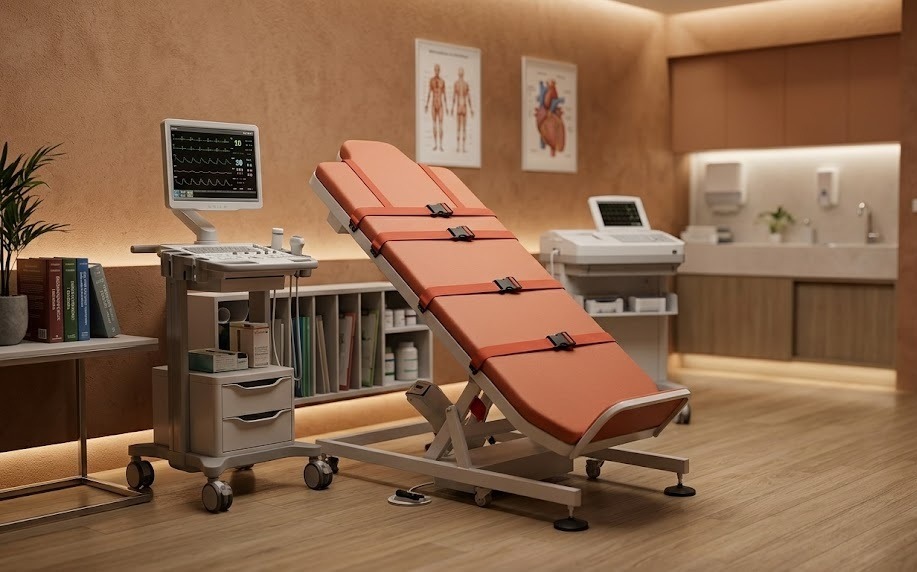
Accurately assessing cardiovascular and autonomic nervous system function is one of the most delicate clinical challenges within a specialized medical department. Choosing the right cardiology examination and tilt test tables is not simply a matter of office furniture; it is a strategic investment aimed at ensuring absolute diagnostic precision, optimizing team workflows, and rigorously protecting patient safety. Specifically designed for controlled orthostatic tests (tilt tests), these medical devices allow for real-time and simultaneous monitoring of the patient's heart rate and blood pressure during calibrated postural changes. Whether it's a large hospital, a private clinic, or an outpatient clinic focused on the diagnosis of syncope, presyncope, and autonomic disorders, having reliable and ergonomic equipment defines the level of professionalism of the facility. This purchasing guide was created to help you navigate the various models available in our online catalogue at Holity.co.uk, analysing section types, motorisation systems, dimensional constraints and industry regulatory compliance.
In the professional healthcare devices and furniture market, cardiology tables are differentiated mainly based on the number of articulated sections of the lying surface and the level of automation of the supporting structure, parameters that determine the clinical versatility of the device.
They represent the ideal entry-level configuration for facilities requiring a solid, compact and economically accessible device for performing standardised orthostatic tests.
Advantages: Maximum structural stability of the frame and footprint reduced to the bare minimum. They offer a fluid motorized tilt system that allows you to reach angles between -20° and +90° (or 88-90°) in complete safety, ensuring precise and continuous movements.
Disadvantages: Total absence of intermediate joints in the lying surface, not allowing separate adjustments for the backrest or the head of the bed.
Ideal for: Small specialist clinics, internal medicine practices and centers with limited space where only routine tilt test procedures are performed.
Advanced and highly articulated systems, designed to offer maximum postural flexibility and customization of patient positioning.
Advantages: They feature independent and adjustable sections for the backrest, the mobile head and an articulated footrest. This modularity allows the lying surface to be adapted to the specific anatomy of each patient down to the millimetre, improving clinical accessibility and overall comfort.
Disadvantages: Geometrically more complex structures that require careful management of the various mechanical joints and a higher purchasing budget.
Ideal for: Hospital cardiology departments, highly specialized diagnostic centers, university clinics and multidisciplinary workstations.
The configuration and number of low voltage electric motors define the level of dynamism and accessibility of the medical bed:
Special heavy-duty medical devices equipped with reinforced frames in high-thickness steel and enhanced lifting systems.
Advantages: They ensure absolute mechanical stability and the absence of dangerous oscillations or structural collapses when welcoming patients with serious obesity or overweight conditions. They extend the standard useful load beyond 150 kg, reaching and certifying loads of up to 200 kg.
Disadvantages: The visual footprint and weight of the furniture are more massive, which partially limit its rapid movement between the rooms of the department.
Ideal for: Bariatric centers of excellence, long-term care clinics and hospital departments structured with high anthropometric inclusiveness.
To set up an efficient and safe cardiology diagnostic room, it is essential to base the research by analyzing specific geometric parameters, covering materials and passive safety details.
The room layout planning must be based on the actual usable dimensions of the modules to allow the smooth passage of emergency trolleys or therapy monitors. Single-section beds maintain a compact width between 60 and 75 cm, making them ideal for confined spaces. Multi-section or bariatric models can extend up to 80–85 cm wide to ensure a comfortable lying position. Choosing models with adjustable working heights (54–96 cm) protects physicians' spinal health during prolonged examination sessions.
During orthostatic tests, the patient experiences sudden changes in pressure that can cause syncope or altered vegetative states. It is essential that the table be equipped with a system of multiple, adjustable, quick-release emergency straps (less than 5 seconds), combined with a stable leg rest to prevent accidental slips or falls. The choice of controls—via manual keypad or no-touch foot control—must allow the cardiologist to vary the table's inclination without interrupting visual contact with the patient or the vital signs monitors. The presence of an integrated goniometer on the frame is an essential technical requirement for measuring exact postural angles with millimetre precision during the procedure.
Static stability is ensured by steel structures treated with epoxy powder coatings or high-resistance anti-corrosion chrome plating, equipped with wheels with centralized brakes. Surface coverings must combine the visual comfort of the patient with compliance with strict hygiene standards. The material of choice is fireproof imitation leather or eco-leather certified in class IM1, completely waterproof and non-porous, compatible with alcohol- or chlorine-based hospital disinfectants. Premium options with intrinsic antibacterial properties effectively counteract the proliferation of microorganisms on frequently touched surfaces.
Hospitals, Polyclinics and Syncope Specialized Units: We recommend installing dual-motor tilt test tables (variable height), equipped with 4 articulated sections, integrated precision goniometer and technological interfaces for direct connection to multifunctional telemetry monitors. They maximize diagnostic accuracy and speed up high-volume patient workflows.
Private Cardiology Clinics and Specialist Medical Practices: Single-section models on a fixed or variable height frame represent the optimal solution. They offer mechanical precision for verticalization up to 90° while taking up minimal floor space, guaranteeing an excellent quality-price ratio and fully passing local ASL audits.
Neurological Rehabilitation Centers, Geriatrics and Bariatric Departments: In settings characterized by frail, elderly or reduced mobility patients, it is essential to adopt dual-motorized bariatric beds with load capacities of up to 200 kg. The wide lying surfaces (over 80 cm) and the altimetric range eliminate the physical strain on caregivers during wheelchair transfers.
Raise the diagnostic standards of your clinics, guarantee maximum sterile safety and protect the health of your patients during postural tests. On Holity.co.uk we offer you a specialized and certified assortment of professional cardiology examination and tilt test beds, engineered by the best brands in the medical sector to guarantee multi-year operational life and fluid, silent movements.
Use our online search tools to select the number of suitable sections (single or multi-section models) and configure the type of motorization best suited to your premises. Are you the purchasing manager of a public health company, do you manage an accredited clinic or do you need a dedicated quote for complex tender specifications or purchases via MePA? Contact our customer service today to receive complete technical data sheets and customized technical advice for your project.
What is the main difference between a tilt test table and a standard examination table?
A tilt test table is equipped with one or more hydraulic-electric motors specifically designed to vary the inclination of the table top up to 88-90° (verticalization) in a smooth and controlled manner, allowing the doctor to observe the patient's cardiocirculatory reactions to changes in posture. A standard examination table, on the other hand, has fixed or adjustable horizontal surfaces only for small traditional examinations, without orthostatic tipping systems or emergency restraint straps.
What maximum load capacity is recommended for a general cardiology clinic?
The choice of load capacity must be based on the anthropometric characteristics of the population assisted. The standard load capacity of 150 kg is suitable for the vast majority of general practices. However, to ensure operational safety over time and avoid premature wear of the motors under stress, it is advisable to choose reinforced 180 kg models or certified bariatric variants up to 200 kg when managing flows of significantly overweight patients.
Why does variable height motorization represent a real operational advantage?
Dual-motorized beds with variable height (approximate range from 54 to 96 cm) offer a twofold benefit: they significantly facilitate independent or assisted access for elderly patients and those with reduced mobility by reducing the minimum height, and allow the cardiologist to raise the table top to the most ergonomic viewing and working height, safeguarding the health of his spine during prolonged diagnostic procedures.
What is the IM1 class classification in medical upholstery?
The acronym Class 1 IM indicates a strict approved certification of reaction and resistance to fire applied to upholstered furniture for public and collective use. This standard certifies that the imitation leather or eco-leather used has a severely limited flammability, does not propagate flames in the event of a fire and develops low quantities of smoke and toxins, fully complying with the fire safety requirements of hospital facilities.
Is it possible to integrate or interface the cardiology table with existing vital signs monitors?
Yes, the premium mid-high range models designed for modern "Syncope Units" incorporate specific data connection interfaces (such as RS-232 serial ports or dedicated connection modules) designed to synchronize the tilt movements of the table with the acquisition software of the multi-parameter telemetric monitors, allowing the automatic and centralized recording of the patient's vital signs.
What are the ordinary and extraordinary maintenance obligations required by law?
In compliance with Legislative Decree 475/92 and the directives on Medical Devices, healthcare facilities are required to perform periodic functional checks and electrical safety tests (CEI EN 60601-1) generally on an annual basis. Routine maintenance includes lubricating mechanical joints, checking motor limit switches, and sanitizing the surface of the coatings. Each intervention is recorded in the facility's construction site log.
 English
  Italian
 French
 German
 Spanish