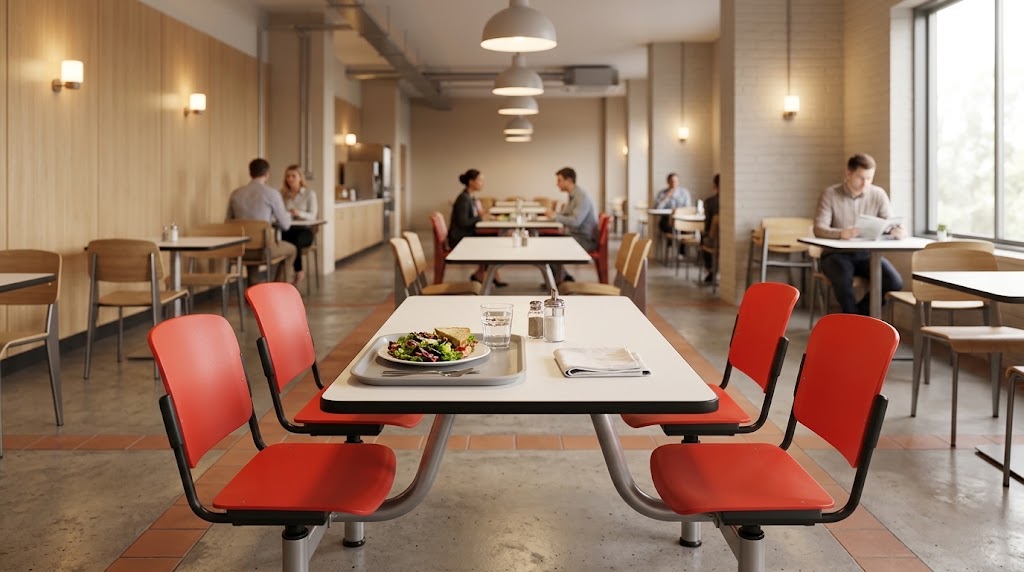
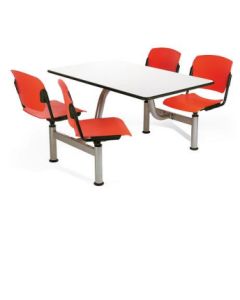
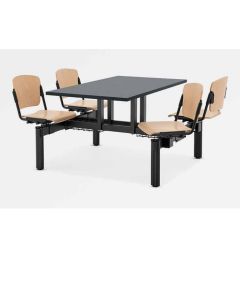
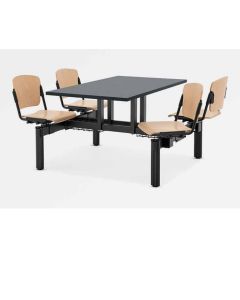
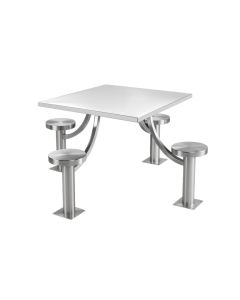
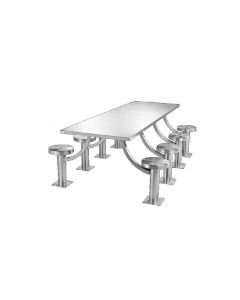
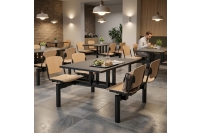
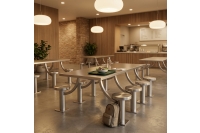
A monobloc canteen tables are systems composed of a top and seats integrated into a single structure, designed to furnish company and school canteens, self-service restaurants, fast food outlets and other spaces intended for collective catering in a practical and orderly manner. Compared to the traditional combination of separate tables and chairs, a monobloc structure allows the seats to be kept in the intended position, simplifying the organisation of the room and facilitating daily cleaning operations. Materials, dimensions, number of seats and seat configuration are therefore aspects to be carefully evaluated before purchasing.
What are monobloc canteen tables?
A monobloc table with integrated seats combines the top, supporting structure and seats in a single element. The seats therefore remain connected to the table and cannot be moved freely by users.
This configuration is particularly suitable for environments characterised by a large number of people and frequent shifts of use, where it is important to maintain the orderly arrangement of the furniture throughout the day.
Why choose tables with integrated seats?
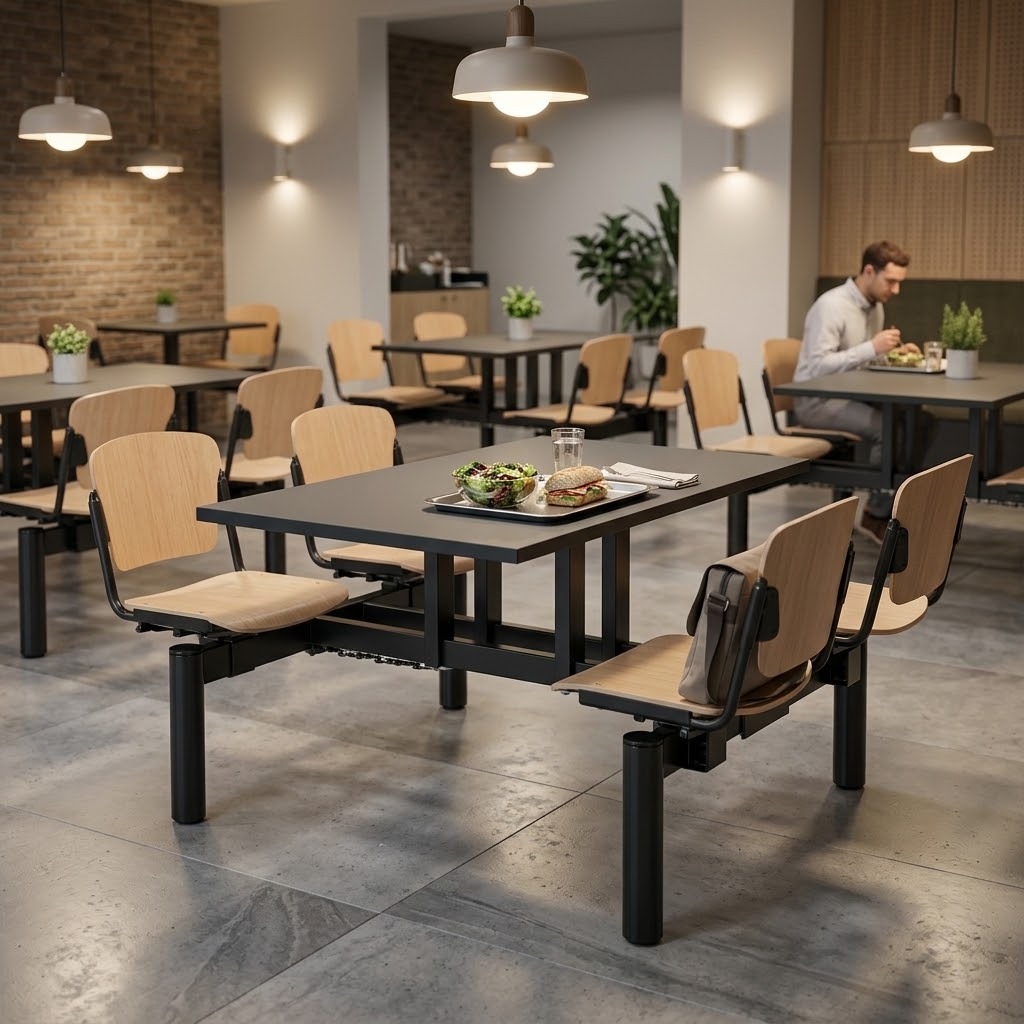 One of the main advantages is the organisation of the space. Since there are no independent chairs, they are prevented from being moved and left in the corridors or in other areas of the room. The arrangement therefore remains more stable and predictable.
The integrated structure can also facilitate floor cleaning operations, because it reduces the number of mobile elements to be moved. The noise produced by the continuous dragging of the chairs can also be limited, a useful aspect especially in canteens frequented by many people at the same time.
Monobloc tables for school canteens
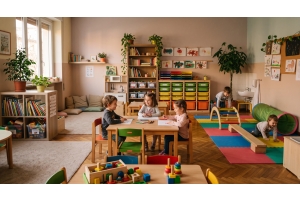
In school canteens the organisation of the spaces must allow for the management of numerous students during shifts of limited duration. Monobloc tables allow you to maintain a constant seating arrangement and organize queues and routes more rationally.
Before choosing, it is important to check the dimensions of the table, seat height, number of seats and construction features in relation to the age of the users and the available space.
Monobloc tables for company canteens
Even in company canteens these solutions allow you to organize the areas intended for lunch breaks in an orderly manner. The integrated configuration allows you to precisely define the number of seats and avoid constant movement of the chairs.
In environments used daily, it is advisable to favor robust models, easy to clean and sized according to the number of employees and the expected rotation during service.
Monobloc tables for self-service and fast food
Tables with integrated seats are also used in self-service, fast food and refreshment areas , where speed of use, order and ease of maintenance are particularly important.
In these contexts it is possible to choose different configurations and finishes depending on the style of the premises, combining operational and aesthetic needs without sacrificing the practicality of the monobloc structure.
How to choose a monobloc table for the canteen
Before purchasing it is necessary to consider above all dimensions, number of seats, materials, seat configuration and available space . The capacity of the table must be evaluated together with the overall surface area of the room, leaving sufficient space for the circulation of users and staff.
Ease of use is also an important factor. Cleaning is an important criterion. Tops and seats are used several times during the day and must therefore be made of materials suitable for the intended use and easy to maintain.
How many seats should a single-block table have?
The number of seats depends on the organization of the canteen and the size of the space. A greater number of seats for each structure allows more users to be concentrated in the same area, but it is always necessary to consider the overall dimensions and passageways.
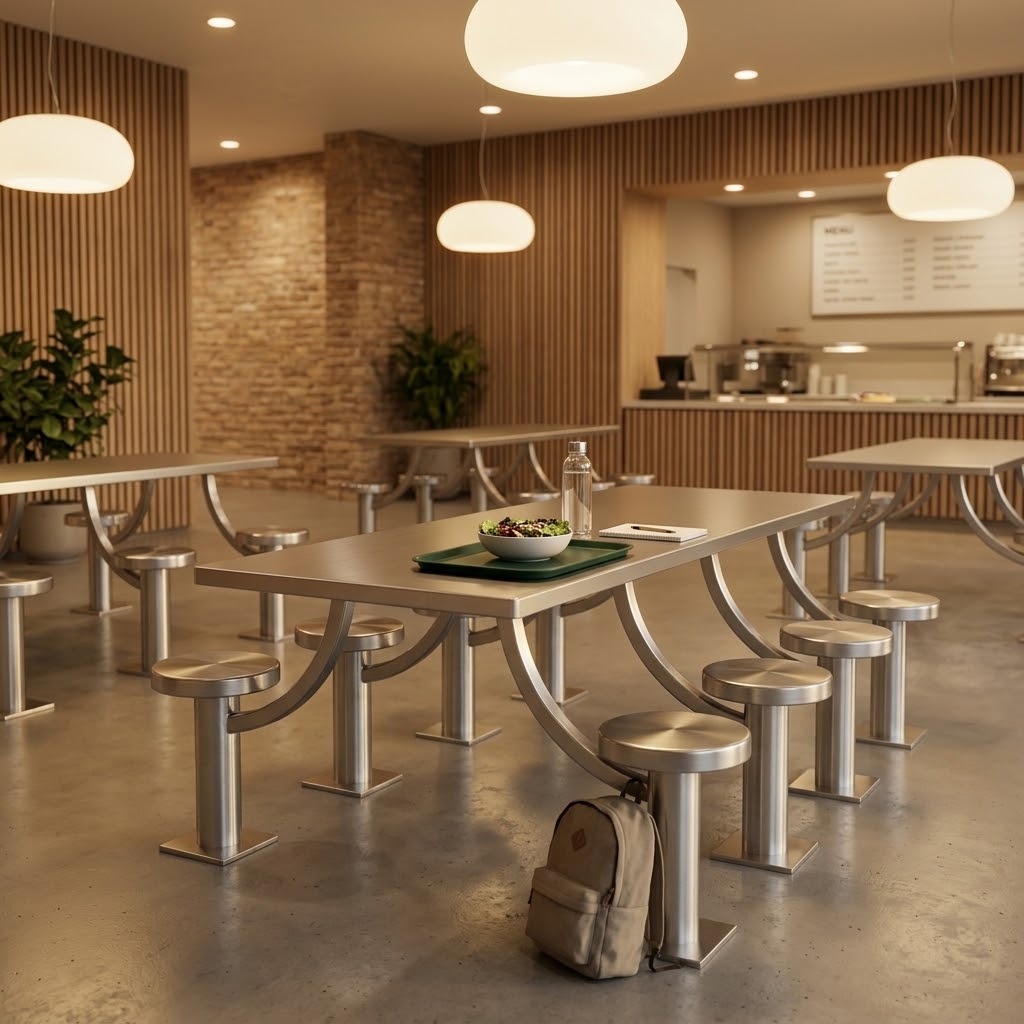
Before defining the configuration, it is therefore useful to calculate the maximum number of people present at the same time and plan the arrangement of the tables according to the expected shifts.
Materials, resistance and maintenance
In a canteen, the furnishings are subjected to frequent use. For this reason, the structure, top and seats must be chosen considering sturdiness and ease of maintenance. Easily cleanable surfaces also contribute to making daily activities more efficient.
Colors and finishes can also be used to coordinate tables with the rest of the environment, allowing you to create modern and functional canteens without neglecting the aesthetic aspect.
How to organize canteen spaces
Tables must be arranged leaving adequate paths for access to seats and circulation within the room. It is also important to consider the path between meal distribution, tables and the tray return area.
A coordinated design of furniture for communities and collectives allows you to make the entire environment more efficient and not just the area designated for seating.
Complete furniture for canteens and self-service
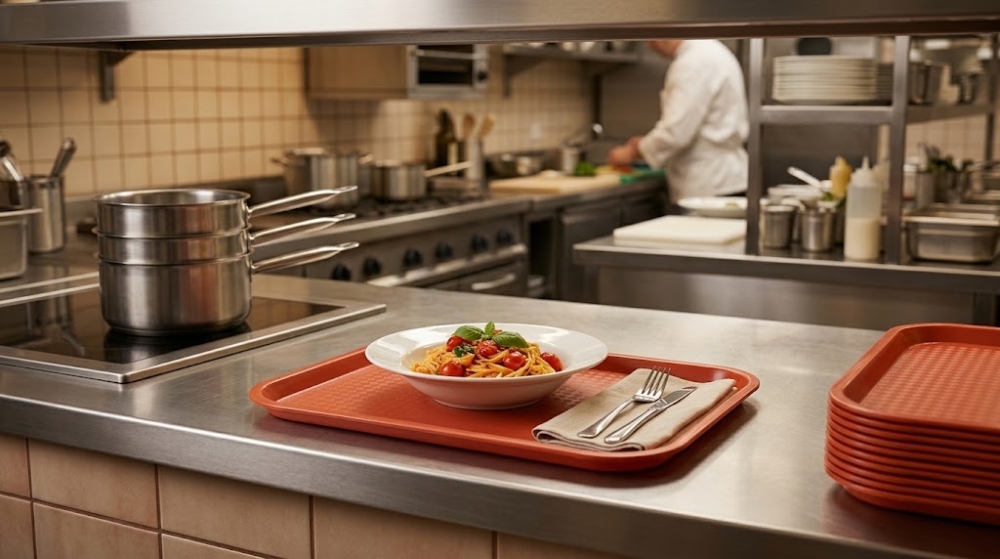
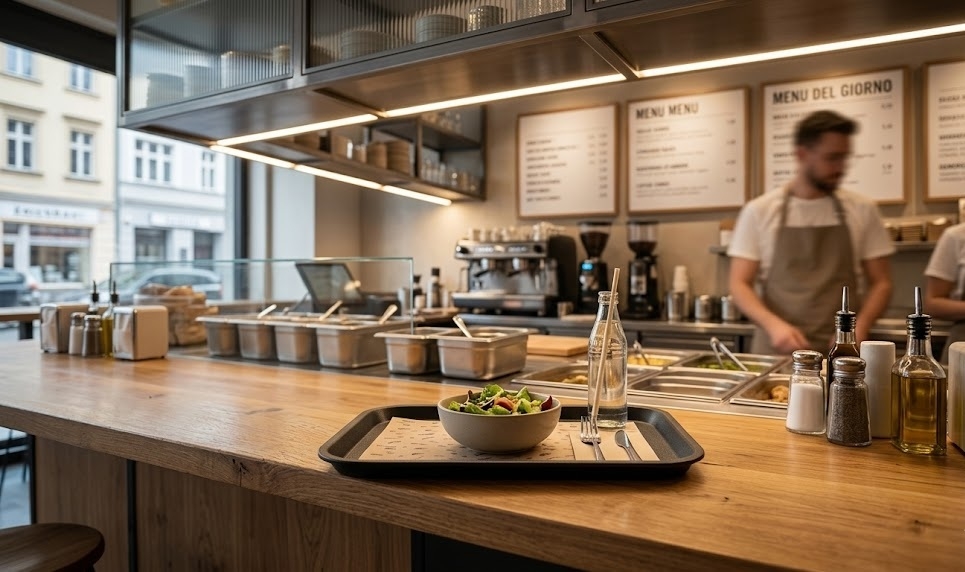
The table is just one of the elements necessary to organize a professional canteen. Depending on the type of service, trays for self-service and tray emptying bins for canteens and fast food outlets may also be useful, so as to coherently organize distribution, consumption and return.
The choice of monoblock tables for canteens must therefore start from the characteristics of the structure, the number of users and the organization of the service. A correct configuration allows you to create an orderly, practical environment suitable for daily use.
 English
  Italian
 French
 German
 Spanish