
mon-fri 9-13 / 14.30-18.30

Pack of 2 pieces
€592.80 VAT incl.Carrying chair with 2 wheels for casualty recovery. Orange nylon sheet. Capacity: 150 Kg.
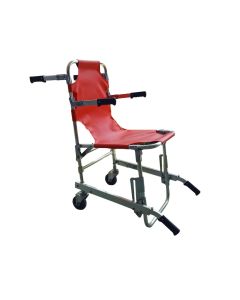
Evacuation carry chair. Load capacity: 150 kg. Material: nylon and aluminum.
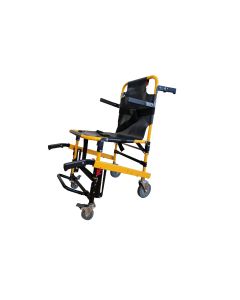
Pack of 2 pieces
€643.20 VAT incl.Carrying chair for elderly and disabled with 4 transport handles. Open dimensions: W.710 x D.505 x H.910 mm.

Pack of 2 pieces
€661.20 VAT incl.Transport chair for the elderly and disabled. Load capacity: 159 kg. Open dimensions (H x D x W): 910x505x710 mm.

Emergency transport chair equipped with 4 wheels. Medical device Class I. Load capacity: 150 Kg.

Professional lightweight metal patient transport chair, 4 wheels for flat surfaces, 120 kg capacity, space-saving foldable structure.

Evacuation chair with 4 wheels, footrest and armrests.
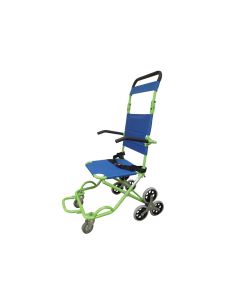
Stair carrying chair H667_09 with a compact structure for evacuation on stairs, 3-wheel system, load capacity 90 kg. Ideal for assisted uphill transport.
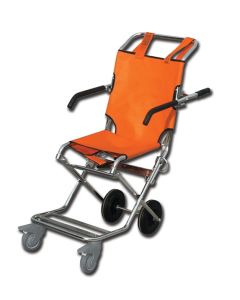
Carrying and evacuation chair in chromed steel for moving patients in emergencies. Capacity: 116 Kg.
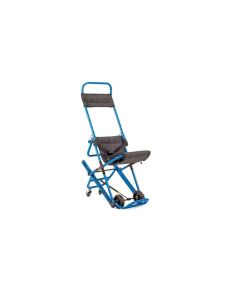
Aluminum transport chair for injured persons. Load capacity: 159 kg. Open dimensions: W.88 x D.53 x H.140 cm.
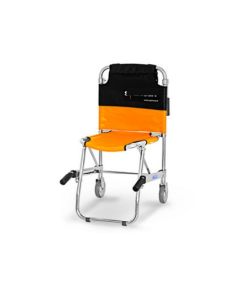
Evacuation chair with an unladen weight of only 10.5 kg.

Evacuation chair for medical evacuation with 2 wheels and adjustable handles. Compact structure, 150 kg capacity, ideal for narrow passages.
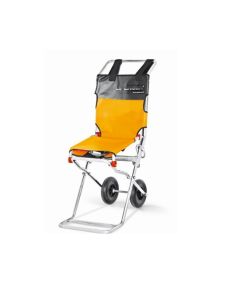
Evacuation chair with two rear wheels. Load capacity of approximately 150 kg.
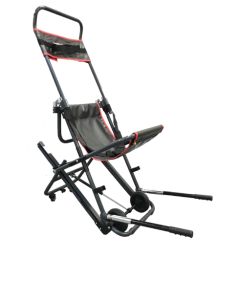
Evacuation chair for patient transport. Capacity: 130 kg. Open dimensions: W53 x D.92 x h.138 cm.

Carrying chair with two rear wheels. Load capacity 180 kg
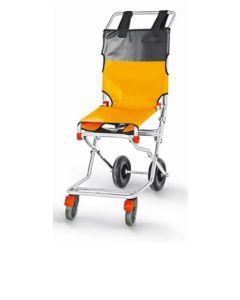
Folding chrome-plated steel carrying chair for evacuation and rescue in confined spaces. 150 kg load capacity and anti-folding security system.
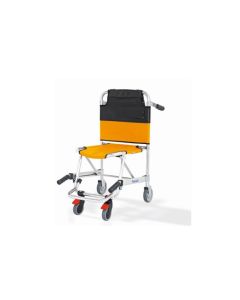
Lightweight evacuation chair with 4 wheels. Load capacity of approximately 150 kg

Folding steel and PVC carry chair for evacuation. 150kg capacity, lightweight (9.5kg) and compact, ideal for narrow spaces and ambulances.
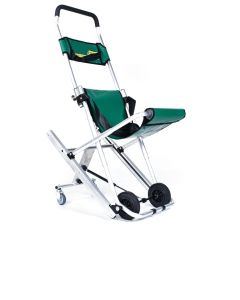
Evacuation transport chair, ideal for public buildings. Folded dimensions: W51 x D18 x H102 cm

Folding carrying chair in aluminum and PVC, 91.5x70x47.5 cm. Lightweight structure with 160 kg capacity for patient transport in confined spaces.

Carrying chair for transporting elderly and disabled patients. Capacity: 180 kg. Open dimensions: L114 x W51 x H92 cm.

Folding transport and evacuation chair in chromed steel and PVC. Load capacity 150 kg, 4 wheels with brake and anti-closure safety system.
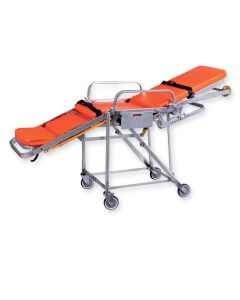
Convertible stretcher chair. Capacity: 159 kg. Dimensions: L190 x W57 x H85 cm.
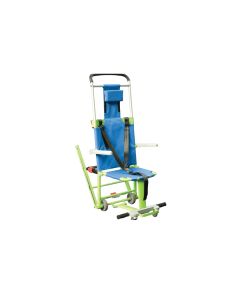
Professional H667_08 evacuation chair for stairs. 182 kg load capacity, braking tracks for controlled descent and lightweight alloy folding structure.
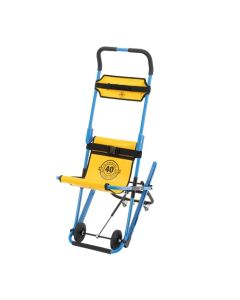
Folding painted steel evacuation chair with 182 kg capacity. Ideal for emergency transport in hospitals and healthcare facilities.
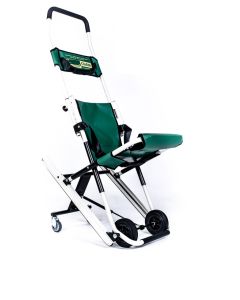
Evacuation chair for transporting the disabled and injured. Frame material: aluminum. Load capacity: 185 kg.
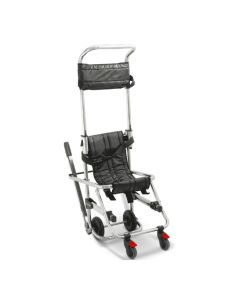
Evacuation chair h687_98 in aluminum (12.7 kg). High-grip tracks for stairs, 250 kg capacity, foldable to 90x33x107 cm.
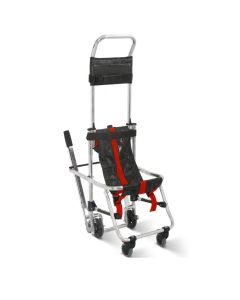
Evacuation stair chair with tracks h687_97 in aluminum weighing 10 kg. Smooth movement on stairs, 250 kg capacity, foldable in 90x17.5x104 cm.

Folding steel evacuation transit chair with 180 kg capacity, equipped with a centralized brake, pull-out handles, and 10G certification.

Hospital carry chair H708_37 made of thermoplastic material, foldable, with armrests and footrests. Load capacity 170 kg and folded footprint of 22 cm.

Folding transit chair in steel and PVC, weight 9.4 kg and load capacity 180 kg. Equipped with telescopic handles for agile maneuvers in tight spaces and stairs.
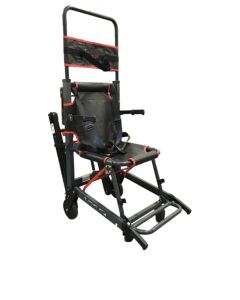
Evacuation chair for disabled and elderly people. Load capacity: 160 kg. Open dimensions: W.50 x D.76 x H.160 cm.

Evacuation chair h687_99 in aluminum, 14.2 kg, with tracks and telescopic handles. Load capacity 250 kg, foldable in 33x55x107 cm.

Steel stair climbing chair for emergency evacuation. Equipped with descent tracks and telescopic handles. Capacity 150 kg. Medical Device.

Evacuation chair suitable for transporting disabled people in the presence of stairs or uphill roads. Closed dimensions: W51 x D21 x H 120 cm
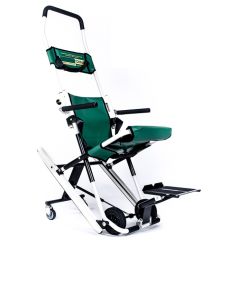
Emergency stair chair with aluminum frame, complete with armrests and footrest. Closed dimensions: W57 x D21 x H120 cm

Professional H708_36 aluminum transport chair with track system for stairs. 227 kg capacity, foldable and equipped with color-coded straps.
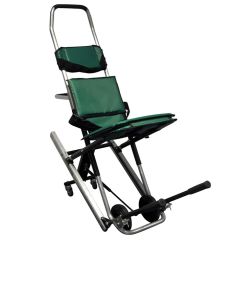
Evacuation chair with compact dimensions. Capacity: 185 kg.

Evacuation chair for transporting disabled or injured persons. Frame material: aluminum. Load capacity: 185 kg.

Battery-powered evacuation chair for climbing and descending stairs quickly. Folded dimensions: 63 x 29 x h 109 cm.
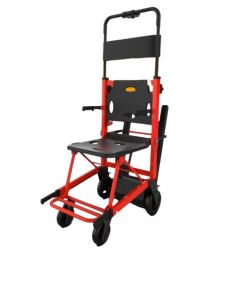
Electric aluminum alloy stair chair with motorized tracks. 180kg capacity, foldable and maneuverable by a single operator on stairs.
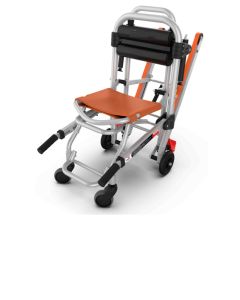
Folding evacuation chair in steel and PVC with self-braking tracks, capacity 180 kg. Ideal for the safe transport of patients on stairs.
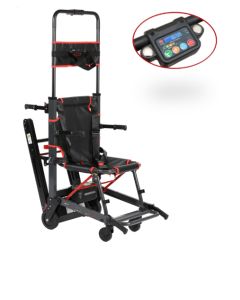
Stair chair for transporting disabled or elderly people. Motorized with battery operation. Capacity: 160 kg.
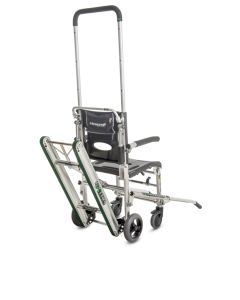
Stair climbing carrying chair in aluminum alloys. Dimensions: W55 x D81/139 x H101 cm
Evacuation carry chairs represent essential tools in rescue and transport operations for people in emergency conditions, both in medical and civil contexts. These devices are designed to ensure maximum safety during the transfer of patients, injured persons, or people with reduced mobility, allowing operators and rescuers to face complex scenarios such as evacuations from stairs, public buildings, or crisis situations. Their constructive versatility allows them to adapt to different types of environments and operational needs, from vertical mobility on narrow stairs to movement on flat surfaces. An effective carry chair must combine structural lightness, high load capacity, and stability, ensuring protection for both the user and the operators involved in the rescue.
Evacuation carry chairs offer decisive advantages in contexts where the timeliness and safety of transport represent critical factors. Firstly, they allow for the movement of people in physical difficulty in a controlled manner, reducing the risk of further injury compared to unstructured manual transport. Their ergonomic configuration distributes weight in a balanced way, protecting the spine of the user and minimizing muscle fatigue during prolonged operations. These devices are particularly valuable in public buildings, healthcare facilities, and civil protection operations, where escape routes can be complicated and spaces are tight.
From an operational point of view, a well-chosen carry chair significantly speeds up evacuation times in case of emergency, allowing one or more people to move a significant load even on irregular terrain or through architectural obstacles. Many modern types include stabilization systems, stair brakes, and ergonomic handles that reduce operator fatigue. Furthermore, the use of lightweight materials such as aluminum combined with steel structures ensures robustness without excessive own weight. In healthcare and care environments, carry chairs preserve the dignity of the evacuated person and allow for a safe position to be maintained during even complex journeys, representing a consolidated standard in evacuation procedures.
The market offers several configurations of carry chairs, each optimized for specific operational scenarios. Two-rear-wheel chairs represent the most compact and maneuverable solution for vertical evacuations on stairs, with a folding structure that facilitates storage and transport in rescue vehicles. These units maintain low weights, often under 12 kg, allowing two operators to handle them easily even in confined spaces. Variants with three or four wheels, on the other hand, prefer movement on flat and horizontal surfaces, offering superior stability and less physical effort for rescuers; their capacity tends to be higher, frequently reaching 150-180 kg. Construction materials vary between chromed steel (greater robustness), aluminum (lightness), and hybrid combinations that seek the best compromise between durability and maneuverability.
A relevant category includes carry chairs convertible into stretchers, which add operational flexibility by allowing the transition from a seated to a horizontal configuration without changing the device. Seats can be made of resistant fabric (nylon, PVC) or with padded components for greater comfort. Some advanced solutions include footrests, adjustable armrests, and intelligent brake systems for stairs, intended for high-level healthcare facilities. Lightweight and folding variants, often referred to as rapid evacuation chairs, prioritize maneuverability and vertical storage, making them ideal for buildings where space is limited. Structures in resistant painted steel, steel-aluminum combinations, and finishes in high-visibility colors (yellow-black, orange) characterize the contemporary construction landscape.
The selection of a carry chair requires a preliminary analysis of the specific operational context. First of all, it is necessary to evaluate the maximum foreseeable load: capacities generally vary between 90 and 180 kg, and over-dimensioning this parameter guarantees an operational safety margin. Secondly, the geography of the building and the planned evacuation methods must guide the choice: environments with narrow stairs and angled corridors favor lightweight and folding two-wheel solutions, while hospital or residential structures with linear paths benefit from four-wheel configurations with greater stability. The device’s own weight represents a factor often underestimated but crucial for the physical sustainability of operators, especially in prolonged interventions or when the evacuation involves multiple floors.
Common errors in choice include purchasing over-specified chairs for simple contexts (increasing costs and complexity) or, conversely, adopting under-dimensioned solutions that expose one to risks of structural failure. A rational selection criterion involves an inventory of the population residing in or visiting the facility, mapping escape routes, and involving operators in maneuverability tests. Compatibility with existing storage systems and the availability of spare parts (seats, wheels, handles) must be considered in the calculation of the total cost of ownership. Sensitive structures such as hospitals, nursing homes, and public offices require certified medical devices (Class I or equivalent according to European regulations), while industrial or civil environments can rely on generic solutions as long as they are robust and well-maintained.
Evacuation carry chairs, especially when used in healthcare contexts, must comply with stringent regulatory frameworks at European and national levels. In Italy, the main reference is the EEC Directive 93/42 on medical devices, which classifies these products as Class I medical devices when intended for the transport of patients in hospital or care settings. This classification entails the obligation of the CE mark, declaration of conformity, and production traceability. The EN 1865 standard specifically dedicated to carry chairs sets detailed construction parameters, including load capacity limits, stability criteria, mechanical resistance, and safety of moving components. Fire safety regulations also require that materials used comply with the fire reaction class according to EN 13501-1, with particular attention to fabric seats.
Beyond clinical settings, carry chairs intended for civil evacuations must respect the Italian Fire Prevention Codes and Civil Protection regulations regarding operational readiness and technical certification. Recurring safety requirements include resistance to concentrated loads (to avoid localized failure), stability in maximum load conditions on surfaces inclined up to 10%, and verification of brake behavior on stairs. Many models are subjected to extreme failure tests with an overload of 25% compared to the nominal capacity to ensure adequate safety margins. Periodic maintenance, visual verification of wear and failure, and recording of interventions represent recurring obligations for public and healthcare facilities, in order to guarantee continuous compliance with regulations.
Explore all products in the category and compare the available solutions to find the one most suitable for your operational context, evaluating load capacity, own weight, configuration, and certifications required by your sector of activity.
Two-rear-wheel chairs are lighter and more maneuverable on stairs, ideal for vertical evacuations, while four-wheel ones offer greater stability on flat surfaces and require less physical effort. The choice depends on the building layout and operational priorities.
For care facilities with an elderly population, a minimum capacity of 150 kg is recommended to ensure adequate safety margins. Devices with an 180 kg capacity are preferable when the age group is high or anthropometric variability is significant.
Yes, if used in a hospital, residential, or care setting, they must be Class I medical devices with the CE mark. Civil or industrial structures can use generic solutions, as long as they are robust and comply with local fire regulations.
The weight varies from 9-10 kg for lightweight folding models up to 20-25 kg for robust four-wheel solutions. Excessive weight fatigues operators and slows down evacuation times; for prolonged vertical evacuations, prefer devices under 12 kg.
Yes, but with specific precautions. Two-wheel chairs with a lightweight structure are optimal for complex stairs. Many models include intelligent brakes and tracks to increase stability. Operator training is essential; buildings with spiral stairs require dedicated solutions.
A well-built carry chair lasts 10-15 years with regular use. Periodic maintenance involves checking wheels, verifying brakes, inspecting the structure, and cleaning the seat. Every 6-12 months, check for failure and lubricate moving joints.
Chromed steel offers maximum robustness but is heavier; aluminum is lightweight but less resistant to prolonged stress; hybrid combinations (steel-aluminum) represent the best compromise, ensuring balanced resistance and maneuverability for most contexts.
Yes, if designed according to EN 1865 standards. The locking mechanism must lock solidly during use, ensuring equivalent rigidity. Check the operation of the release device before each evacuation.
 English
  Italian
 French
 German
 Spanish