
mon-fri 9-13 / 14.30-18.30
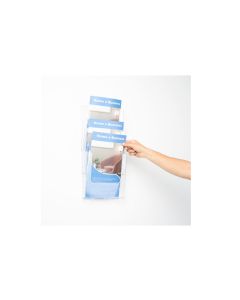
Wall-mounted brochure display rack for hotels, trade fairs. Three A4 pockets. Dimensions: 23.7 x 10.2 x 53.5h cm.
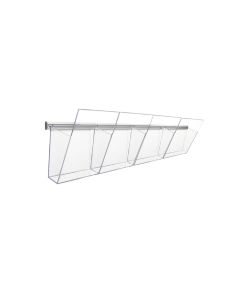
Plexiglass brochure holder display for hotels and trade fairs. Equipped with 4 pockets for A4 sheets. Bar length 100 cm.
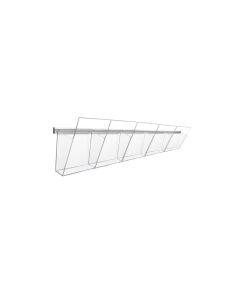
Plexiglass brochure holder display for hotels and trade fairs. Equipped with 5 pockets for A4 format brochures. Bar length: 125 cm.
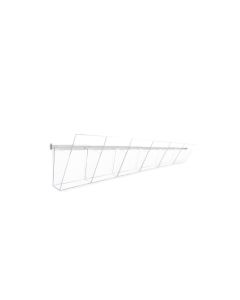
Plexiglass brochure holder for hotels and trade fairs. Equipped with 6 pockets for A5 sheets. Length 106 cm.
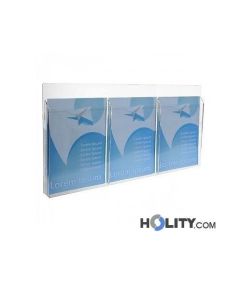
Wall-mounted brochure holder consisting of 3 pockets. Suitable for A4 format brochures. Panel width 72 cm and height 34 cm.
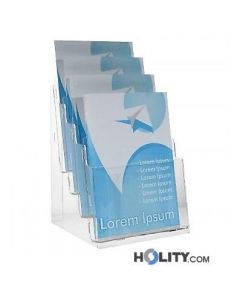
Brochure display with four A4 size pockets. Suitable for tabletop or wall mounting.
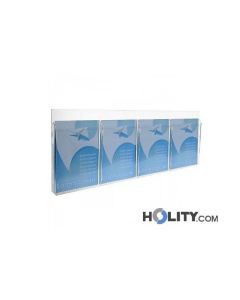
Display for leaflets and advertising material. Composed of 4 pockets for A5 format.
Freestanding metal and aluminum floor brochure holder with 4 transparent styrene pockets for A5 format. Dimensions 30x116 cm.
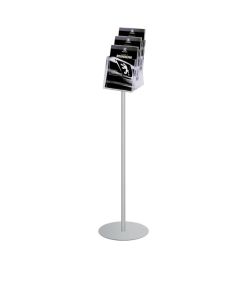
Freestanding metal and aluminum display with 3 transparent A4 pockets in styrene. Dimensions 30x120 cm, ideal for high visibility in public areas.
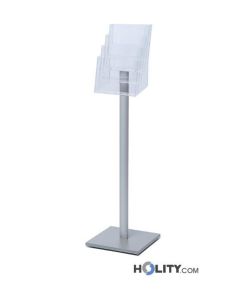
Floor-standing brochure holder with 4 A4-size pockets ideal for hotels, shops and shopping centers. Dimensions: W.33 x H.111.5 x D. 33 cm.
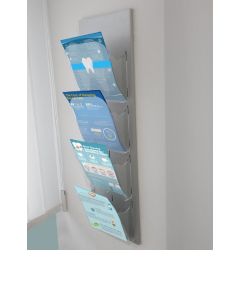
Wall-mounted brochure display holder. With 4 A4-sized pockets. Dimensions: W.27.6 x D.1.6 x h.95 cm.
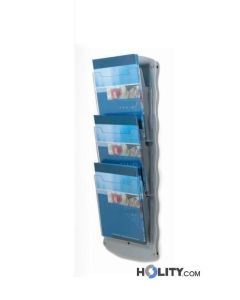
Wall-mounted brochure display stand in painted metal complete with 3 vertical A4 pockets in transparent shockproof plexiglass. Italian product.
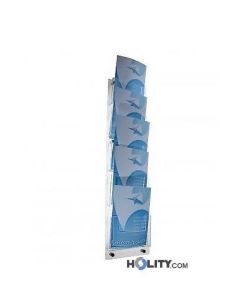
Wall-mounted display for brochures and leaflets. Composed of 5 A4 size pockets. Pocket dimensions: W 22 x 3 x H 15 cm
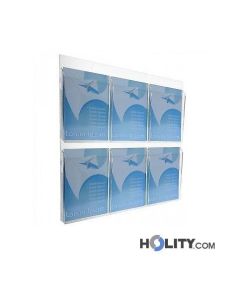
Wall-mounted brochure holder consisting of 6 pockets suitable for holding A4 format brochures.
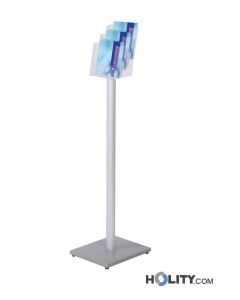
Floor-standing 3-pocket brochure stand for leaflets and maps A5 format. Dimensions: W.33 x D.33 x h.108.50 cm.
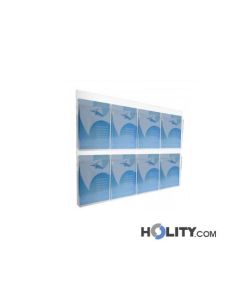
Wall-mounted brochure holder with 8 pockets. Suitable for A5 format brochures, ideal for hotels, museums and accommodation facilities. Dimensions: W.72 x H.52 cm.
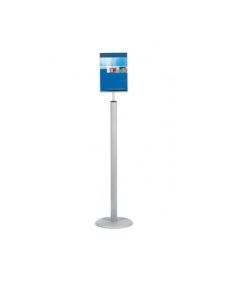
Brochure holder stand equipped with a vertical A4 Plexiglas pocket.
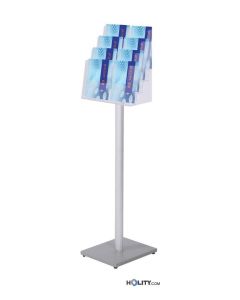
8-pocket brochure display ideal for A5 format leaflets. Dimensions: W 34 x H 114 x D 33 cm.
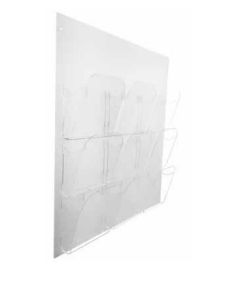
Wall-mounted display for brochures and leaflets. With 9 A4 format pockets. Dimensions: W.77.8 x D.1.6 x h.88 cm
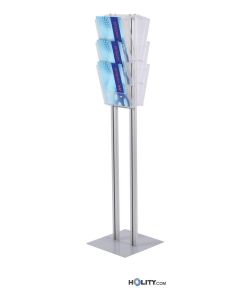
Double-sided brochure holder with 6 pockets for A4 sheets. Dimensions: W35 x H141.50 x D35 cm
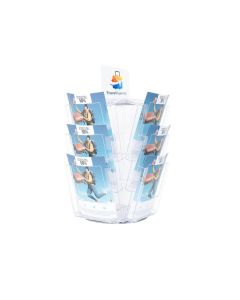
Leaflet display stand equipped with 12 A4-sized pockets. Suitable for counter-top mounting. With rotating base.
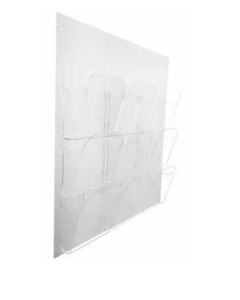
Wall-mounted brochure and leaflet display stand. With 12 A4-sized pockets. Dimensions: W.102.8 x D.1.7 x h.88 cm.
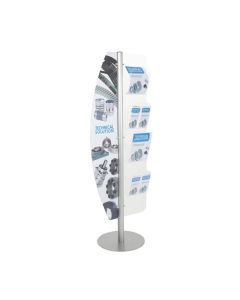
Aluminum floor brochure stand for A4 brochures, height 175 cm. Equipped with 4 pockets with removable dividers and a customizable top header.
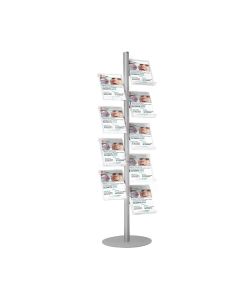
Aluminum and metal brochure display stand for A4 format. Equipped with 9 adjustable micro-perforated sheet metal shelves and a stable circular base.
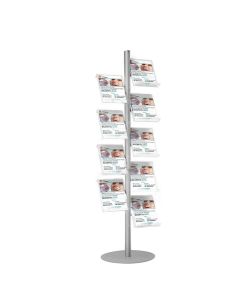
Floor-standing aluminum and metal display for vertical A4 leaflets, H 175.6 cm, with 9 tiltable and adjustable acrylic shelves.
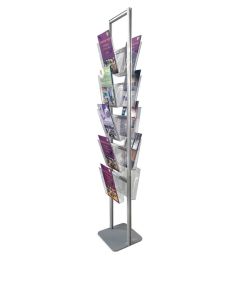
Self-supporting aluminum display with 10 transparent A4 format pockets. Ideal for offices, events and waiting rooms. Dimensions: W. 30 x h. 160 cm.
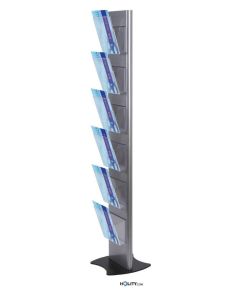
Brochure display in A4 format. Available in single-sided or double-sided versions.
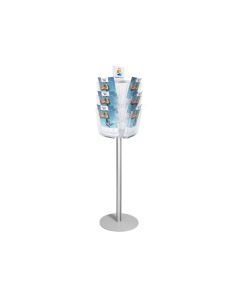
Rotating brochure display stand equipped with 12 A4-sized pockets. Suitable for floor mounting.
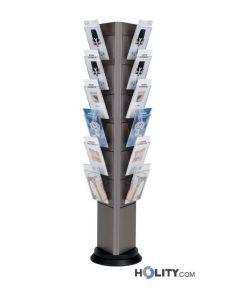
3-sided rotating display with 18 pockets ideal for holding brochures and catalogues in vertical A4 format. Rotating MDF base.
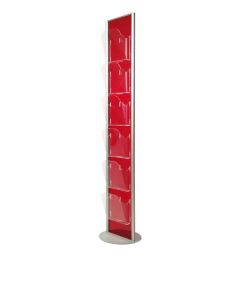
Rotating floor-standing display in aluminum and methacrylate, with 6 A4 pockets convertible to 1/3 A4. Height 181 cm, ideal for lobbies and exhibition areas.
Managing informational material within a hospitality facility, a showroom, or an exhibition pavilion requires display solutions that combine visual order with immediate accessibility. Brochure and leaflet displays are fundamental passive communication tools for presenting catalogs, tourist maps, event programs, and technical sheets professionally, avoiding the cluttered accumulation of paper on counters. A well-positioned display not only facilitates consultation by the user but acts as a true autonomous information point, capable of guiding the guest in discovering the services offered. In contexts such as hotels, museums, and public offices, the quality of the display supports directly reflects the organization's image, elevating the perception of care and attention to communicative detail.
The proposed solutions vary in design, load capacity, and installation methods, adapting to every architectural need. The use of transparent materials such as high-quality plexiglass allows for maximum visibility of the printed graphics without the stand overshadowing the advertising message. At the same time, the use of metal or aluminum structures ensures the necessary stability for floor displays intended for high-traffic areas. In this section, we will explore the different versions of these professional accessories, analyzing how the correct distribution of informational material can improve the front-office staff's workflow and enrich the end customer's informative experience, guaranteeing order, cleanliness, and an impeccable institutional aesthetic.
The utility of a professional display lies in its ability to transform printed communication from a source of clutter into a strategic resource for internal marketing. In a hotel lobby or at a trade fair stand, the visitor's attention span is extremely limited; having brochures and catalogs arranged vertically and hierarchically allows for quick visual scanning and encourages the collection of material. Professional brochure holders are designed with deep, angled pockets that prevent the paper material from folding over or falling forward, a common problem with cheap supports that instantly compromises the decor of the premises. Furthermore, the robustness of the materials ensures that the display maintains its position even under the weight of voluminous catalogs.
In addition to aesthetic functionality, the use of these supports optimizes the management of operational spaces. A wall or counter display frees up valuable surfaces that can be allocated to other activities, ensuring that key information is always at hand without creating disorder. In public facilities and museums, displays serve as an indispensable support for informational signage and the distribution of guides, reducing verbal requests to staff and improving guest autonomy. Choosing a professional product also means investing in durability: anti-scratch treatments and reinforced structures are designed to withstand thousands of collections and daily cleaning operations, ensuring a constant return on investment over time and minimal maintenance.
The variety of displays is divided into three macro-categories, each intended for a specific area of the premises. Counter displays are the most compact, ideal for being placed directly on reception desks or office desks; usually made of monobloc plexiglass, they are available in formats ranging from the classic A4 to small business card holders or DL formats. Floor displays, on the other hand, represent the most scenic and functional solution for entrances and corridors: these "stands" can accommodate numerous compartments on multiple levels, allowing for the distribution of different types of informational material simultaneously, with weighted bases to ensure maximum anti-tip safety in the presence of constant flows of people.
For those who need to totally optimize horizontal surfaces, wall-mounted displays offer a wall-fixing system that transforms empty walls into dynamic information centers. These models can be single-pocket or composed of modular cascade systems, widely used in travel agencies or congress centers to display a wide range of options without occupying floor space. Materials range from crystal-clear transparent plexiglass, which disappears from view letting the colors of the brochures speak for themselves, to anodized aluminum and powder-coated metal, chosen for their superior resistance and modern design. There are also foldable variants, specifically designed for the trade fair sector, which allow for easy transport and rapid assembly in seconds.
The selection of the ideal support must start with an analysis of the format and weight of the informational material to be distributed. If the catalog is heavy and composed of many pages, it is essential to opt for metal or high-thickness plexiglass displays, with pockets equipped with structural reinforcements to avoid lateral cracks. Conversely, for simple flyers or light leaflets, the transparency and lightness of a polystyrene counter leaflet holder may be sufficient. It is fundamental to evaluate visibility: in high-traffic areas, a floor display with staggered pockets allows for showing the header of each brochure, making the content immediately identifiable without the user having to touch every single piece to find what they are looking for.
Another decision criterion concerns mobility: if the need is to frequently move the information point (for example for temporary setups in meeting rooms), models equipped with wheels or foldable versions are the most rational choice. One must also consider chromatic harmony with the furniture: a display with a wooden upright is perfect for hotels with a classic taste or boutiques, while the essential lines of satin aluminum integrate better in executive offices or hi-tech contexts. A common mistake is underestimating the importance of base stability; in spaces open to the public, an unstable display is not only unprofessional but represents a potential tripping hazard. Always check that the display capacity is proportional to the expected replenishment frequency, to avoid the pockets remaining empty for too long during the day.
The installation of displays in public spaces is subject to safety considerations related to stability and the management of escape routes. In contexts such as hotels and congress centers, floor displays must not obstruct passage or constitute obstacles along evacuation routes; for this reason, professional models feature rounded profiles and flat bases that minimize the risk of accidental tripping. From the point of view of material safety, the plexiglass used must be of a technical type, impact-resistant (anti-shatter) to prevent sharp fragments dangerous for guests and staff in the event of breakage. In premises subject to strict fire safety regulations, it is preferable to opt for metal displays or materials certified for low smoke emission in case of combustion.
Another regulatory aspect concerns accessibility: displays should be positioned at a height that allows easy use even by people with motor disabilities or in wheelchairs, ensuring that the highest pockets are not unreachable. In the museum or trade fair field, stability is verified according to load standards that ensure the display does not tip over even if accidentally bumped. Compliance with product safety directives ensures that there are no sharp edges or protruding metal parts that could cause injury. Purchasing professional equipment guarantees compliance with these requirements, protecting the manager from civil liability and ensuring that the information service is provided in full compliance with the international safety standards set for high-traffic locations.
Explore all the products in the category and compare the available solutions to find the one most suitable for your operational context.
Plexiglass is a more premium material, characterized by superior crystal clarity and greater resistance to impacts and scratches, ideal for hotel receptions and prestigious offices. Polystyrene is a more economical and lightweight solution, suitable for temporary or promotional uses where maximum aesthetic durability is not the primary requirement.
The capacity depends on the depth of the pocket and the thickness of the brochure paper. On average, a professional pocket with a depth of 3-4 cm can hold about 50-70 single leaflets or 15-20 bulkier catalogs. It is important not to overload the pocket to allow the user to easily slide out the informational material without damaging it.
Installation is generally very simple and involves the use of standard screws and wall plugs. Many professional models are equipped with pre-drilled holes on the back or mounting rails that allow for precise and secure positioning. For plasterboard walls, it is recommended to use specific anchors to ensure that the weight of the catalogs does not compromise the support's hold.
Yes, specific versions are available equipped with a self-closing lid or seals that protect the paper material from rain and humidity. These models are ideal for restaurant menus at entrances or real estate agencies. However, for standard floor displays, use is primarily recommended in indoor environments or covered areas to preserve the integrity of the displayed material.
Many metal floor displays or those with large front panels offer the possibility of applying custom graphics, stickers, or logos via screen printing. This customization transforms the accessory into a powerful branding tool, making the information point perfectly coordinated with the corporate identity of the hospitality facility or company.
To maintain the brilliance of the plexiglass, it is essential to use a soft microfiber cloth and specific anti-static detergents or simple water with neutral soap. You must absolutely avoid products containing alcohol, ammonia, or aggressive solvents, as they can cause surface micro-cracking and permanently cloud the transparent material.
 English
  Italian
 French
 German
 Spanish