
mon-fri 9-13 / 14.30-18.30

Cleaning trolley for hospitals, RSOs, nursing homes, emergency rooms. Recycled plastic.
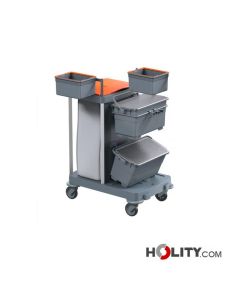
RE USE hospital cleaning trolley made of certified recycled plastic.
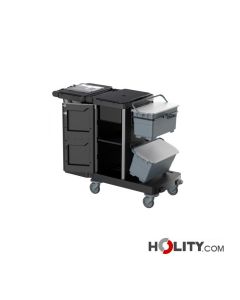
Cleaning trolley for RSO hospitals, emergency rooms. Re-use in high-quality recycled plastic.
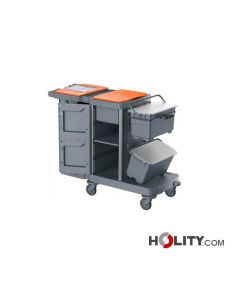
Hospital cleaning trolley. Dimensions: W.121xD.62xH.107 cm.
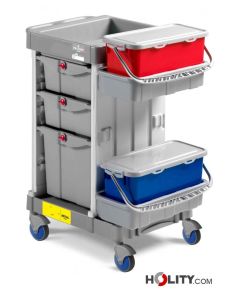
Hospital cleaning trolley for magnetic resonance areas. Free of metallic components.
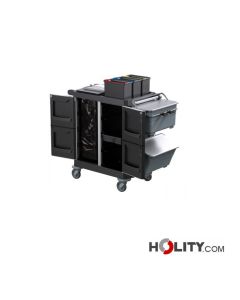
Hospital cleaning trolley in recycled plastic. Dimensions: W.130xD.62xH.107 cm

Cleaning trolley for hospitals, clinics, nursing homes, made of quality recycled plastic. With storage trays.
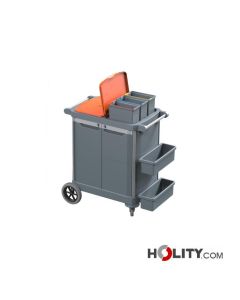
Hospital cleaning trolley. Quality recycled plastic. With storage trays.
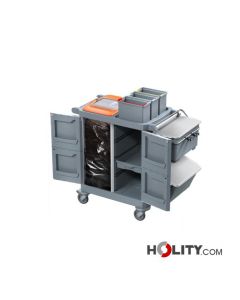
Hospital cleaning trolley made of quality recycled plastic
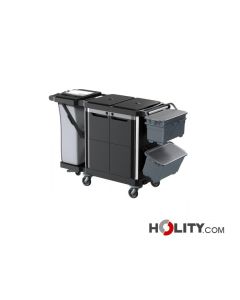
Hospital cleaning trolley made of quality recycled plastic.

Hospital cleaning trolley with storage trays, buckets and bag holder (bag not included).

Hospital cleaning trolley in antibacterial plastic. Dimensions 118x66x112 cm
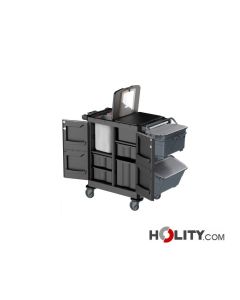
Hospital cleaning trolley made of quality recycled plastic. Dimensions: W.144xD.62xH.107 cm
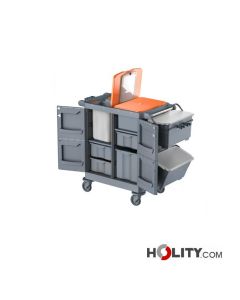
Cleaning trolley for hospitals, first aid, in quality recycled plastic
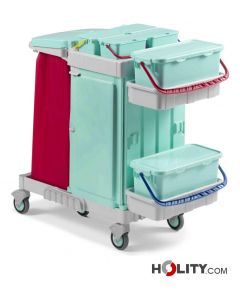
Hospital cleaning trolley in antibacterial plastic with closing door and removable key.
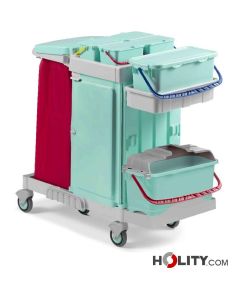
Cleaning trolley for hospital environments. Dimensions: W. 112 x D. 66 x h. 118 cm.
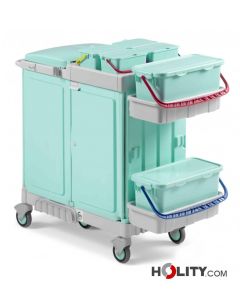
Hospital cleaning trolley in antibacterial plastic, with 150 lt closed bag holder with divider
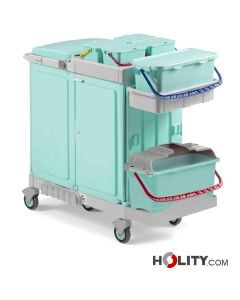
Cleaning trolley for medical offices. Dimensions: W. 112 x D. 66 x h.120 cm.
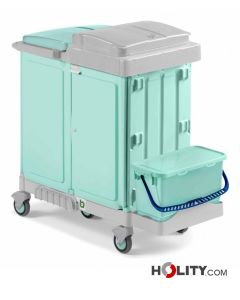
Cleaning trolley for hospitals, clinics and nursing homes, in antibacterial plastic. Dimensions: W.120xD.66xH.110 cm
Hospital cleaning trolleys represent an essential tool in the daily management of healthcare environments, from operating rooms to clinics, from inpatient wards to emergency rooms. They are equipment specifically designed to facilitate the movement of cleaning materials and waste, while ensuring compliance with the health and hygiene regulations that characterize medical contexts. The choice of the right trolley directly affects the quality of the sanitation service and the safety of the staff involved. These tools must combine functionality, resistance, and compliance with international regulations, operating effectively in environments where hygiene requirements are a priority and non-negotiable.
A well-designed hospital cleaning trolley significantly simplifies the workflows of cleaning and sanitation staff, reducing movement and optimizing work times. The ergonomic structure and multiple compartments allow for the organized and easily accessible arrangement of tools, detergents, waste bags, and specific materials. This not only speeds up cleaning operations but also contributes to minimizing the risk of cross-contamination, as each category of material remains separate and protected. In sensitive environments such as operating rooms, intensive care units, or isolation wards, using trolleys that comply with regulations allows for maintaining extremely high hygiene standards, preventing the spread of pathogens and hospital-acquired infections.
Modern trolleys made of recycled plastic or antibacterial polypropylene offer numerous advantages: they are resistant to corrosion caused by aggressive detergents, easy to disinfect, lightweight yet robust, and suitable for withstanding sterilization cycles when necessary. Furthermore, the mobility guaranteed by high-quality wheels allows for easy navigation in cramped spaces and high-traffic areas typical of hospitals. The availability of models with integrated bag holders, storage trays, and closed compartments allows for customizing the tool based on the specific needs of each department, whether it be a hospital, private clinic, nursing home, or medical practice.
The range of hospital cleaning trolleys includes various configurations, each designed to meet specific operational needs. Basic models in recycled plastic guarantee an excellent balance between cost and performance, making them ideal for standard departments such as inpatient wards and outpatient clinics. These trolleys usually have compact dimensions (approximately 120×60×107 cm), which facilitates movement in narrow environments, and incorporate trays and storage compartments to organize cleaning materials. Antibacterial polypropylene models, on the other hand, represent the most suitable solution for critical environments, as the material itself inhibits bacterial proliferation on the surface. There are also specialized trolleys for MRI areas, completely free of metal components to avoid interference with imaging systems. Some models include 150-liter bag holders, particularly useful in contexts with a high volume of waste, while others are equipped with locking doors to protect sensitive materials or special waste.
For facilities requiring the movement of heavy loads, trolleys with electric motorization are available, which eliminate physical effort and reduce operator fatigue. These models guarantee operational autonomy even in large contexts such as large hospitals or complex healthcare facilities. Dimensional variants range from compact solutions (approximately 112×58×114 cm) designed for limited spaces, to more capable models with lengths of up to 153 cm, ideal for departments where it is necessary to transport significant quantities of materials. The choice of type must consider the environment of use, the daily workload, and the specific regulations of the sector in which the trolley will operate.
Selecting the most appropriate trolley requires a preliminary assessment of the environment of use and the frequency of use. One of the fundamental questions concerns the context: a trolley intended for general inpatient wards has different requirements from one designed for the operating room or for isolation areas. If the environment involves the frequent use of aggressive detergents or sterilization cycles, an antibacterial plastic trolley proves to be the most suitable choice, as it resists chemical treatments and disinfecting agents better. Another discriminating criterion is represented by the available dimensions: narrow spaces require compact models (120×60 cm), while large departments can benefit from larger trolleys to reduce the frequency of replenishment. The presence of an integrated bag holder becomes essential if the area generates considerable volumes of waste, while storage trays are fundamental for organizing small tools and diverse materials.
A common mistake is underestimating the importance of construction quality and materials: low-quality trolleys wear out quickly, compromising hygiene and requiring frequent replacements. It is important to check that the wheels are silent (a critical aspect in sensitive environments), robust, and easily replaceable. Compliance with European regulations must be a priority: certifications such as those relating to the safety of materials in contact with sanitized surfaces ensure that the trolley will not contaminate the environment. For MRI areas, verifying the total absence of metals is non-negotiable. If the hospital or healthcare facility operates with limited budgets, evaluating good quality used trolleys or basic models in recycled plastic can represent an economical solution without sacrificing reliability. Consulting the cleaning staff, who know the real daily operational needs, allows for more informed decisions.
In Italy and the European Union, hospital trolleys must comply with specific regulations that guarantee hygienic safety and the protection of workers. The UNI EN 601:2020 standard establishes safety requirements for hospital beds and, by extension, operational trolleys must respect similar principles. The materials used must be biocompatible, resistant to disinfectants, and easy to clean, according to the indications of the ISO 10993 standard relating to materials in contact with biological tissues. The manual handling of loads is regulated by Legislative Decree 81/2008, which mandates the use of ergonomic equipment to prevent back and lumbar injuries to staff. This means that trolleys must have adjustable heights when possible and structures that facilitate pushing without excessive effort. For areas requiring sterile conditions, such as operating rooms, trolleys must be able to undergo sterilization cycles without deterioration, which is why antibacterial plastic is the preferred solution over metal, which can rust or cause chemical reactions.
Sterilization and disinfection represent fundamental aspects: trolleys must be designed without sharp corners or inaccessible spaces where residues or bacteria can accumulate. Surfaces must be smooth, continuous, and free of cracks. In the context of HACCP standards applied to healthcare services, the traceability and maintenance of trolleys are part of hygiene quality control plans. The CE (European Community) also requires that manufacturers of medical equipment provide complete technical documentation, including material safety data sheets and certificates of conformity. For public facilities, the acquisition of trolleys must also comply with public procurement regulations and, frequently, the possibility of periodic disinfestation is required. Some trolleys included in the catalog feature additional certifications for use in high biological risk contexts, guaranteeing even more rigorous standards.
Explore all the products in the category and compare the available solutions to find the one most suitable for your operational context. Each trolley in our catalog has been selected according to criteria of quality, regulatory compliance, and responsiveness to the real needs of Italian and European healthcare facilities.
Recycled plastic offers a good compromise between cost and durability, making it suitable for standard contexts. Antibacterial polypropylene naturally inhibits bacterial proliferation on the surface, making it preferable for operating rooms, isolation wards, and high biological risk environments. Both resist aggressive detergents, but polypropylene guarantees superior performance in more critical environments.
Yes. Trolleys designed for hospitals and healthcare departments are also fully suitable for private clinics, dental offices, medical clinics, and smaller inpatient facilities. The choice of type depends on the daily workload and the areas involved: more compact models are often sufficient for medium-sized contexts.
The integrated bag holder eliminates the need for a separate waste trolley, centralizing the handling of waste and contaminated materials. A capacity of up to 150 liters allows for reducing the frequency of emptying, improving operational efficiency. Furthermore, many models include a divider that facilitates the separation of special waste.
Most trolleys have a width of 58-66 cm, which allows for easy passage through standard European doors (80-90 cm). The most compact models (approximately 112 cm in length) are optimal for navigating narrow corridors and complex environments. Before purchasing, check the specific dimensions of the space where the trolley will operate.
Plastic or polypropylene trolleys can undergo chemical disinfection (immersion in disinfectant solutions) or low-temperature steam. They are not suitable for high-temperature autoclaves (above 121°C) as the plastic could deteriorate. Consult the manufacturer’s instructions for recommended sterilization cycles and compatible detergents.
Yes. We have trolleys specifically designed for MRI areas that are completely free of metal parts. This feature is fundamental to avoid interference with the machine’s magnetic field and ensure patient safety during diagnostic examinations.
Times vary based on warehouse availability and the requested configuration. Basic models in stock are usually shipped within 5-10 business days. Customized configurations or bulk orders may require longer times; consult the specific availability of each product in the catalog.
Motorized trolleys require periodic checks of the battery, motor, and transmission. Batteries must be recharged regularly and replaced after 2-3 years of intense use. Preventive maintenance significantly extends the life of the equipment and reduces unexpected repair costs.
 English
  Italian
 French
 German
 Spanish