
mon-fri 9-13 / 14.30-18.30
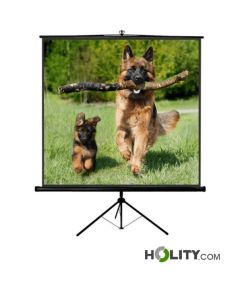
Projection screen for high-quality video projections. Dimensions: 160 x 160 cm.
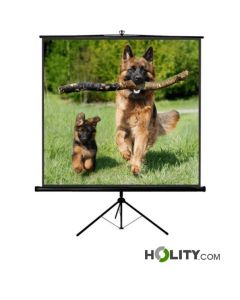
Portable projection screen. Dimensions: 180 x 180 cm.
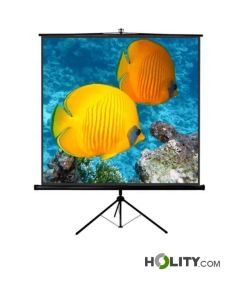
Projection screen with tripod. Dimensions: 200 x 200 cm.
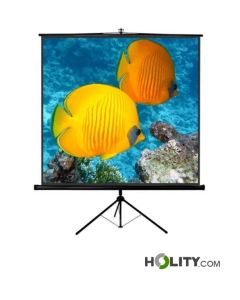
Tripod projection screen. Dimensions: 240 x 240 cm.

Projection screen with open rear housing, wall/ceiling mounting. Maximum dimensions: 1860 x 1268 mm.

Projection screen for conference rooms. Maximum dimensions: 2,260 x 1,518 mm. End cap finish: wrinkled white.

Roller screen with open case, ideal for wall/ceiling. Dimensions: 2,660 x 1,768 mm.
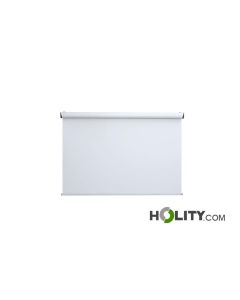
Electric roll-up projection screen, matte white with rear drop. Maximum overall dimensions 2,070 x 1,502 mm.
Robust motorized screen, easy to install. Maximum dimensions: 3,070x2,157 mm. Projection area: 2,900 mm.
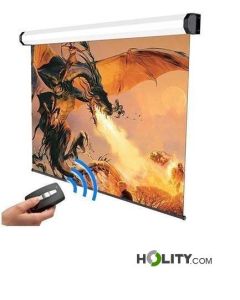
Projection screen for meeting rooms. Dimensions: 350 x h. 197 cm.
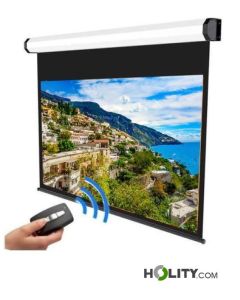
Meeting room projection screen. Dimensions: 350 x 252 cm.

Professional motorized screen. Maximum dimensions: 4,570 x 3,094 mm. Projection area: 4,400 mm.
Projection screens represent a versatile and professional solution for displaying content in diverse environments, from conference rooms to theaters, from corporate presentations to educational spaces. The choice of the correct type depends on factors such as the size of the available space, lighting conditions, frequency of use, and the type of installation required. A quality screen ensures a sharp, faithful, and distortion-free projection, which are fundamental elements for effectively communicating complex visual messages. The available range includes lightweight portable models, wall-mounted screens with tripods, motorized roll-up solutions, and professional fabrics for large surfaces, each designed to meet specific needs of the hospitality, educational, healthcare, and industrial sectors.
A professional projection screen radically transforms the quality of visual communication in any operational context. Unlike direct projection onto a wall or an improvised surface, a dedicated screen guarantees superior color rendering, optimal contrast, and the absence of unwanted effects such as the hotspot (the concentrated bright spot in the center of the image). This advantage is particularly evident during corporate presentations, training sessions, meetings with clients, or during public events. The treated surfaces of professional screens also promote a uniform distribution of light over a wide viewing angle, allowing a large audience to perceive the image with consistent quality regardless of their viewing position. For environments with lighting that is difficult to control completely, the use of a specific fabric allows for the compensation of unwanted light sources while still maintaining good definition of the projected image.
The installation of a projection screen also elevates the aesthetic appearance and professional perception of a space. While a visible mounted projector may appear bulky or inelegant, motorized solutions allow the element to be completely hidden when not in use, returning a clean and tidy visual line to the room. This is particularly appreciated in environments where space is precious or where aesthetics contribute to the overall experience, such as in high-end hotels, prestigious conference rooms, or showrooms. The variety of available formats also allows for adaptation to any wall or ceiling geometry, ensuring a harmonious integration of the equipment into the existing architectural context.
From a practical point of view, projection screens simplify the technical management of multifunctional spaces. Tripod solutions, for example, allow for the rapid setup of a space for an impromptu presentation without the need for masonry work or permanent installations, making them ideal for schools, training centers, and environments where the configuration changes frequently. Motorized models with remote control or integration with automation systems instead offer intuitive control, reducing setup times and minimizing the involvement of technical staff. For theaters and cinemas, professional screens with specialized fabrics guarantee faithful color rendering and impeccable flatness, decisive elements for the quality of cinematographic projection. The durability of the finishes and resistance to repeated mechanical stress also ensure a long operational life, reducing maintenance costs in the medium-to-long term.
The range of projection screens is divided into several construction categories, each responding to specific installation and use logic. Portable screens with tripods represent the most flexible and versatile solution, characterized by a lightweight structure in painted steel with non-slip feet and a square-section support tube that allows the fabric to be positioned at the desired height. These models are available in different sizes, from 160×160 cm for small environments up to 350×252 cm for larger spaces, and are installed in a few minutes without requiring any intervention on the structure. The fabric is made of professional-quality PVC and can be white, gray, perforated, or rear-projection depending on specific needs. They are particularly appreciated in educational contexts, during roadshows and traveling presentations, and in all cases where mobility is a fundamental requirement.
Motorized screens represent the most sophisticated and permanent solution. Characterized by an elegantly shaped anodized aluminum casing, these models integrate an electric motor that allows the fabric to be lowered from the ceiling or raised from below with a simple click or voice command. The fabric remains completely hidden inside the casing when not in use, ensuring a tidy and professional appearance to the environment. They are available in multiple sizes, from compact models for meeting rooms to professional ones with a projection area exceeding 4 meters. Installation requires more significant structural interventions, but once positioned, these screens offer a superior user experience and integrate perfectly with home automation systems. Particularly suitable for theaters, cinemas, high-level conference rooms, and attics, motorized screens represent a long-term investment that significantly elevates the qualitative perception of the space.
Fabric variants represent a determining aspect of performance. Matte white fabric guarantees excellent flatness and a total absence of the hotspot effect, making it ideal in environments where ambient light is controllable and where natural color rendering is preferred. White fabric with black backing is instead recommended for environments where uncontrolled light sources might come from behind the screen, as the dark rear surface absorbs stray light. Gray fabric, with higher gain, is suitable for spaces where light control is more challenging and where a more pronounced contrast is desired. Perforated, micro-perforated, and rear-projection fabrics represent specialized solutions for movie theaters, high-profile installations, and applications where it is necessary to hide acoustic diffusers or integrate rear-projected video systems. All these materials are subjected to strict quality standards to ensure a surface free of ripples, stains, or manufacturing defects that could compromise the sharpness of the projected image.
Selecting the most suitable projection screen requires a preliminary evaluation of various technical and logistical parameters. The first criterion is to determine the physical dimensions available in the space and the projection distance, which is the distance between the projector and the projection surface. This measurement is critical because most projectors have a fixed or variable focal ratio within limited ranges: a screen that is oversized relative to the projection capacity would result in low-brightness or not fully filled images, while an undersized one would create black areas at the edges. The width of the screen should cover at least 40-60% of the field of view of the most distant viewer to ensure optimal visual engagement. The second fundamental criterion is the control of ambient light: environments with unshielded windows require gray or black-backed fabrics to maintain contrast even in sub-optimal lighting conditions, while fully controllable rooms can benefit from the superior color rendering of standard white fabric. The type of installation also deeply influences the choice: permanent spaces such as corporate conference rooms or theaters justify investment in motorized solutions, while educational environments or multi-use spaces benefit from the flexibility of tripod models.
Common errors to avoid include underestimating setup and teardown times: an apparently attractive portable model for its price could prove inconvenient if it must be assembled and disassembled frequently on high-traffic days. Choosing a fabric inadequate for the actual lighting conditions easily leads to disappointment in the perceived image quality, even with high-end projectors. A critical factor often overlooked is the quality of the fabric itself: cheap surfaces can present ripples, color inhomogeneity, or accelerated degradation with exposure to UV light, rapidly compromising the visual yield. For permanent installations, it is worth investing in certified professional fabrics, which guarantee superior flatness and a ten-year lifespan. Furthermore, the ability of the casing to completely contain the steel fabric without residual folds is decisive: cheap models often do not guarantee this feature, leaving the edges of the cloth visible even when retracted. Finally, always consider the acoustic aspect: perforated and micro-perforated fabrics are designed to allow sound to pass through, an essential element if the screen must mask acoustic diffusers or if the audio must come from behind the projection surface.
Projection screens, although not equated to safety devices in the strict sense, must still meet internationally recognized quality standards. The ISO 12800 standard defines the criteria for measuring luminous gain (brightness) and the acceptable viewing angle for projection surfaces, ensuring that the visual yield remains consistent even from extreme side angles. This compliance is particularly relevant in crowded auditoriums where spectators are not always positioned directly in front of the screen. For the materials used, the European standard EN 13823 regulates the use of hazardous substances and compliance with environmental standards, an aspect particularly important for PVC fabrics and for aluminum casing coatings. Motorized screens must also comply with the EU 2014/35/EU directive for low-voltage equipment, ensuring the absence of hazards arising from electrical components and appropriate grounding.
From a practical point of view, all professional screens should be accompanied by certificates of origin and declarations of conformity attesting to the origin of the materials and the absence of harmful substances. This is particularly important for installations in sensitive environments such as healthcare facilities or schools, where hygiene and safety regulations are even more rigorous. Tripod screens must feature stable, non-slip feet, complying with accident prevention safety standards, as they represent a potential tipping hazard if subjected to accidental impacts. For motorized solutions, compliance with remote control systems and integration with home automation protocols must guarantee that commands are intuitive and that sudden blocking or malfunction situations are not possible. Finally, always consider that permanent installations in public environments may require additional structural evaluations regarding the allowable load of the wall or ceiling, an element that should be verified in advance with a specialized technician before acquisition.
Explore all products in the category and compare the available solutions to find the one best suited to your operational context. The choice of type, size, and fabric represents the first step towards quality installations and guaranteed longevity.
The white fabric offers a natural and complete color rendering, ideal for environments with controlled lighting. The gray fabric has a higher gain and greater absorption of ambient light, suitable for spaces with uncontrollable light sources, guaranteeing superior contrast even in sub-optimal conditions.
Measure the distance between the projector and the projection wall, consult the focal ratio of your projector, and verify that the width of the screen covers at least 40-60% of the field of view of the most distant spectators. Oversized screens will produce low-brightness images, while undersized ones will create black areas at the edges.
 English
  Italian
 French
 German
 Spanish