
mon-fri 9-13 / 14.30-18.30
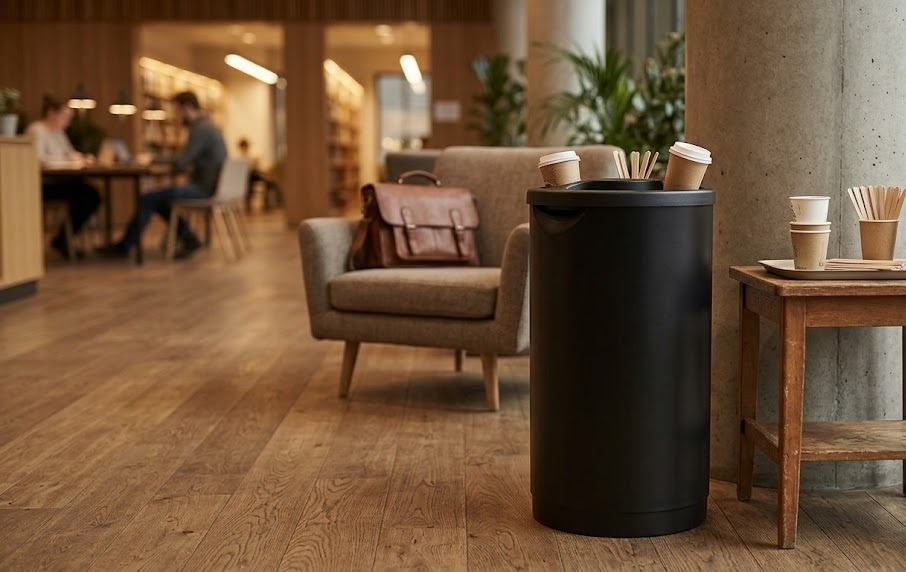
The efficiency of a break area, a company break room, or a coffee corner inevitably depends on the logistical management of the waste produced. Choosing the right cup and stirrer bins isn't just about purchasing a bin: it's an organizational intervention aimed at maintaining the decorum of the environment, halving clutter, and facilitating the work of cleaning staff. In high-traffic environments such as hospitals, clinics, large offices, or waiting rooms, the untidy accumulation of plastic or paper cups quickly saturates standard waste bins, creating visual clutter and constant overflows. Engineered stacking bins address the root of the problem, channeling disposable tableware into neat columns that reduce spatial clutter by up to 60-70%. This purchasing guide will help you navigate the Holity.co.uk online catalogue, analysing the hole architectures, litre capacities and structural materials to configure the perfect accessory for your common areas.
The technological heart of these devices lies in the shape of the lid and the internal drip ducts, elements that differentiate the solutions based on the type of drinks dispensed and the expected waste volume.
These represent the excellent solution for optimising volume. The lid features a series of calibrated holes (usually 4, 6 or 7 openings) from which internal guide tubes in PVC or metal descend.
Systems designed for break areas that offer multiple dispensing options (e.g. ristretto espresso coffee, long American coffee, water or cold drinks), characterised by upper holes of different sizes (from 35mm up to 80mm).
To integrate a collector that does not saturate by mid-morning and that harmonises with the design of the reception, it is essential to base the research on the correct geometric and volumetric parameters.
The volume of the cylinder or parallelepiped defines the maintenance cycles required by cleaning staff:
The external casing must resist impacts from cleaning trolleys and prevent microbiological proliferation resulting from sugary residues from drinks. epoxy powder-coated steel (often in black, RAL grey or silver) is the market standard: it does not absorb coffee stains, can be cleaned instantly with a damp microfibre cloth and is structurally heavy, preventing the bin from accidentally tipping over. For facilities with strict hygiene protocols (medical clinics, food industries) the use of satin or polished stainless steel (Inox) is strongly recommended, as it is totally inert to rust and compatible with the most aggressive professional sanitizers.
Emptying a tower containing 1000 nested cups can be burdensome if the bin design is not ergonomic. The best professional models have a removable body upwards or opening side doors: this allows the operator to remove the collection bag (anchored internally by bag tensioning rings) without having to lift the weight from the ground, simply by removing the plastic casing sideways and avoiding strain on the spine.
Small Offices, Notary's Offices and Agencies: The use of 60-litre cylindrical containers in satin-finish steel with 4 holes is recommended. The footprint is less than 40 cm in diameter, allowing the bin to be fitted into the blind corner next to the bar cabinet without altering the elegance of the furnishings.
Vending Hubs, Universities and Waiting Rooms: The preferred choice falls on square or rectangular models (e.g. 38x38 cm) with a high capacity (80-100 litres) equipped with 6 or 7 differentiated holes. The square shapes allow the modules to be perfectly placed alongside the walls of large vending machines, creating a continuous equipped wall.
Healthcare Facilities and Hospital Canteens: It is mandatory to configure the purchase towards AISI 304 stainless steel bins, possibly equipped with removable hinged lids for deep sanitization in an industrial dishwasher. The clear and unmistakable differentiation between the hole for plastic (cups) and the hole for solid/organic waste (wooden stirrers and sugar) is essential to comply with the hospital's strict waste separation protocols.
Prevent clutter, halve the volume of plastic waste and improve the perception of hygiene in your refreshment areas. In the Holity.co.uk catalog you will find a professional and certified selection of containers for cups and stirrers, developed to withstand intensive public use and to harmonize with modern vending machines.
Use our navigation filters to select the number of holes suitable for your disposable tableware, set the liter volume required for your users and define the most suitable material (stainless steel or black/grey painted). Request a personalized quote today: our technical office is at your disposal to provide you with detailed product sheets and targeted advice for optimizing your vending department.
How does internal tubular stacking prevent cup columns from blocking and asymmetrical crushing?
Professional models equipped with "stacking tubes" (internal pipes) do more than simply guide the fall of the cup. The internal diameter of the PVC or metal cylinder is calibrated to be just a few millimeters larger than the maximum diameter of the rim (spout) of the cup. This tight tolerance guides the cup in a perfectly vertical fall, forcing it to nest centrally in the cup below. This process prevents the cups from getting skewed or crushed diagonally, ensuring that the stack grows compactly and maximizing the compaction density to increase the autonomy of the basket tenfold.
What measures isolate liquid residues (coffee grounds) inside the bag without degrading the container's steel base?
Discarded disposable cups inevitably contain sugary or liquid residues that tend to drip to the bottom of the bag due to gravity, triggering fermentation processes and unpleasant odors. High-end bins integrate an internal tray or a watertight polypropylene (PP) or ABS drip tray into the base of the metal drum. Should the polyethylene collection bag develop micro-cracks due to the pressure of the stacked column, this containment tray collects the spills, preventing coffee acids from attacking the bin's steel base or irreparably staining the office flooring.
How is the variable hole tolerance calculated to manage the introduction of cups for hot and cold drinks without jamming?
Italian espresso cups typically have a rim (flange) diameter between 57 mm and 62 mm, while cups for cold drinks or American coffee reach 70-80 mm. Variable-bore containers use interchangeable top flanges or flared stepped openings. The flared opening "guides" the small glass towards the center, stabilizing it before it falls, while allowing the large glass to pass through the opening without creating friction. It is essential to check the bin's technical data sheet to ensure that the maximum diameter (e.g. 85 mm) accommodates the dishes supplied by the company.
How do metal crown bag tensioning systems prevent the polyethylene from collapsing under the weight of the column of 1600 cups?
A stack of 1600 nested cups (with their liquid dregs) can generate a considerable vertical load. If the garbage bag were to rest only on the edges of the drum, the weight would inevitably cause it to collapse inside, thwarting sorting. Professional bins are equipped with bag-holding rings made of steel rod or snap-on crowns. The edge of the bag is folded externally onto the ring and locked under tension; the ring rests firmly on slots or shelves welded internally to the body of the bin, placing all the static weight of the garbage on the steel frame and not on the fragile thickness of the plastic bag.
Why is the watertight compartmentalization of the scoop duct such a fundamental requirement to avoid compromising the stacking cycle?
If wooden or plastic scoops were tossed into the same compartment as glasses, they would become interposed transversely between one glass and another as they fall, physically blocking nesting and saturating the bin volume in a matter of minutes. For this reason, professional collectors have small diameter central holes (usually 30-40 mm) that convey only the long elements (sticks) into a separate blind tube or an independent collection bag (internal mini-tank). This fluid-dynamic segregation ensures that the sticks are deposited in parallel and do not hinder the stacking geometry of the cups in any way.
What regulations require the use of specific and differentiated containers for vending areas within the Public Administration (CAM)?
The organization of refreshment areas in the Public Administration must comply with the Minimum Environmental Criteria (CAM) for waste management. The regulations require that collection flows be clearly pre-differentiated at source to maximize the percentage sent for recycling and minimize unsorted waste. Using mixed containers for the coffee area nullifies the recovery of polystyrene or polythene-coated paper from cups, polluting the fraction. The installation of containers with dedicated holes requires separate waste collection (nudging), forcing users to mechanically separate the cup (plastic/paper) from the shovel (wood/unsorted), ensuring compliance with the Authority's environmental KPIs.
 English
  Italian
 French
 German
 Spanish