
mon-fri 9-13 / 14.30-18.30
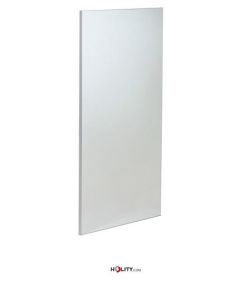
Smooth mirror for rehabilitation centers. Dimensions: W. 80 x h. 120 cm.
Smooth mirror for postural exercises. Thickness: 4 mm. Dimensions: 100 x h. 170 cm.
Plain physiotherapy mirror. Thickness: 4 mm. Dimensions: 100 x h. 200 cm.
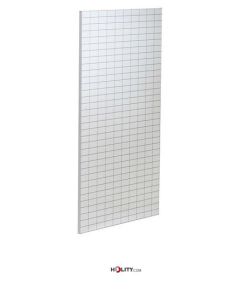
Checkered mirror for rehabilitation exercises. Dimensions: W. 80 x h. 120 cm.
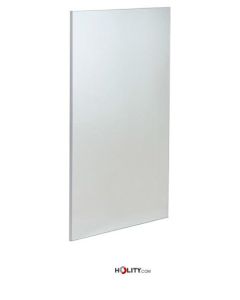
Physiotherapy mirror with smooth surface. Dimensions: W. 100 x h. 170 cm.
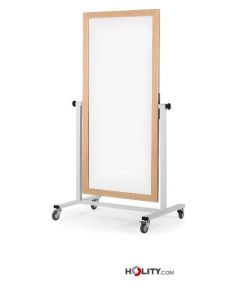
Mobile hinged mirror for physiotherapy. Dimensions: 835 x 610 x 1700 mm. Smooth surface.
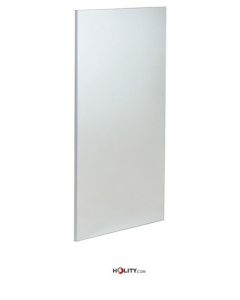
Smooth posture mirror. Dimensions: W. 100 x h. 200 cm.
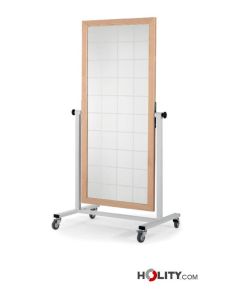
Posture mirror with squared surface. Dimensions: 835 x 610 x 1700 mm.
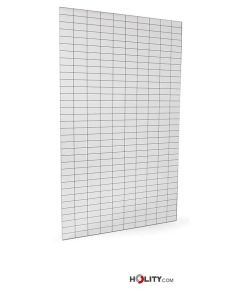
Grid-marked postural mirror for physiotherapy and rehabilitation centers. Thickness: 4 mm. Dimensions: 100 x h. 170 cm.
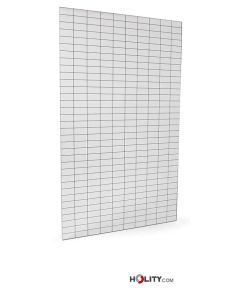
Grid mirror for postural analysis. Dimensions: 100 x h. 200 cm.
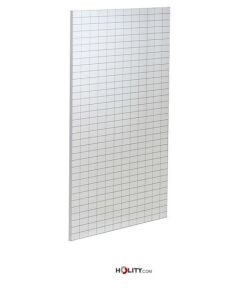
Safety mirror with grid. Dimensions: W. 100 x h. 170 cm.
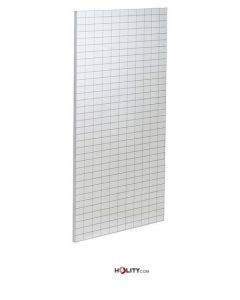
Postural mirror with grid. Dimensions: W. 100 x h. 200 cm.
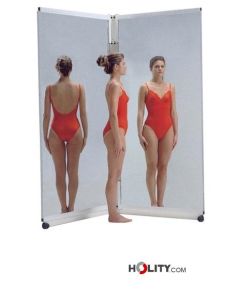
Smooth double adjustable mirror for postural exercises. Dimensions: W. 100 x D. 2 x h. 200 cm.
Posture mirrors represent a fundamental tool in physiotherapy, rehabilitation, and postural gymnastics contexts. These devices allow patients to observe body alignment in real-time, facilitating the conscious correction of postural defects and the acquisition of correct motor patterns. Their application ranges from specialized physiotherapy centers to medical offices, rehabilitation gyms, and dance schools, representing an indispensable element for any professional working on posture and biomechanical movement analysis.
The build quality of postural mirrors directly affects the safety of the clinical environment and the precision of the analysis. A good posture mirror must guarantee a clear and faithful reflection of the patient's body, allowing the therapist to evaluate joint angles, spinal alignments, and body symmetries with millimeter precision.
The availability of different types, sizes, and finishes reflects the varying needs of different professional environments and specific therapeutic programs.
Using posture mirrors brings significant advantages for both the patient and the healthcare professional. Direct visualization of one's body during therapeutic exercise activates crucial sensory feedback for motor learning, allowing the patient to self-correct and consolidate proprioceptive awareness. In a clinical setting, the mirror represents an accessible diagnostic means to identify asymmetries, spinal deviations, muscular compensations, and postural dysfunctions that might not be evident through direct observation.
For physiotherapists and kinesiologists, a quality mirror becomes a valuable educational tool: the patient immediately visualizes the improvements achieved, increasing therapeutic compliance and motivation for treatment. In postural gymnastics and functional re-education contexts, the presence of the mirror significantly reduces the time for acquiring correct movement, as visual feedback shortens the motor learning curve.
In the dance and artistic gymnastics sector, posture mirrors are equally indispensable for technical refinement and for preventing injuries related to postural imbalances. Furthermore, in environments where multiple professional figures operate—such as multidisciplinary rehabilitation centers—mirrors allow for shared evaluations among therapists, facilitating clinical communication and standardization of treatment protocols.
The structural safety of the mirrors, guaranteed by safety films and resistant materials, protects both the patient and the operator from risks of accidental breakage, a critical element in high-operation environments.
The market offers posture mirrors in various configurations, each responding to specific needs. Smooth-surface mirrors are the classic and versatile solution, ideal for general postural analysis, biomechanical movement observation, and motor control-based therapeutic exercises. These models provide a pure and transparent reflection, allowing for accurate evaluation without distortion. Gridded mirrors, on the other hand, integrate a geometric grid that facilitates the measurement of angles and misalignments, making them particularly useful in quantitative postural analysis contexts, specialized rehabilitation, and medical training programs where measurement precision is a priority.
Dimensions vary significantly: compact models (80x120 cm) suitable for private practices and limited spaces, up to large surfaces (200x100 cm or 100x200 cm) necessary in rehabilitation gyms, physiotherapy centers, and dance schools. Some mirrors are designed with a fixed wall-mounted structure, ensuring maximum stability and free floor space, while others feature mobile configurations with wheels, allowing for flexibility of use and quick repositioning.
Double adjustable models represent an advanced solution: consisting of two adjustable mirroring surfaces, they allow the patient to observe themselves simultaneously from different angles (front and side), offering a more complete biomechanical evaluation in real-time. This type of mirror is particularly appreciated in specialized contexts where three-dimensional posture analysis is decisive.
From a construction standpoint, posture mirrors use safety back-film that holds fragments together in case of breakage, a fundamental regulatory aspect. The glass is glued to polystyrene or MDF panels, supported by aluminum or wood frames: the choice of structural material affects durability, weight, and the overall aesthetics.
The selection of a posture mirror must start from the analysis of the available space and the intended use. If space is limited, small dimensions (80x120 cm) offer a practical solution without sacrificing clinical utility for evaluations of specific body segments or individual therapeutic paths. For centers providing services to a high volume of patients or practicing collective postural gymnastics, larger dimensions (170x100 cm or larger) become mandatory to allow several people to observe their bodies simultaneously.
A second fundamental criterion concerns the choice between smooth and gridded surfaces: if the goal is motor education and strengthening postural awareness, the smooth surface is sufficiently effective and less distracting; if precise quantitative analysis is required, with the need for measuring angles and spinal misalignments, the gridded surface becomes indispensable. In clinical research or university training settings, the grid adds significant diagnostic value.
The mounting method is an often underestimated but critical element: wall mirrors eliminate floor obstacles and are ideal for high-traffic spaces, while mobile solutions with wheels are preferable in environments where the space configuration must be modified frequently or where the building structure does not allow permanent fixtures. A common mistake is undersizing the mirror thinking it can be "adapted at the limit": a mirror that is too small drastically reduces pedagogical and diagnostic effectiveness.
Another important consideration is optical quality: a low-quality mirror produces distortions that compromise the reliability of postural analysis. Before purchasing, always check compliance with safety regulations (safety film, suitable glass thickness) and the manufacturer's reputation in terms of durability and maintenance over time. For multidisciplinary centers, consider the possibility of double adjustable models, which, although more expensive, offer superior versatility and reduce the need for additional purchases.
The commercialization of mirrors for professional and clinical environments is subject to specific regulatory and administrative requirements, particularly regarding structural safety. Safety back-film is a mandatory element on all mirrors intended for healthcare and rehabilitation environments, as it significantly reduces the risk of injury from glass fragments in case of accidental breakage, a physically plausible scenario in high body-movement contexts. The UNI EN 12150-1 standard regulates the technical specifications of tempered glass used in safety mirrors, while specific directives on "general product safety" (GPSD) apply to all equipment intended for medical centers.
Supporting materials (panels, frames, fixing elements) must guarantee structural stability to prevent accidental tipping, a particularly critical aspect if the mirrors are mobile. Fixed wall structures require correct identification of anchoring points and compliance with load specifications indicated by the manufacturer, a technical document that must accompany every delivery.
Furthermore, in clinical and hospital environments, the design and installation of mirrors must be consistent with national guidelines on safety in healthcare environments, including directives on fall prevention and injury risks. Ease of cleaning and disinfection is a fundamental hygienic requirement in hospital and specialized rehabilitation settings: rough materials, joints, or surface discontinuities must be minimized.
Finally, for centers operating within the national health service or that enter into agreements with public bodies, the supply of posture mirrors is often subject to tenders with binding technical specifications and compliance requirements documented by quality certifications (ISO, CE marking). It is advisable to request complete regulatory compliance documentation from the supplier before purchase, especially for permanent installations in accredited facilities.
Explore all products in the category and compare the available solutions to find the one best suited to your operational context, considering dimensions, surface type, and mounting method.
The smooth mirror offers a pure reflection ideal for movement observation and therapeutic exercise. The gridded one integrates a geometric grid that facilitates the measurement of angles, spinal misalignments, and postural asymmetries, making it preferable in quantitative analysis and specialized clinical training contexts.
The minimum recommended dimensions are 80x120 cm for evaluations of specific segments. If space allows, 100x170 cm or 170x100 cm offer a more complete body view and facilitate therapeutic exercises on entire muscle groups, improving treatment effectiveness.
No, modern safety back-film does not significantly compromise optical transparency or reflection quality. It is a mandatory regulatory safety element in clinical environments that holds fragments together in case of breakage, protecting patients and operators.
Wall-mounted mirrors require anchoring using expansion screws or wall plugs on suitable wall structures, typically located on aluminum or wooden frames integrated into the product. It is essential to respect the maximum loads indicated by the manufacturer and entrust the installation to competent personnel to ensure stability and safety.
Yes, there are hinged mobile models equipped with wheels that allow for quick repositioning and flexibility of use. They are particularly useful in environments where the spatial configuration is variable or where buildings do not allow for permanent wall fixings.
Yes, double mirrors allow the patient to observe themselves simultaneously from front and side angles, providing a more accurate and three-dimensional biomechanical evaluation. They are particularly advantageous in specialized centers where complex posture analysis is a priority.
A thickness of 4 mm is standard for medium-sized mirrors (up to 170x100 cm). For larger mirrors or critical installations, greater thicknesses (6-8 mm) increase mechanical stability and reduce the risk of vibration during use.
Maintenance is minimal: periodic cleaning with non-abrasive detergents and visual checks of the anchoring seals are sufficient. In hospital environments, follow the entity's specific disinfection protocols. Annually check that the safety film does not show damage or lifting.
 English
  Italian
 French
 German
 Spanish