
mon-fri 9-13 / 14.30-18.30

Pack of 2 pieces
€157.18 VAT incl.Single stainless steel basin stand for operating room. Diameter: Ø 32 cm. Capacity: 4L.

Pack of 2 pieces
€214.82 VAT incl.Double basin stand trolley in stainless steel for operating rooms. Basin diameter: Ø 32 cm. Basin capacity: 4L.

Basin stand with one stainless steel basin. Capacity: 2 litres. Height not adjustable.

Pack of 6 pieces
€1,087.20 VAT incl.16 L waste kick bucket, with Ø 30 mm wheels. Dimensions: Ø 41 x H 18 cm.

Surgical basin stand in 18/8 stainless steel and chrome-plated metal, height 82.5 cm with 5 multidirectional wheels including 2 antistatic for clinical safety.

Single bowl stand for clinics. Supplied with an 8 lt basin. With adjustable height structure.

Basin stand with 2 stainless steel basins. Height not adjustable.

Pack of 3 pieces
€793.80 VAT incl.Bowl stand trolley with one bowl with a diameter of 320 mm.

Bowl stand for collecting dressings and liquids. Equipped with 2 stainless steel bowls of 8 lt each. Height adjustable from 80 to 120 cm

Professional double basin stand for operating rooms in chromed metal and 18/8 stainless steel. Height 82.5 cm, rotating basins and antistatic wheels.

Pack of 2 pieces
€601.20 VAT incl.Bowl stand trolley for operating rooms with two bowls of 7 liters each.

Stainless steel basin stand for surgical rooms. Height: 825 mm. Capacity: 4 kg.

Surgical stainless steel bowl stand with 6-liter bowl, push handle and 5 swivel castors for maximum mobility in the operating room.

Professional chrome-plated steel basin stand for operating rooms, complete with 6-liter stainless steel basin and 5-spoke mobile base. Height 82.5 cm.

Basin stand trolley h736_05 in stainless steel with two 6-litre basins and 5-wheel base, ideal for operating rooms and professional medical clinics.

Stainless steel basin holder trolley for operating rooms with wheels. Height: 825 mm. Capacity: 8 kg.
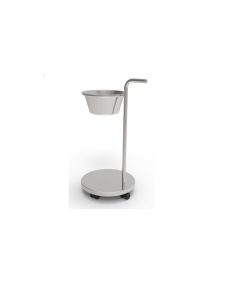
Single basin stand on a mobile stainless steel base. Dimensions: W.380 x D.380 x H.800 mm.

Professional double bowl stand in chromed steel and 18/8 stainless steel, height 82.5 cm. Structure on wheels for maximum mobility in surgical environments.

Bowl stand trolley for 2 stainless steel bowls with round base. Dimensions: W.380 x D.700 x H.865 mm.

Basin stand for operating rooms. Dimensions: W. 52 x D. 37.7 x h. 90 cm.
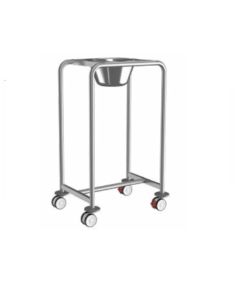
Operating room bowl stand suitable for hospitals. Dimensions: W. 87 x D. 37.7 x h. 90 cm
Basin stands represent essential elements in surgical environments and medical clinics, designed for the safe collection and transport of biological fluids, dressings, and waste materials during diagnostic and therapeutic procedures. These mobile trolleys guarantee organization, hygiene, and operational practicality, supporting the work of healthcare personnel during surgeries, dressings, and decontamination procedures. Their presence in the operating theater is crucial for maintaining high standards of sterility and clinical efficiency. Each basin stand is made of biocompatible and easily sanitizable materials, compliant with international hospital regulations and biosafety protocols.
Choosing a suitable basin stand directly impacts the operational efficiency of the surgical room and the safety of the medical team. A well-designed basin stand trolley reduces the handling time of biological waste, minimizes the risk of cross-contamination, and facilitates compliance with cleaning and sanitization protocols. The mobility guaranteed by multidirectional and antistatic wheels allows for reaching every area of the operating room without obstacles, while the stable structure prevents accidental tipping during maneuvers. Furthermore, a professional basin stand contributes to maintaining visual order in the room, facilitating staff organization and reducing distractions during critical procedures.
From an ergonomic point of view, the possibility of adjusting the height of the basin allows medical and nursing staff to operate in correct positions, preventing fatigue and repetitive strain injuries. Stainless steel materials guarantee durability over time and compatibility with high-temperature sterilization cycles, ensuring a long useful life for the device. The availability of single and double models allows for adapting the solution to the specific needs of different types of healthcare facilities, from small clinics to large university hospitals.
The catalog of operating room basin stands includes solutions differentiated based on capacity, size, and configuration. Single models, equipped with a basin from 2 to 8 liters, represent the ideal choice for clinics, surgical practices, and small operating rooms where space is limited and procedures are generally of short duration. Double basin stands, on the other hand, offer two independent basins and are particularly suitable for hospital contexts where it is necessary to separate waste materials by category (solid waste and biological liquids). The construction structure varies between fixed-base models and trolleys on wheels, with the latter guaranteeing maximum mobility but requiring slightly more storage space.
Some models have a standardized fixed height of 82.5 centimeters, compliant with hospital ergonomic standards, while others allow adjustments from 80 to 120 centimeters, adapting to different operational needs. The basins are mainly made of 18/8 stainless steel, which offers resistance to corrosion and compatibility with aggressive hospital detergents. The base can be made of chromed metal or full stainless steel, with wheels that vary in diameter and functionality: standard solid wheels, antistatic wheels for environments sensitive to electrostatic discharges, and swivel wheels to guarantee optimal maneuverability in the tight spaces of the surgical room.
The selection of the appropriate basin stand depends on multiple factors that must be carefully evaluated during the healthcare environment design phase. First, it is necessary to consider the average volume of biological waste and liquids generated during procedures: short procedures with low biological impact can be supported by single trolleys with minimum capacity, while complex or prolonged surgical interventions require double models with larger capacity basins. Space availability in the operating room is a critical element: if the square footage is limited, a round-base basin stand on wheels occupies less surface area than a fixed rectangular base model. It is essential to verify that the dimensions of the trolley allow for passage through access doors and positioning in dedicated corners, without interfering with the movement circuits of the surgical team.
Another decisive aspect concerns sterilization and decontamination requirements: if the healthcare facility uses high-temperature steam sterilization cycles, it is essential that all components, including the wheels, are compatible with these processes. The choice between antistatic and standard wheels depends on the operating environment: rooms equipped with electromedical instrumentation sensitive to electrostatic discharges strictly require certified antistatic wheels. Evaluating ease of cleaning is equally important: models with smooth surfaces, minimal joints, and rounded corners are preferable because they reduce sanitization times and the risk of critical areas unreachable by detergents. Some users make the mistake of underestimating the importance of adjustable height, which allows staff to operate in correct postures and significantly reduces fatigue during long shifts.
Basin stands for healthcare environments must comply with a series of international standards that guarantee safety, efficiency, and hygiene. The ISO 13849-1 standard defines the safety requirements for the design and construction of medical equipment, including structural elements and movement systems. European directives on cathodic protection systems and biocompatible materials require that the stainless steel used be of clinical grade (preferably 18/8) and free from contaminants that could degrade during sterilization cycles. CE certification is mandatory for marketing in Europe, certifying that the product complies with the essential health and safety requirements established by the directive on medical articles.
From a biosafety perspective, basin stands must be designed to reduce the risk of cross-contamination: basins must have sufficient depth to contain any spills, joints must be sealed and easily cleanable, and the structure must prevent the accumulation of liquids in inaccessible areas. Wheels must be constructed with materials that resist disinfectants commonly used in hospitals, such as alcohols, phenolics, and hypochlorites. If the basin stand is intended for operating rooms with laminar flow or rigorous environmental control conditions, it is necessary to verify that it does not generate microparticles during movement or handling. Many hospital facilities also require documentation on compatibility with specific sterilization cycles and material traceability, in compliance with international hospital accreditation audits (JCI, ACHS, ISQua).
Explore all the basin stand models available in our catalog and compare technical specifications, basin capacities, and base configurations to identify the optimal solution for your healthcare facility. Carefully evaluate the spatial, operational, and regulatory requirements of your operating room before proceeding with the acquisition.
The single basin stand has only one basin and occupies a small space, ideal for outpatient clinics and small operating rooms. The double model features two independent basins, allowing for the separation of liquid biological waste from solid waste, which is essential in large hospitals where differentiated disposal protocols must be followed.
Antistatic wheels naturally dissipate electrostatic charges accumulated during movement, preventing the risk of discharges that could damage sensitive electromedical equipment such as heart monitors, ventilators, or infusion pumps present in the operating room.
Yes, 18/8 stainless steel is the required standard because it resists corrosion induced by aggressive disinfectants, high temperatures of sterilization cycles, and the humidity of healthcare environments. Lower quality materials would degrade quickly, compromising the hygiene and durability of the device.
The choice depends on the workstations and the ergonomics of the surgical team. The standard height of 82.5 centimeters complies with hospital standards, but models adjustable between 80 and 120 centimeters allow for adaptation to different procedures and staff preferences, reducing fatigue and repetitive strain injuries.
Not all models: it is fundamental to verify technical compatibility before purchase. Stainless steel basins are generally sterilizable, but wheels, joints, and rubber components might not resist. Always consult the manufacturer’s specifications and the provided technical documentation.
For surgical interventions of medium-long duration, a single 6-8 liter basin is generally sufficient. For extensive procedures or operating rooms with a high volume of procedures, a double basin stand with 6-7 liter basins each guarantees operational continuity without the need for frequent emptying.
After each use, empty the basin completely, rinse with warm water and a specific detergent for medical environments, then disinfect with authorized hospital products. Clean the base and wheels weekly. Regularly inspect joints for any cracks or residue accumulation.
Measure the operating room entrance, the space available for stationary positioning, and the area dedicated to storage when not in use. Verify that the trolley can rotate easily in corners and does not obstruct the team’s movement circuits. Consult the technical specifications for length, depth, and height provided by the manufacturer.
 English
  Italian
 French
 German
 Spanish