
mon-fri 9-13 / 14.30-18.30
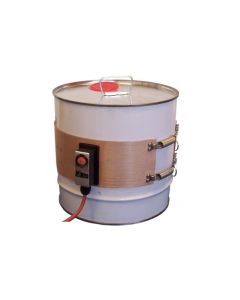
Silicone heating jacket for 10-liter drums. Temperature: 0 – 130 °C. Dimensions: L 700 x H 95 mm.
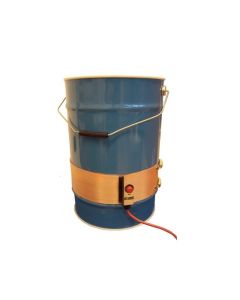
Silicone heating belt for 25 lt drums. Temperature: 0 – 130 °C. Dimensions: L 800 x H 95 mm.
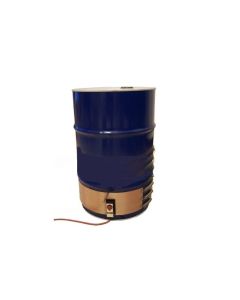
Silicone heating belt for 50 lt drums. Temperature: 0 – 130 °C. Dimensions: L 950 x H 115 mm.
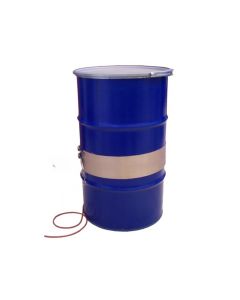
Silicone heating jacket for 100 lt drums. Temperature: 0 – 130 °C. Dimensions: L 1300 x H 115 mm.
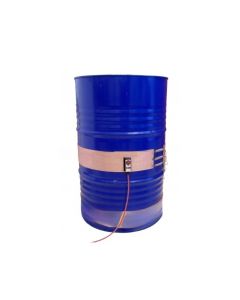
Heating band for 200 lt drums in silicone and fiberglass. Temperature: 0 – 130 °C. Dimensions: L 1710 x H 115 mm.
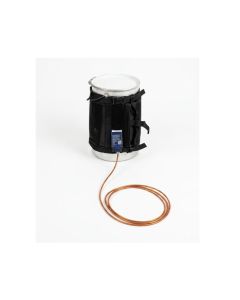
Professional heating jacket h923_17 for 25-liter drums. 130 W power, integrated adjustable thermostat, and silicone-coated fiberglass fabric lining.
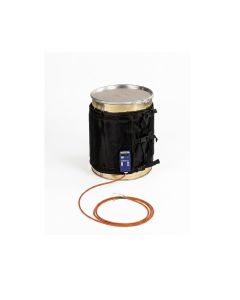
Industrial drum heater jacket h923_18 for 50-liter drums. 220 W power, integrated adjustable thermostat and silicone glass fiber insulating coating.
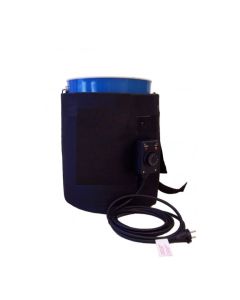
Thermal jacket for drums Ø 280 mm 25 lt, adjustable thermostat 0 – 90°C. Dimensions: L 1020 x H 400 mm.
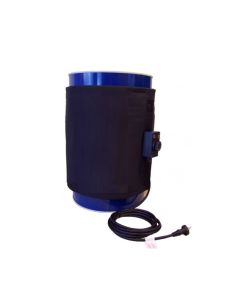
Heating belt for 50 L plastic or metal drums. Power: 300 W. Thermostat 0 – 90 °C. Dimensions: L 1330 x H 460 mm.
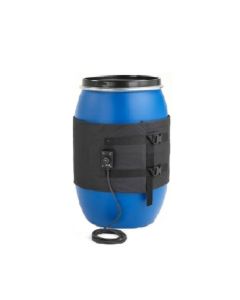
Heating band with thermostat 0 - 90°C for 100 lt drums. Dimensions: L 1650 x H 370 mm.
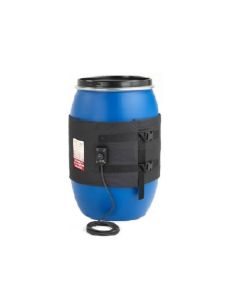
Thermal jacket for 100 lt metal or plastic drums. Temperature: 0 – 90 °C. Dimensions: L 1595 x H 370 mm.
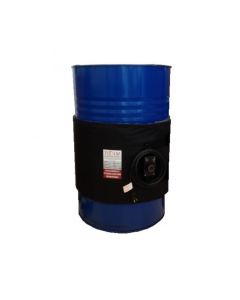
Heating jacket for 200 L drums, adjustable 0/90°C, in nylon and fiberglass, dim.Ø 1800-1990 mm x h 450 mm, 4 m power cable.
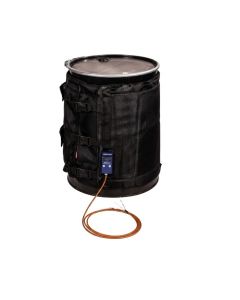
Professional drum heater jacket h923_19 for 200-liter drums. 650 W power, integrated adjustable thermostat and silicone-coated fiberglass insulating coating.
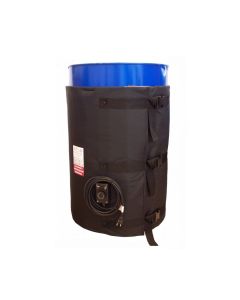
1200W heating jacket with adjustable thermostat 0–90°C for 200-liter drums. External coating in nylon-polyurethane. Dimensions: Ø 1800–1990 mm x h 800 mm. 4 m power cable with Schuko plug.
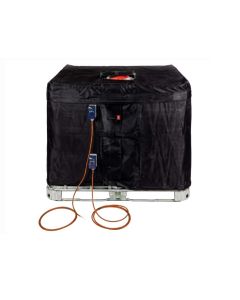
Professional heating jacket and drum heater h923_20 for 1000-liter IBCs and tanks. Equipped with an integrated adjustable thermostat from 0 to 90°C and silicone fiberglass thermal insulation.
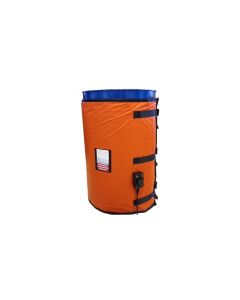
Heating jacket in PTFE fabric for 200 L drums. Power: 1200 W, thermostat: 0–90°C. Dimensions: h. 850 mm x Ø 1950 mm. 4 m power cable with plug.
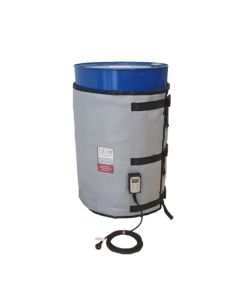
Industrial heating jacket for 200-liter drums with digital thermostat 0–150°C. Power: 2300 W. Dimensions: Ø 1800–1990 mm x h. 800 mm. 4 m power cable with Schuko plug.
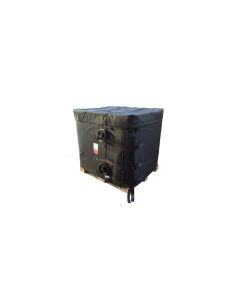
Heating jacket for 1000 l IBC tanks. Power: 3,500 W. Thermostat 0 – 90 °C. Height: 1000 mm.
Drum heating jackets are a fundamental technical solution in industrial processes where container temperature control is critical for product quality and fluidity. These devices, also known as drum heater belts or thermal covers, are applied directly to the outer surface of the drum or tank to maintain, heat, or decrystallize substances such as mineral oils, waxes, resins, chemical pastes, and viscous food products. The adoption of an appropriate thermal jacket prevents solidification, crystallization, and slowdowns in processing cycles, ensuring operational continuity and product homogeneity during decanting and handling.
The choice of heating jacket depends on variables such as drum capacity, the required operating temperature, the type of material to be controlled, and the environmental conditions of use. Available solutions range from silicone belts for vertical application on small and medium-capacity drums to thermal jackets made of technical fabric or metal for 1000-liter IBC tanks, with power ratings ranging from a few watts up to 3,500 W. Each configuration is designed to balance energy efficiency, heating speed, and ease of installation, adapting to the specific contexts of the chemical, pharmaceutical, cosmetic, food, and lubricant industries.
Drum heating jackets solve concrete problems in production environments where the physicochemical properties of raw materials make thermal control essential. Substances such as paraffinic oils, synthetic waxes, epoxy pastes, and petroleum derivatives behave differently at different temperatures: if allowed to cool below a critical threshold, they become difficult to pump, transfer, or mix, causing costly and unforeseen line downtime. A heating jacket ensures they are kept within the optimal viscosity window, reducing waiting times and consumption related to intermittent heating. In the chemical-pharmaceutical sector, where product traceability and stability are regulatory obligations, temperature control via a thermal jacket with an adjustable thermostat also ensures documentation compliance and reduces the risks of active ingredient degradation.
A further advantage emerges in the reduction of overall operating costs: rather than providing separate heating steps in dedicated ovens or boilers, a jacket applied to the drum performs heating in situ, reducing handling and capital tie-up. In contexts where it is necessary to maintain the drum at a constant temperature for hours or days, energy costs are minimized thanks to the thermostat that cuts off power once the setpoint temperature is reached. For sectors such as lubricant processing, cosmetic production, or chemical works, the heating jacket thus becomes a tool for logistical optimization as well as production quality.
Drum heating jackets are divided into two main construction categories, each with its own characteristics and distinct areas of application. Silicone belts represent the entry-level solution, ideal for small and medium-capacity drums (from 10 to 200 liters) where heating is occasional and the operating temperature does not exceed 130–140°C. Consisting of a resistive core encapsulated in silicone rubber, they are applied by wrapping them around the drum vertically and fixing them with Velcro straps or simple mechanical systems. Their lightness, low cost, and ease of removal make them ideal for environments where drums are frequently replaced or where setup flexibility is required. However, lateral heat loss is higher compared to more sophisticated solutions, and heating uniformity may be lower on very large drums.
Thermal jackets in technical fabric or nylon-polyurethane coating with fiberglass constitute the solution for critical industrial applications and large-capacity drums (from 50 to 1000 liters). These systems completely wrap the drum, often with a height covering two-thirds or the entire body of the container, and incorporate helical or planar resistors arranged to ensure uniform heating. Equipped with an adjustable digital or analog thermostat up to 150°C, they can reach power outputs of 2,300–3,500 W, allowing for rapid heating even for very high viscosities. Their more robust construction allows for use in harsh environments, with resistance to humidity, vibrations, and chemical vapors, making them preferable in chemical plants, refineries, and laboratories where operational continuity is a priority. The higher initial cost is offset by prolonged durability and lower energy requirements at steady state.
Selecting the correct heating jacket requires systematically evaluating three decision axes: drum capacity, the required thermal profile, and operating conditions. Starting with volumetric capacity, users often make the error of purchasing a jacket sized for a lower capacity, thinking they will save money; on the contrary, an undersized jacket poorly covers the lateral surface, generating cold zones and uneven heating that compromise the quality of the contained material. The rule of thumb consists in choosing the jacket corresponding to the nominal capacity of the drum or the immediately higher category. For example, a 50-liter drum requires a 50-liter jacket; if the drum has an unusual diameter or the useful height to be heated is higher than standard, opting for the 100-liter category ensures adequate coverage.
The second criterion is the maximum operating temperature: for low-viscosity substances (light mineral oils, alcohols), a 0–90°C or 0–130°C jacket with limited power is sufficient; for waxes, epoxy pastes, or critical chemical compounds, it is advisable to choose models with a thermostat up to 150°C and power exceeding 1,000 W. A common mistake consists in underestimating the necessary power and expecting rapid heating: if the material has a very high initial viscosity (above 1,000 cP), a 300 W jacket takes hours to reach temperature, while a 1,200 W one reaches it in 30–60 minutes. Finally, evaluate environmental conditions: in humid, corrosive environments or with very low external temperatures, technical fabric or nylon-polyurethane jackets with fiberglass offer superior protection compared to silicone, which degrades more rapidly. If the drum remains outdoors or in unconditioned warehouses, provide a jacket with power slightly higher than the calculated minimum to compensate for heat loss.
Drum heating jackets operate within technical and safety regulations that vary depending on the geographical destination and the application sector. In the European context, the main reference standards are the Machinery Directive 2006/42/EC and technical standards EN 60950 (safety of electrical devices) and EN 61800-3 (electromagnetic compatibility). Jackets intended for direct contact with food or pharmaceutical products must also comply with the requirements of FDA 21 CFR Part 11 or HACCP provisions, ensuring non-migrating contact materials and traceability of the production cycle. In Italy, compliance must be certified according to the provisions of Legislative Decree 81/2008 on safety at work, with particular reference to the risks of thermal contact and the maximum permitted surface temperatures (generally limited to 65°C in areas accessible without protection).
Recurring aspects emerged from user reports concern the need for a certified and correctly sized power cable: a 1,200–2,300 W jacket requires a minimum section of 2.5–4 mm² and a 30 mA residual current circuit breaker to avoid the risk of electrocution in humid environments. The presence of an adjustable thermostat (analog or digital) is mandatory both for energy efficiency reasons and to ensure the thermal safety of the container and its contents: exceeding the maximum temperature tolerated by the liquid can cause chemical degradation or, in extreme cases, uncontrolled exothermic reactions. Furthermore, it is recommended to check that the jacket has an automatic reset after a power failure, avoiding unexpected restarts and danger scenarios. In sectors subject to inspections (chemical, pharmaceutical), keeping the technical documentation of the product and the certificate of conformity is essential to demonstrate compliance with regulatory requirements.
Explore the complete catalog of drum heating jackets and compare the available solutions in terms of capacity, power, thermal control, and construction materials to identify the most suitable one for your operating context and the specific needs of the production process.
The silicone belt is lightweight, economical, and suitable for drums up to 200 liters with occasional heating and temperatures up to 130°C. The fabric jacket completely covers the drum, reaches power up to 3,500 W and temperatures of 150°C, ideal for critical industrial applications and harsh environments. The choice depends on drum capacity, heating frequency, and conditions of use.
Power depends on the initial viscosity of the material and the desired heating time. For light oils and low-viscosity liquids, 300–500 W are generally sufficient. For pastes and waxes, choose 800–1,200 W for fast heating. Increase the power if the drum is exposed to external cold or if you need to reach temperatures above 100°C. Consult the product data sheet for specific indications.
Yes, silicone belts are designed for hot application and only require Velcro or straps for fixing, making installation quick. Larger thermal jackets might require a short stop for correct positioning. In both cases, make sure the drum is clean and dry to ensure optimal adhesion and efficient thermal transfer.
Silicone belts operate up to 130°C, while fabric jackets reach 150°C with a digital thermostat. However, the actual temperature depends on the material contained: mineral oils tolerate 140–150°C, synthetic waxes 100–120°C, food and pharmaceutical products generally do not exceed 90–100°C. Always check the specifications of the product contained to avoid degradation or undesired reactions.
Energy consumption is limited if the jacket is equipped with an adjustable thermostat: once the setpoint temperature is reached, the resistive element turns off automatically, consuming energy only to compensate for thermal loss. A 1,200 W jacket maintained at 80°C typically consumes 2–4 kWh per day; the actual cost depends on the local energy price and continuous operating time.
No, each jacket is sized for a specific capacity and covers a predetermined length of the drum. Application to a drum of lower capacity will leave uncovered areas; on drums of higher capacity, the coverage will be insufficient and heating uneven. Purchase the jacket corresponding to the nominal capacity of your drum or the immediately higher category if the useful height requires it.
 English
  Italian
 French
 German
 Spanish