
mon-fri 9-13 / 14.30-18.30
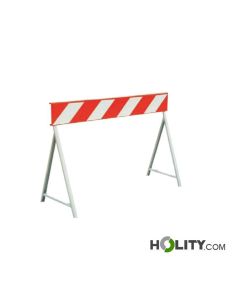
120x100 cm reflective road barrier with galvanized supports, ideal for the delimitation of construction sites and signaling of hazard areas.
Pack of 10 pieces
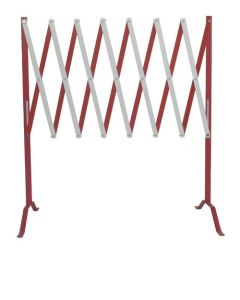
€687.96 VAT incl.Extendable road barrier. Material: metal. Max length: 300 cm.
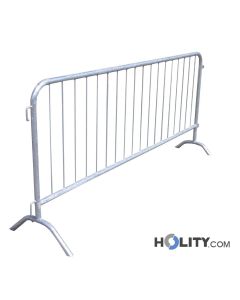
Linkable barrier in hot-dip galvanized steel. Dimensions: W. 120 x 110 cm. Steel tubular Ø 38 cm.
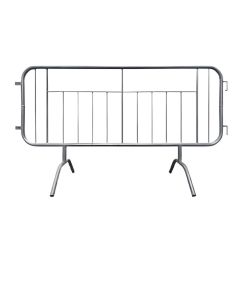
Pack of 10 pieces
€882.00 VAT incl.Urban furniture barrier in hot-dip galvanized iron. Dimensions: L200 x H110 cm.
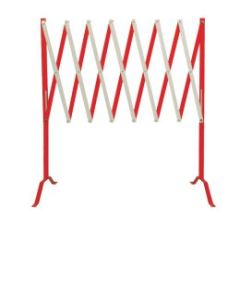
Extensible barrier for area delimitation. Dimensions: L300 x H100 cm. Material: iron.
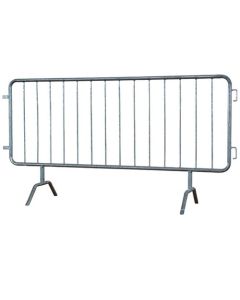
Pack of 10 pieces
€970.20 VAT incl.Metal delimitation barrier. Length: 250 cm. With swivel foot.
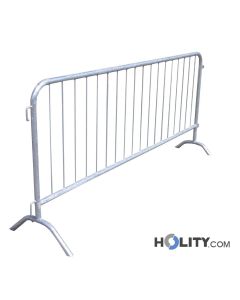
Tubular steel structure Ø 38 mm and vertical profiles in drawn steel rod. Dimensions: W. 200xh.110 cm.
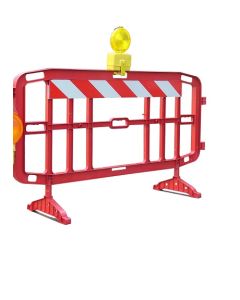
Pack of 40 pieces
€4,191.36 VAT incl.Plastic delimitation barrier. Dimensions: W200 x H102 cm.
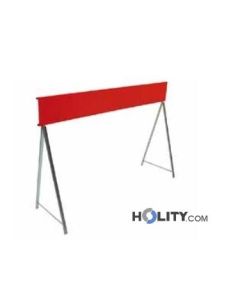
Road barrier with a structure consisting of two pairs of heavy-duty legs and a red sign. Dimensions: W.150 cm H. 100 cm.
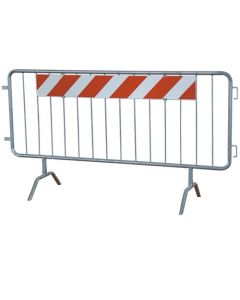
Pack of 10 pieces
€1,089.84 VAT incl.Delimitation barrier for public spaces. With reflective strip. Dimensions: L200 x H110 cm.
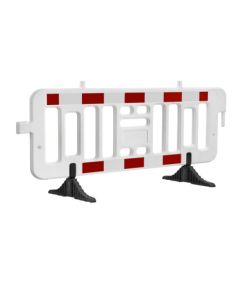
Mobile plastic barrier. Dimensions: W. 207.50 x D. 110 cm. With robust and stable hooking system.
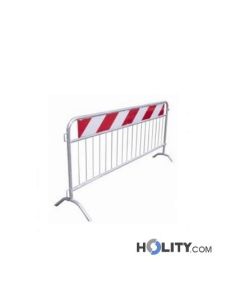
Hot-dip galvanized steel barrier with double crossbar and reflective panel. Dimensions: W. 120 cm h. 110 cm.
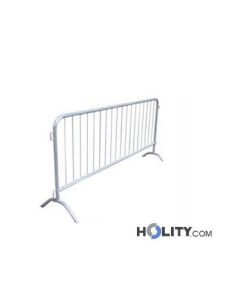
Hot-dip galvanized steel crowd control barrier. Dimensions: L. 250 x h. 110 cm. Tubular: D. 38 mm.
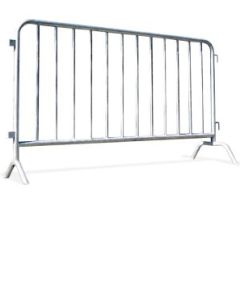
Barrier for events and trade fairs. Dimensions: W200 x H110 cm. Material: galvanized steel.
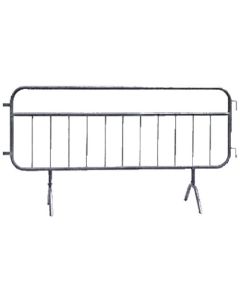
Pack of 10 pieces
€1,150.32 VAT incl.Road barrier in metal with swivelling feet. Dimensions: L250 x H110 cm.
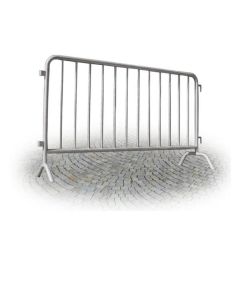
Steel barrier for urban furniture. Dimensions: L200 x H110 cm
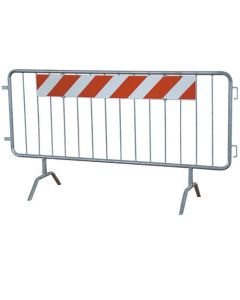
Pack of 10 pieces
€1,178.16 VAT incl.Construction site barrier with reflective strip. Material: galvanized iron. Dimensions: L250 x H110 cm.
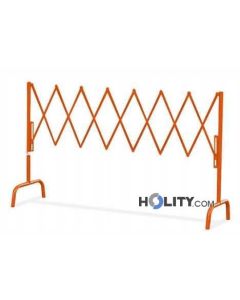
Barrier for construction sites in galvanized steel, with paneling "pantograph". The extensibility allows you to coordinate security with the optimization of the management of the space.
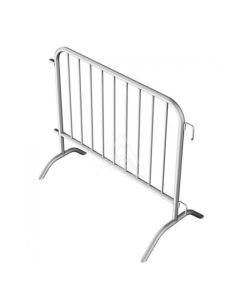
Galvanized steel crowd control barrier equipped with hooks and connection brackets. Dimensions: L.125 x 110 cm.
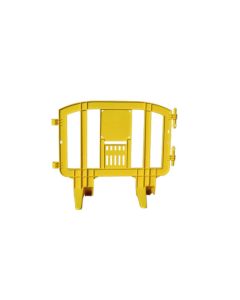
High-quality plastic pedestrian barrier, CE certified, durable and customizable with logo. Dimensions: 125 x 100 cm.
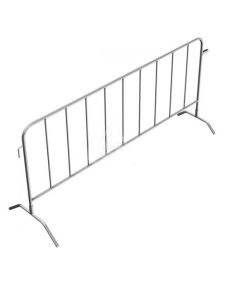
2.50-meter crowd control barrier equipped with hook and connection bracket. Total height: 110 cm.
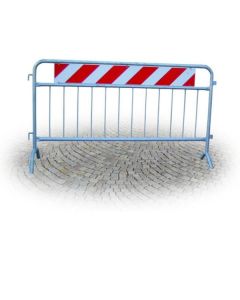
Galvanized steel urban furniture barrier with provision for reflective strip. Dimensions: L200 x H110 cm
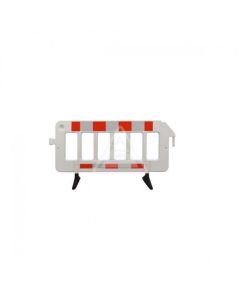
Plastic barrier to prevent access, ideal for events and demonstrations. Dimensions: W.200 x H.100 cm.
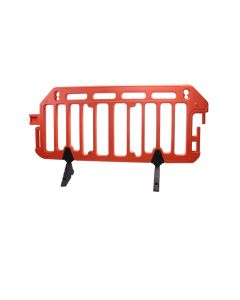
Modular polyethylene road barrier. Dimensions: W.195 x D.44 x H.100 cm.
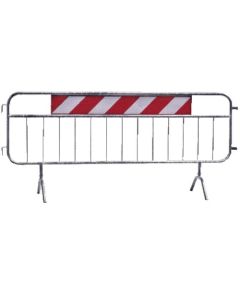
Pack of 10 pieces
€1,372.08 VAT incl.Construction site barrier with reflective strip. Material: metal. Dimensions: L250 x H110 cm.
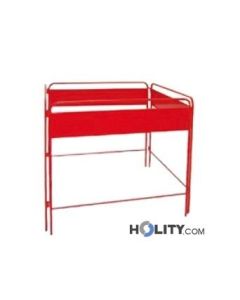
Barrier consisting of four identical elements, assembled with interlocking hinges. Red colour. Dimensions: W.100 x h.100 cm.
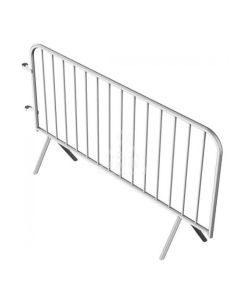
200 cm barrier made of galvanized steel round tube. Complete with straight feet. Total height: 1.10 meters.
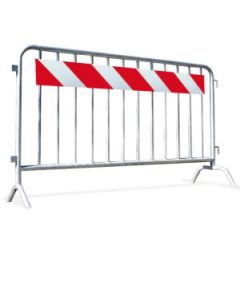
Galvanized steel barrier with reflective panel. Dimensions: L200 x H110 cm.
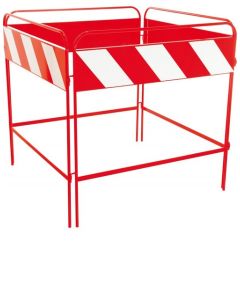
Pack of 4 pieces
€574.56 VAT incl.Boundary barrier for manholes. Dimensions: L100 x W100 x H80 cm. With Class I reflective film.
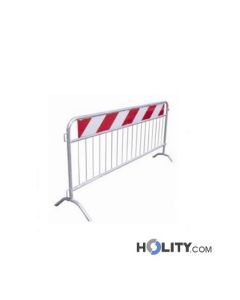
Zinc road barrier with reflective panel. Dimensions: L. 200 cm - h. 110 cm. Tubular: 38 mm.
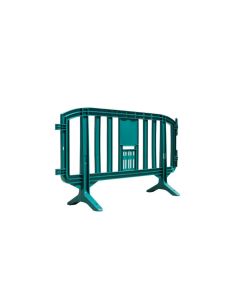
Plastic pedestrian barrier, durable and safe, with CE marking and customizable space for screen printing. Dimensions: 200 x 100 cm.
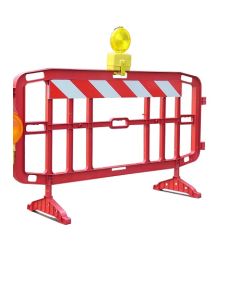
Pack of 40 pieces
€6,096.48 VAT incl.Plastic delimitation barrier. With reflective panel. Dimensions: W200 x H102 cm.
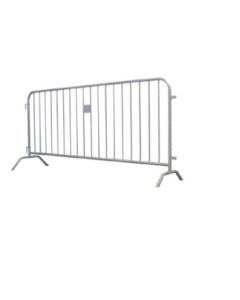
Road barrier 2.50 meters in galvanized steel. Dimensions: W. 250 x 110 cm
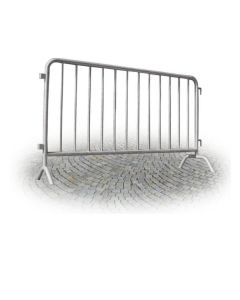
Road barrier for events in galvanized steel. Dimensions: L250 x H110 cm
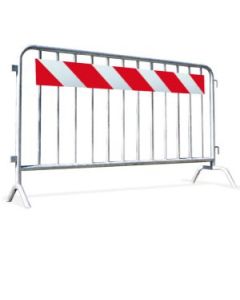
Construction site barrier with reflector. Material: galvanized steel. Dimensions: W250 x H110 cm.
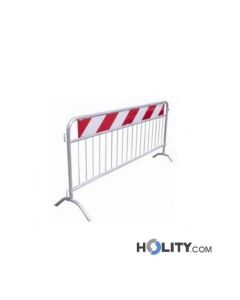
Galvanized steel road barrier with reflective panel. Dimensions: W. 250 cm - h. 110 cm. Tubular: D. 38 mm.
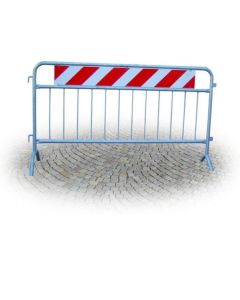
Mobile barrier for urban furniture, in galvanized steel. Dimensions: W250 x H110 cm
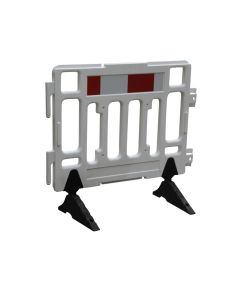
Plastic road barrier. Dimensions: W.110xD.40xH.100 cm.
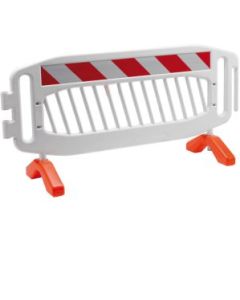
Plastic delimitation barrier. Dimensions: W220 x H110 cm. With reflective panel.
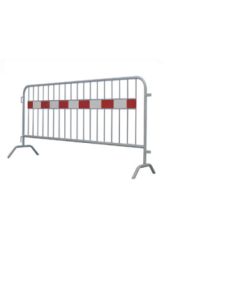
2-meter road barrier with reflective strip. Dimensions: L 2.00m x H 1.10m
Pack of 4 pieces
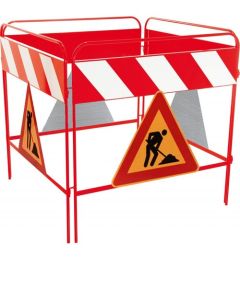
€831.60 VAT incl.Manhole safety barrier. Dimensions: W100 x D100 x H80 cm. With reflective strip and “Road works ahead” sign.
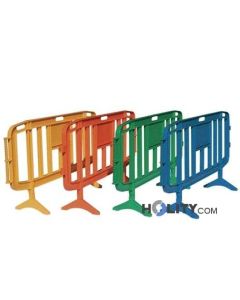
Interlocking barrier made of durable polypropylene. Dimensions: W.198 x D.55.5 x h.102 cm. Available in various colors with a central space for lettering and logos.
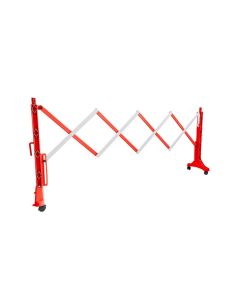
Lightweight and expandable barrier up to 2 meters, ideal for securing areas safely. Open dimensions: W 200 × D 39 × H 100 cm.
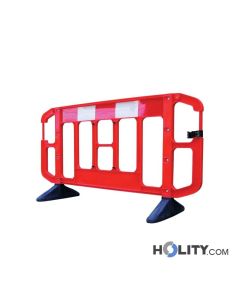
High-resistance protection barrier with injection molding. Equipped with adjustable feet and a central handle.
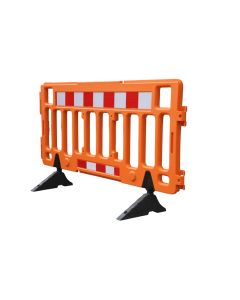
Plastic road barrier. Dimensions: W.193xD.44.6xH.100 cm
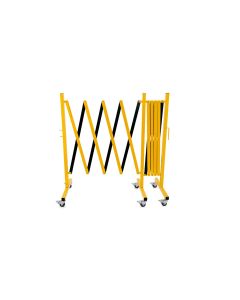
Expandable aluminum crowd control barrier. Finish: black and yellow. Dimensions: W.400 x H.100 cm.
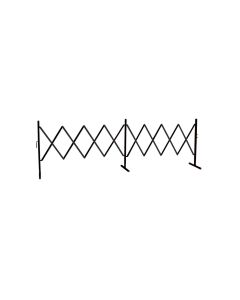
Expandable steel barrier up to 4 meters, ideal for delimiting hazardous areas. Dimensions: L 400 × D 45 × H 100 cm.
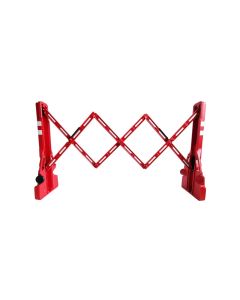
Expandable barrier up to 2.4 meters, ideal for delimiting and securing areas. Dimensions: L 240 x H 100 cm.
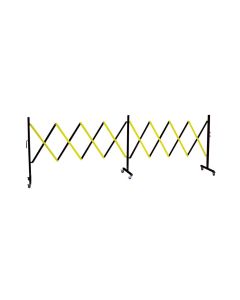
Expanding barrier up to 4 meters with fixed foot, ideal for delimiting hazardous areas. Dimensions: L 400 × D 45 × H 108 cm.
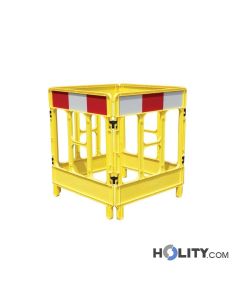
Safety barrier with central handle ideal for delimiting an area with an electrical system. Color: yellow. Available in two different sizes.
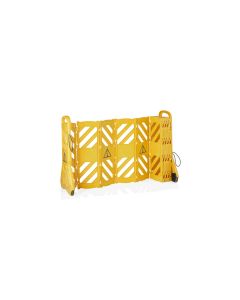
Extendable barrier for construction sites. Material: plastic. With 2 wheels and handle. Dimensions: L.400 x H.100 cm.
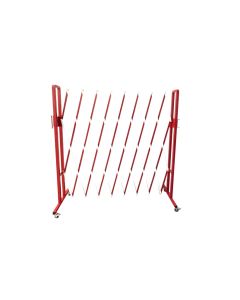
Extendable steel barrier with a maximum length of 3 meters, ideal for delimiting hazardous areas. Dimensions: L 300 × D 41 × H 160 cm.
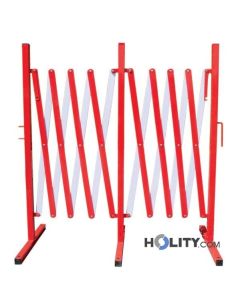
Extendable barrier ideal for closing large access points. Maximum length: 4 m. Color: white-red. Height: 940 mm.
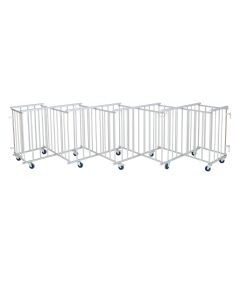
Extensible barrier for stadiums and concerts. Dimensions: L.405 x h.110 cm. Self-supporting and with wheels.
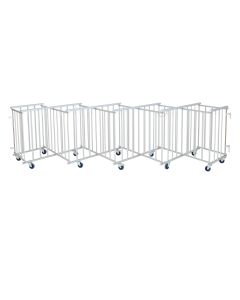
Expandable aluminum security barrier. Dimensions: L.670 x h.110 cm. Quick and easy to assemble and disassemble.
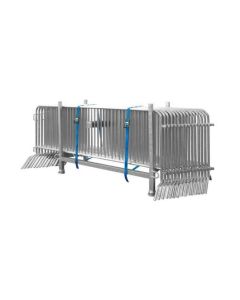
Kit of 15 metal road barriers. Dimensions: 2.50x1.10 m
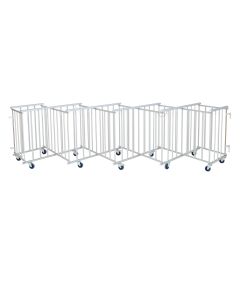
Extensible crowd control barrier. Dimensions: W.803 x h.110 cm. Material: anodized aluminum.
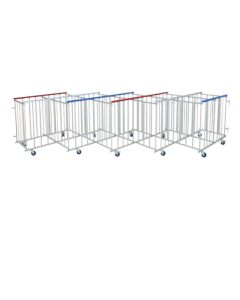
Double-row expandable security barrier. Length: 710 cm. Material: 6060-T6 anodized aluminum.
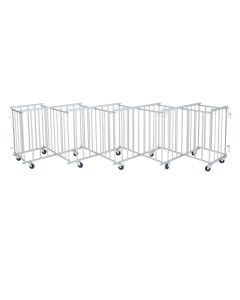
Extensible barrier with wheels. Dimensions: L.1065 x h.110 cm. Easy assembly, disassembly, and transport.
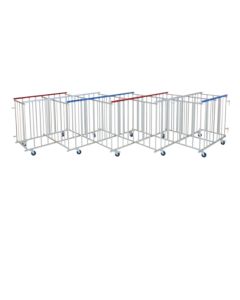
Double-row extensible crowd control barrier for events. Dimensions: W.1210 x h.110 cm. Easy assembly and disassembly.
Barriers represent an essential solution for delimiting and managing space in very different contexts: construction sites, public events, urban furniture, and hazard areas require robust and reliable systems to control the flow of people and vehicles. A well-chosen barrier ensures safety, compliance with current regulations, and a long-lasting investment. The market offers models in different materials—galvanized steel, plastic, iron—each with specific characteristics that meet particular needs. From extendable modular barriers to reflective barriers for night visibility, the choice depends on the field of application, frequency of use, and climatic conditions to which they will be exposed.
A barrier performs critical functions in environments where risk prevention is a priority. On a construction site, it delimits work zones reducing the risk of accidents; during a public event or demonstration, it channels the flow of people and protects restricted areas; in urban furniture, it creates elegant and functional barriers for gardens, squares, and public spaces. Structural robustness and stability are fundamental characteristics that distinguish a professional product from an improvised alternative. Modern models also incorporate quick-connection systems, swivel legs to adapt to irregular surfaces, and reflective coatings that improve visibility and safety in low-light conditions. The wide range of sizes and configurations allows the solution to be adapted to the specific context, minimizing empty spaces and maximizing the efficiency of the delimitation.
From a practical point of view, investing in quality barriers means reducing replacement and maintenance costs in the medium to long term. Galvanized steel barriers, for example, resist rain, snow, and temperature changes without losing structural integrity; plastic ones weigh less and facilitate transport to construction sites distributed over multiple locations. The choice of the correct type directly influences the operational efficiency of any project: a logistical organization that includes extendable modular barriers optimizes setup and dismantling times, while a fixed structure offers maximum stability in high-traffic contexts. Steel crowd control barriers, equipped with hooks and connection brackets, allow for creative configurations adaptable to the needs of the moment.
The barrier catalog is mainly divided by construction material and functionality. Hot-dip galvanized steel barriers represent the professional standard in construction sites and urban furniture: the tube diameter (usually 38 mm) guarantees resistance to mechanical stress, while galvanization protects against corrosion even in humid or saline environments. Available in lengths from 120 cm up to 250 cm, with a standard height of 100-110 cm, they easily hook to one another to form continuous barriers. Plastic barriers, on the other hand, offer lightness and ease of movement: ideal for demonstrations and events where setup must be fast and personnel limited. They weigh significantly less than steel but maintain adequate structural rigidity thanks to internal ribbing and hollow structures.
Another important category includes modular and extendable barriers, which allow the total length of the barrier to be varied without adding individual elements. This system reduces the number of components to be transported and speeds up assembly. Barriers with a reflective strip, made of steel or aluminum, integrate reflective elements that improve night visibility and road safety: they are mandatory in some construction contexts and recommended in high vehicle traffic areas. Crowd control barriers, equipped with connection hooks, allow for serpentine or continuous fencing configurations, suitable for controlling queues and entrances. Some models offer swivel legs, useful for adapting to irregular flooring, while others integrate fixed straight feet for maximum stability in windy conditions.
Selecting the appropriate barrier starts with defining the context of use and the expected frequency of use. If the barrier will remain in place for consecutive months—such as on a large construction site—the choice naturally falls on hot-dip galvanized steel: it offers maximum durability and requires no special maintenance. If, however, it is for occasional events or temporary setups, lightweight plastic barriers are preferable for handling practicality and lower costs. A decisive criterion is the required stability: in high pedestrian or vehicle traffic areas, barriers with heavy feet or hookable systems ensure that the barrier does not move under pressure. For areas exposed to wind, models with higher weight and low frontal height are safer.
Storage space availability should influence the decision between standard and extendable models. If storage is limited, telescopic or modular barriers reduce bulk while maintaining operational flexibility. Night visibility is an element that should not be underestimated: on sites active 24 hours a day, along public roads, or at evening events, reflective barriers are mandatory by law in many jurisdictions. A frequent mistake is choosing solely based on unit price: a very cheap barrier in fragile plastic, if broken during its first use, costs more than double compared to a professional solution. Compatibility with existing connection systems—hooks, brackets, screws—represents a crucial practical factor for those who already own barriers and intend to expand their existing fleet.
Barriers must meet regulatory standards that vary based on the geographic context and type of use. In Italy, construction sites are regulated by Legislative Decree 81/2008 (Consolidated Law on Safety) which specifies the characteristics of delimitation barriers: minimum height, impact resistance, visibility and, for night environments, the presence of reflective elements. The UNI EN 13001 standard defines the mechanical resistance requirements for road and site barriers, ensuring the structure does not fail under reasonable stress. Barriers intended for public spaces must often be CE certified and comply with commercial product safety standards. For public demonstrations and events, municipal administrations frequently require the use of crowd control barriers that meet specific load tests, generally between 1.5 kN and 3 kN per linear meter of barrier.
Safety aspects that most frequently emerge from practice concern the stability of the base (sharp angles or insufficient feet create tipping risks), the resistance of the reflective strip over time (degradation of reflective materials reduces effectiveness), and the absence of sharp edges that could injure users. In areas with public presence, barriers must be free of sharp edges and elements that could catch on clothing. Visual inspection frequency is important: cracks in the plastic, untreated rust on the steel, or deterioration of the connection straps lead to sudden failures and collapse risks. Some suppliers require certification of conformity at the time of purchase; others provide documentation on galvanization or the use of quality recycled plastic, useful for projects aiming for environmental sustainability.
Explore all products in the category and compare the available solutions to find the one best suited to your operational context.
Professional barriers have a length between 120 and 250 cm, with a standard height of 100-110 cm. Extendable models reach up to 300 cm. The choice depends on the space to be delimited and the required aesthetic characteristics. Lower barriers (80-90 cm) are used for seated audiences or areas not requiring full human height.
Hot-dip galvanized steel offers maximum durability, superior mechanical resistance, and stability in high-traffic areas, ideal for permanent sites. Plastic is lightweight, economical, and practical for temporary setups and events, but requires more frequent replacement if subjected to intensive use or extreme weather conditions.
Yes, on sites active during night hours, along public roads, and in evening events, barriers with reflective strips are mandatory by law (Legislative Decree 81/2008 and local regulations). For daytime use in controlled private spaces, they are recommended but not always mandatory; consult your local administration for specifics.
Most professional models use hooks, steel brackets, or interlocking systems to join the barriers. Some can be hooked through side rings, others through upper crossbeams. Verify the compatibility of the connection system with the chosen model; not all systems are inter-compatible.
A 200 cm galvanized steel barrier weighs between 25-35 kg, depending on the thickness of the tube. Plastic barriers weigh 8-15 kg. Extendable and modular models can weigh more due to internal locking systems. Weight affects ease of transport and the need for handling equipment.
Yes, but with limitations. Plastic barriers are suitable for temporary sites, light work, and controlled environments. In high-intensity sites, with heavy material handling or prolonged exposure to intense UV rays, galvanized steel is preferable for reliability and durability. Check that the product is CE certified and complies with safety regulations.
No, stability depends on the base and total weight, not the extension system. A 250 cm fixed barrier has the same stability as a modular one extended to 250 cm, given equal weight and foot design. However, modular barriers gain operational flexibility, reducing the number of components to transport and facilitating adaptation to variable spaces.
Galvanized steel barriers require periodic checks to verify the integrity of the galvanization, removal of dirt deposits, and light lubrication of hook systems if used frequently. They do not require additional painting. If the galvanization shows extensive damage, apply anti-rust paint to prolong its life.
 English
  Italian
 French
 German
 Spanish