
mon-fri 9-13 / 14.30-18.30
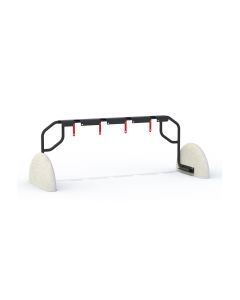
Kick scooter rack in galvanized steel with concrete bases for 4 scooters. Dimensions: L 220 x D 78 x H 76 cm. Total weight: 149 kg.
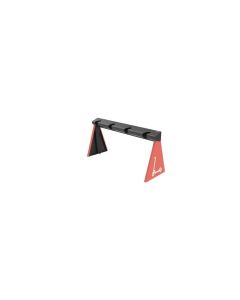
Steel electric scooter rack. Dimensions: W.1496xD.510xH.742 mm
The rise of electric micromobility has radically transformed the landscape of urban centers and corporate spaces, making the adoption of dedicated infrastructure such as scooter racks necessary. These devices are not simple metal supports, but represent an engineering response to the need for public order and protection of individual vehicles. Designing a functional parking area means considering the size of the devices, ease of access, and resistance to atmospheric agents, while ensuring a solution that prevents accidental tipping of the vehicles, which are often equipped with unstable centers of gravity.
The integration of these structures in public or private contexts requires an in-depth knowledge of construction materials, preferring galvanized or stainless steel to counteract the corrosive phenomena typical of outdoor environments. The primary objective is to provide a parking station that not only organizes the space but also acts as a deterrent against theft and vandalism through mechanical anchoring systems specifically designed for the thin frames and stems of electric scooters. Correct planning of parking areas allows sidewalks to be cleared of obstructions, improving the usability of pedestrian paths and promoting a culture of sustainable and orderly mobility.
The installation of specific racks for electric mobility responds to a logistical critical issue that emerged with the massive spread of folding devices and sharing models. Unlike bicycles, scooters have different dimensions and support points, making traditional supports often inadequate or inefficient. Choosing dedicated systems allows for the optimization of the available linear footage, offering a higher parking density than any other urban furniture solution. The technical structure of these products is conceived to lock the steering column, preventing the mechanical stress from weighing exclusively on the side kickstand, an element notoriously fragile and subject to breakage under the weight of the battery and integrated motors.
Beyond mere physical organization, these structures perform a fundamental task in the management of passive security. A scooter correctly secured to a professional rack is much less subject to opportunistic theft attempts, as the fixing points are designed to accommodate high-security hardened chains or U-locks. In corporate or school contexts, the adoption of these racks communicates a concrete commitment to environmental sustainability, encouraging employees and students to use non-polluting means thanks to the availability of a safe and orderly parking area. This approach drastically reduces the risk of tripping for pedestrians and protects the economic value of the owner’s vehicle, ensuring a longer life for the structural components of the scooter itself.
The micromobility infrastructure market offers a wide range of configurations, ranging from single models to modular ones for large collective parking lots. Wall-mounted versions are ideal for optimizing narrow spaces, such as condominium garages or company corridors, allowing the vehicle to be lifted off the ground and facilitating floor cleaning operations. In contrast, floor-mounted racks with a self-supporting base or fixing via bolts represent the choice for outdoor areas and squares, ensuring superior structural stability and visibility that acts as an architectural signal for users. Each variant is available with different finishes, from hot-dip galvanizing to polyester powder coating, the latter preferable when it is desired to integrate the product with the institutional color or the surrounding design.
An important technical distinction concerns the locking systems: there are models with simple slots for the passage of the chain and more advanced versions equipped with an anti-tamper clamp that wraps around the column. In recent years, parking stations with integrated charging functionality have also appeared, requiring dedicated electrical wiring but transforming the parking spot into a real energy refueling hub. The choice of material remains the discriminating element for the longevity of the investment; AISI 304 or 316 stainless steel is strongly recommended for installations in coastal areas or areas with high salinity, where humidity and salt can quickly compromise the integrity of cheaper surface finishes, leading to high maintenance costs in the medium term.
The selection of a professional rack must start from a rigorous analysis of the type of users and the expected traffic volume. A common mistake is underestimating the width of the deck of modern scooters, which tend to be increasingly bulky to accommodate long-life batteries; it is therefore essential to verify that the spacing between one spot and another is sufficient to prevent collisions between handlebars during parking and retrieval phases. Universal compatibility is the critical factor: the design of the support must be able to accommodate both light models with solid wheels and off-road models with larger knobby tires. It is essential to consider the type of flooring available, as an installation on asphalt requires different fixing techniques compared to one on concrete screed or on historical stone paving.
Another decision criterion concerns exposure to vandalism; in unsupervised areas, it is appropriate to opt for models with increased steel thickness and non-removable anti-theft bolts with common tools. Ergonomics is often overlooked, but a rack that forces the user to bend excessively or perform complex maneuvers will end up not being used, leading to the return of haphazard parking. It is also advisable to evaluate the modularity of the system: opting for structures that allow the addition of new spots in the future is a far-sighted strategy to accommodate the constant growth of electric mobility without having to redo the entire installation from scratch. Finally, the presence of rubber profiles or anti-scratch protections at the contact points with the scooter frame is a qualitative detail that denotes attention to the care of the end user’s vehicle.
The installation of urban furniture intended for scooter parking must comply with precise guidelines regarding the safety and accessibility of public spaces. In many municipal contexts, it is required that such structures do not constitute architectural barriers, respecting the minimum distances from transit flows and ensuring that no protruding element can represent a danger to visually impaired people or distracted pedestrians. The materials must comply with European regulations on mechanical resistance and reaction to fire, especially if installed in underground parking lots or closed areas. CE marking, although not always mandatory for simple metal supports,
The ideal placement must be easily accessible from the main entrance but located in an area protected from the elements. It is essential to guarantee a lateral maneuvering space of at least 150 centimeters to allow users to move easily without hitting walls or other vehicles already parked in the room.
Wall-mounted solutions allow for significant savings in floor space and facilitate daily floor cleaning operations. They are particularly suitable for internal rooms such as warehouses or common areas, provided the wall is load-bearing and capable of supporting the combined weight of the support and the electric vehicle.
For installation on asphalt, it is necessary to use specific chemical anchors or create small concrete plinths to ensure stability. On gravel, direct fixing is not possible; it is necessary to prepare a solid concrete base or choose self-supporting models equipped with a weighted base that prevents movement.
Professional structures are equipped with high-resistance steel eyelets or shaped clamps that allow the frame or steering column to be locked using U-locks. This mechanical anchoring system prevents the lifting of the vehicle and acts as a visual and physical deterrent against the actions of ill-intentioned individuals.
Maintenance is minimal and consists mainly of periodic cleaning with water and neutral detergents to remove smog and dust residues. Every six months it is advisable to check the tightening of the ground anchor bolts to ensure that vibrations or intensive use have not loosened the load-bearing structure.
Most professional models are designed with a universal design that accommodates different column diameters. However, for scooters with 10-inch wheels or extra-large decks, it is advisable to check that the space between the individual spots is sufficient to avoid accidental contact between the protruding parts of the vehicle.
Near the sea, it is essential to opt for AISI 316 stainless steel or certified hot-dip galvanizing followed by protective painting. These finishes offer a superior barrier against electrochemical corrosion caused by salt, preventing premature oxidation of welds and structural parts exposed to atmospheric agents.
For purely mechanical models, electrical certification is not required, but it is important that the manufacturer provides technical data sheets on breaking loads and material quality. Compliance with urban furniture safety standards ensures that the product is free of sharp edges or dangerous parts for the user.
 English
  Italian
 French
 German
 Spanish