
mon-fri 9-13 / 14.30-18.30
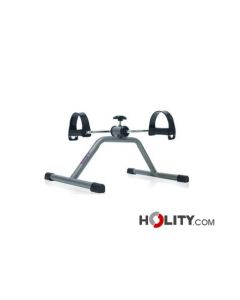
Rehabilitation pedal exerciser made of painted steel. Dimensions: W. 49 x D. 37 x H. 34 cm.
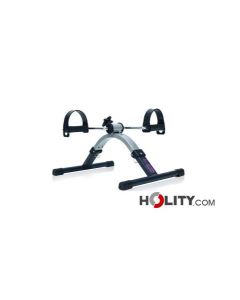
Folding pedal exerciser for physiotherapy made of painted steel. Dimensions: W. 48 x D. 37 x H. 34 cm.
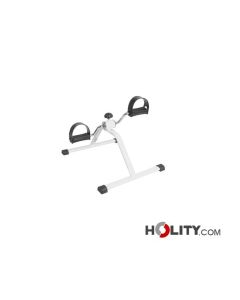
Pack of 7 pieces
€192.29 VAT excl.Rehabilitation pedal exerciser supplied disassembled with screw and wrench for assembly. Dimensions: W. 48 x D. 40.5 x H. 30 cm.
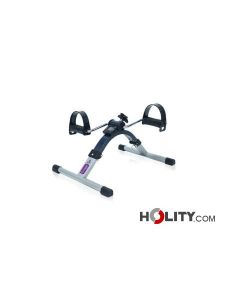
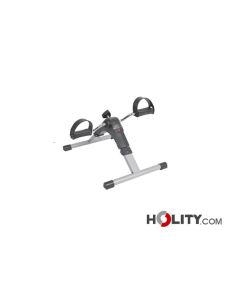
Folding pedal exerciser for rehabilitation and physiotherapy with display. Dimensions: W. 49 x D. 37 x H. 34 cm.
Pack of 5 pieces
€174.70 VAT excl.Rehabilitation pedal exerciser with display and screen with 5 functions. Dimensions: W. 37 x D. 49.5 x H. 26 cm.
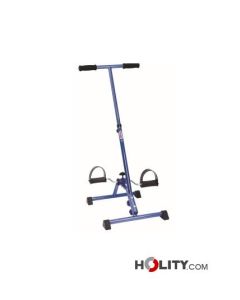
Dismountable rehabilitation pedal exerciser with handles. Dimensions: W. 41.5 x D. 54.5 x H. 95 cm.
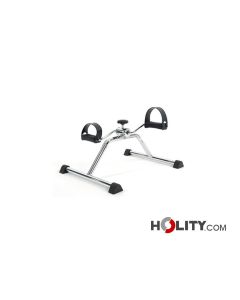
Rehabilitation pedal exerciser suitable for therapy. Dimensions: W. 40 x L. 53 x H. 26 cm.
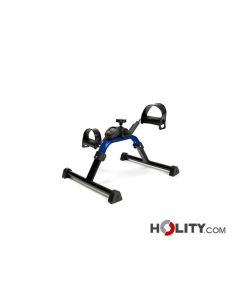
Rehabilitation pedal exerciser equipped with a calorie counter computer. Dimensions: W. 40 x L. 50 x H. 30 cm.
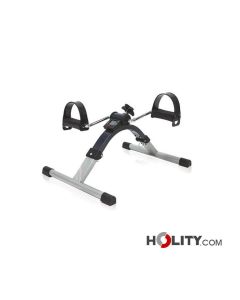
Rehabilitation pedal exerciser with display. Dimensions: W. 49 x D. 37 x h. 34 cm
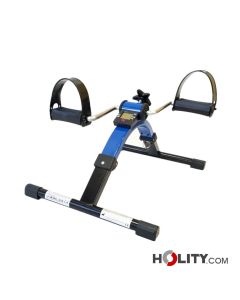
Folding pedal exerciser with display for leg and arm exercises. Dimensions: 48 x 37 x 24 cm.
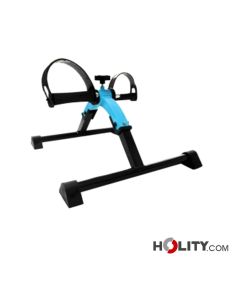
Physiotherapy pedal exerciser with manual adjustment. Dimensions: W. 38 x D. 44 x H. 28 cm.
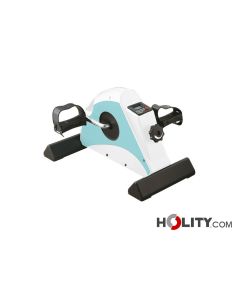
Rehabilitation pedal exerciser. Manual adjustment. Dimensions: W. 48 x D. 39 x h. 29 cm.
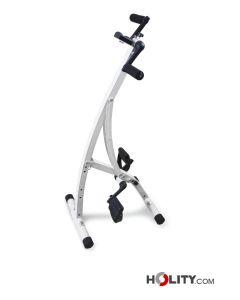
Pedal exerciser for physiotherapy. Manual adjustment. Dimensions: W. 38 x D. 34 x h. 98.5 cm
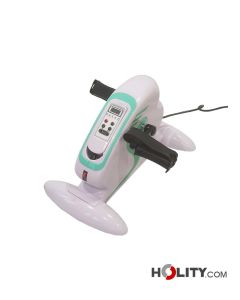
ABS pedal exerciser for arm/leg exercises with motor and 12 speeds. Dimensions: 49 x 40 x 29 cm.
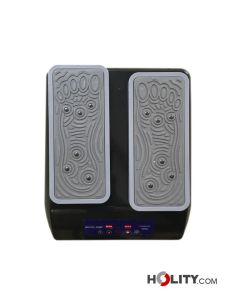
Pedal exerciser simulates walking while seated, with 30 programs and remote control. Dimensions: 31.5 x 37.5 x 14.5 cm.
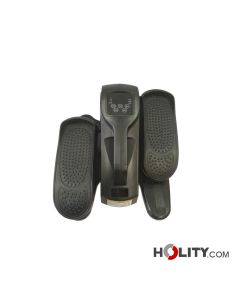
Mini electric elliptical for leg rehabilitation with remote control and display. Dimensions: approx. W 50 x D 44 x H 30 cm.
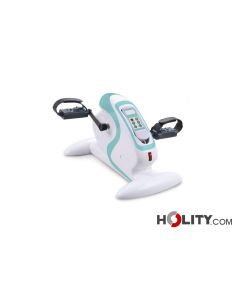
Pedal exerciser for rehabilitation. Dimensions: W. 49 x D. 40 x H. 29 cm.
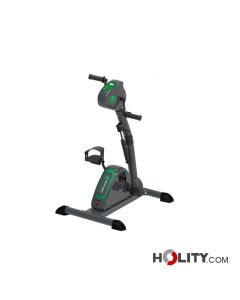
Double adjustable electric pedal exerciser for arms and legs. LCD display. Assembled product dimensions: approx. W 72 x D 63.5 x H from 95 to 104.8 cm.
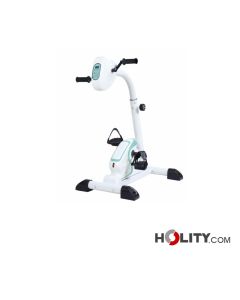
Rehabilitation pedal exerciser. Adjustable height. Dimensions: W. 72 x D. 63.5 x h. 95 cm.
The rehabilitation pedal exerciser is an essential tool in modern physiotherapy practice, used in both clinical and home settings for functional recovery and maintenance of joint mobility. These devices are designed to allow low-impact exercises, reducing the load on joints while stimulating the muscles of the lower and upper limbs. Therapeutic pedal exercisers are distinguished by their versatility, adapting to patients with different levels of motor ability, from the acute recovery phase to the consolidation of functionality.
In the rehabilitative context, the pedal exerciser plays a strategic role in improving blood circulation, reducing joint stiffness, and promoting recovery after surgery or in the case of degenerative pathologies. The choice of the appropriate model depends on specific therapeutic needs, available space, and the patient's level of autonomy. The proposed solutions range from compact manual versions to motorized models with preset programs, ensuring options suitable for any professional or residential setting.
Rehabilitation pedal exercisers offer multisensory benefits that go beyond simple passive mobilization. These devices allow the patient to actively control the range and speed of movement, promoting a conscious recovery of motor skills. Pedaling exercise significantly improves muscle endurance, stimulates the cardiovascular system in a controlled manner, and facilitates lymphatic drainage, aspects that are particularly important during post-operative rehabilitation phases or in deconditioning processes. Regular use of a pedal exerciser also contributes to the recovery of proprioception, i.e., the perception of the body in space, a crucial element for restoring balance and motor coordination.
From a practical standpoint, pedal exercisers represent an efficient solution for physiotherapy centers, where the need to manage multiple patients simultaneously requires reliable and easily adjustable equipment. Even in a home context, these tools prove invaluable for the elderly who wish to maintain functional autonomy, allowing daily exercises without the need for constant supervision. Application versatility includes post-stroke recovery programs, rehabilitation after lower limb fractures, management of arthritis, and functional decline related to aging. Furthermore, many modern pedal exercisers offer visual and sensory feedback through digital displays, increasing patient adherence to the therapeutic program.
The range of rehabilitation pedal exercisers available is divided into several construction categories, each characterized by specific features. Manual pedal exercisers represent the most traditional solution and form the basis for active-assisted mobilization exercises. Made mainly of painted steel, they are generally compact and lightweight, with dimensions varying around 48-49 cm in length and 34-40 cm in depth. These models do not require power, making them ideal for environments with space limitations or for frequent transport. Folding manual pedal exercisers add further practicality, reducing bulk during storage and facilitating mobility between different therapeutic environments. Some models include integrated handles to support arms and legs simultaneously, expanding exercise possibilities.
Motorized pedal exercisers represent technological evolution, equipped with electric motors that allow passive or active-assisted exercises with adjustable speed. Many models include LCD displays showing information on time, distance, calories consumed, and heart rate, essential data for monitoring the therapeutic program. Electric elliptical pedal exercisers offer a smoother and more natural movement compared to traditional cycles, further reducing joint impact. Dual pedal models, with independent adjustment for arms and legs, allow simultaneous exercise of the four limbs, particularly useful for hemiplegic patients or those with bilateral motor limitations. Adjustable heights from 95 to 104 cm characterize professional models, adapting to different body shapes and ensuring correct ergonomic postures during exercise.
Selecting a rehabilitation pedal exerciser requires careful evaluation of multiple criteria related to the context of use and the specific needs of the patient. The first element to consider is available space: restricted environments such as private homes or compact physiotherapy offices benefit from folding or compact models, while large rehabilitation centers can accommodate larger equipment. The size of the pedal exerciser also affects stability during exercise, a critical parameter for elderly patients or those with compromised balance. A second aspect concerns the patient's level of motor autonomy: those who retain active movement capacity need manual pedal exercisers with low adjustable resistance, while patients with significant limitations benefit more from motorized systems that passively assist movement.
Analysis of the pathology and the rehabilitation phase is of decisive importance in the choice. Patients in the acute post-operative phase require devices with the possibility of guided passive exercise, while those in the functional consolidation phase benefit from adjustable resistance that stimulates progressive muscle activation. The presence of digital displays and preset programs, although increasing the initial cost, significantly improves therapeutic adherence, especially in home self-rehabilitation contexts where patient motivation is critical. Seat dimensions and height must adapt anthropometrically to the patient to ensure correct posture during exercise, avoiding joint compensations that would compromise therapeutic efficacy. A frequent mistake consists in underestimating the need for resistance adjustment: pedal exercisers with only three or four levels might be insufficient for prolonged therapeutic progression, while systems with fine manual adjustment offer greater versatility and personalized adaptability.
Rehabilitation pedal exercisers, classified as medical devices or therapeutic equipment, must comply with regulatory standards that vary according to the intended use. The international standard ISO 4871 establishes the safety and performance requirements for gymnastics and rehabilitation equipment, including specifications on structural stability, mechanical safety, and load resistance. In the European context, class I or IIa devices must be CE marked according to Directive 93/42/EEC, ensuring compliance with essential safety and performance requirements. Motorized pedal exercisers also require certifications relating to electrical safety (EN 60601-1 for medical equipment) and electromagnetic compatibility, aspects particularly relevant for hospitals and specialized clinics.
From an ergonomic and safety perspective, pedal exercisers must feature stable structures with a wide enough base to prevent tipping during active exercise. The feet must be equipped with non-slip materials and, where appropriate, floor anchoring for patients with severe balance deficits. Handles, if present, must support significant static loads without deforming, ensuring reliability for elderly patients or those with reduced strength control capacity. Allowable load limits, usually between 100 and 150 kg, must be clearly indicated to avoid improper use. For motorized models, preventive maintenance is critical: motors must be checked periodically to verify the absence of malfunctions that could cause uncontrolled accelerations or sudden blocks. Professional clinical centers must also maintain maintenance and calibration records of the devices, complying with the quality control protocols required by medical safety legislation.
Explore all products in the category and compare the available solutions to find the one best suited to your operational context. The conscious choice of a rehabilitation pedal exerciser represents a strategic investment in the quality of the therapeutic path and the functional well-being of the patient.
A rehabilitation pedal exerciser is a therapeutic device that simulates the movement of cycling, allowing controlled exercises of the lower and sometimes upper limbs. It works through the manual movement of the pedals (manual models) or via an electric motor (motorized models), promoting joint mobility, muscle strengthening, and functional recovery safely.
Pedal exercisers are indicated for patients in post-surgical recovery, elderly people with motor limitations, people with neurodegenerative pathologies, physically disabled individuals, subjects suffering from arthritis or osteoarthritis, and anyone requiring controlled motor rehabilitation. They are particularly useful for patients who cannot bear body weight on their lower limbs.
Manual pedal exercisers require active effort from the patient to move the pedals, ideal for those who retain motor capacity. Motorized ones assist or completely perform the movement, suitable for patients with significant motor deficits. Motorized models often include digital displays, preset programs, and electronic speed adjustment, offering greater therapeutic precision.
Folding pedal exercisers significantly reduce bulk during storage, take up less space, and are easily transportable between different rooms or environments. They are ideal for private homes with limited space, mobile outpatient clinics, and patients requiring flexible home therapy, without compromising on stability during use.
Resistance is adjusted manually via knobs or electronically on motorized models, with increments varying from approximately three to twelve levels. The appropriate difficulty depends on the rehabilitation phase: initially, low resistance is preferred for passive mobilization, progressing gradually to higher resistance during functional consolidation.
Folding mini bikes with displays are ideal for the elderly, combining compactness with ease of use. Motorized models with height adjustment ensure correct postures without excessive effort. Pedal exercisers with integrated handles offer additional stability and safety, particularly beneficial for subjects with balance or coordination deficits.
Manual pedal exercisers require periodic checks on stability, pedals, and bearing lubrication. Motorized models require more thorough preventive maintenance of the motor, annual electrical safety verification, cable checks, and calibration of digital indicators. Professional centers must maintain documented maintenance records according to medical safety guidelines.
For professional centers with high usage, motorized pedal exercisers with a robust steel structure, electronic speed adjustment, reliable displays, and a frame with a maximum load of no less than 150 kg are preferable. Dual pedal models with adjustable height offer superior therapeutic versatility, adapting to different patients and multiple pathologies.
 English
  Italian
 French
 German
 Spanish