
mon-fri 9-13 / 14.30-18.30
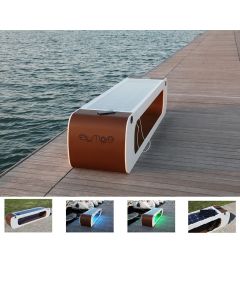
Smart bench with a modern design featuring a solar panel seat. Smart Bench equipped with 4 USB fast charging ports. 100% Made in Italy.
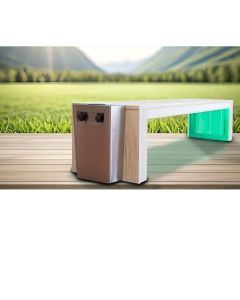
Smart bench made from bamboo waste and recycled plastic h888_03, with USB and wireless charging, RGB LED lighting, robust and eco-friendly. Dimensions: W 193 x D 53 x H 45 cm.
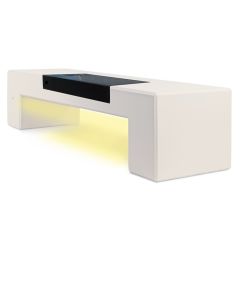
Smart bench with 60W photovoltaic module, 2 USB ports, 20W LED lighting and internal cooling system.
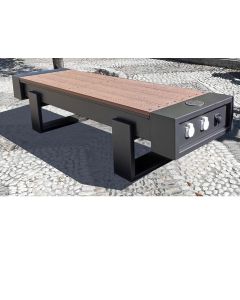
Smart bench without backrest with central control unit and 4 USB charging ports. Dimensions: W. 180 x D. 52 x H. 43 cm.
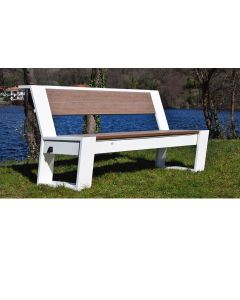
Smart bench for public spaces with Wireless charging kit and 4 USB charging ports. Dimensions: W. 180 x D. 60 x h. 100 cm.
Benches for urban furniture represent a fundamental element in the design of public spaces, from municipal parks to historical squares, from gardens to nature trails. These furnishings must combine structural functionality with resistance to weathering and atmospheric agents, while ensuring comfort and durability over time. The choice of the right bench depends on the specific context, the climatic characteristics of the territory, the expected level of use, and ordinary maintenance needs. Proper design of urban furniture through well-dimensioned seating made with appropriate materials significantly contributes to the usability and attractiveness of public spaces, encouraging citizens and visitors to stay and interact with the environment.
Investing in quality benches represents a strategic decision for public administrations and managers of collective spaces. Appropriate seating transforms public spaces into comfortable resting areas, promoting accessibility for users of all ages and physical conditions. Well-placed benches encourage people to spend more time in parks and squares, with positive effects on the sense of community and the frequentation of public spaces. Resistance to repeated mechanical stress, the ability to maintain structural integrity in conditions of humidity, frost, and direct UV rays, and ease of cleaning and ordinary maintenance are characteristics that an urban furniture bench must possess to guarantee a long life cycle and low management costs over time.
Furthermore, modern benches offer versatile design solutions, allowing designers to create aesthetically coherent public spaces without compromising on functionality. The availability of benches with and without backrests, in different sizes and materials, allows the solution to be adapted to the specific needs of each context: children’s playgrounds, nature trails, historical squares, municipal gardens, parking lots, or proximity to public transport. The use of certified and sustainable materials also reflects an increasing attention towards environmental standards and responsible purchasing policies of public administrations.
The catalog of benches for urban furniture is divided into three main material families, each with distinctive technical characteristics and preferred applications. Metal benches, generally made of galvanized or painted steel, offer high resistance to mechanical stress and relatively simple maintenance through periodic cleaning. Hot-dip galvanizing guarantees long-lasting protection from corrosion, while the possibility of painting the steel with epoxy or polyester enamels allows for integration into urban restyling programs and space theming. Metal benches are distinguished by a modern and minimalist design, suitable for contemporary contexts and spaces where the need for hygiene and ease of sanitization prevails.
Wooden benches, traditionally made with species such as Nordic pine pressure-treated to class IV, maintain a strong aesthetic value and a harmonious integration with natural environments such as parks, trails, and green areas. Wood conveys warmth and familiarity, encouraging prolonged use of the seat, but requires more frequent maintenance through periodic protective treatments to preserve the structure from atmospheric agents and biological degradation. Wooden benches are particularly suitable for wooded areas, historical gardens, and contexts where visual continuity with the natural environment is a priority. Finally, concrete benches, made with high-strength or draining concrete, represent the most robust and durable solution, ideal for historical squares, high-traffic urban centers, and contexts where vandalism is a recurring concern. Concrete does not require periodic protective treatments and effectively resists impacts, abrasions, and prolonged weathering, maintaining structural integrity for decades with minimal maintenance.
The choice of the appropriate bench begins with an assessment of the context of use and the clientele that will occupy the space. Parks with predominantly children’s frequentation require seating with a lower seat height (generally 40-50 cm), compact dimensions and, where possible, backrests to ensure ergonomic support during prolonged stays. Conversely, squares and transit spaces require benches of sufficient length (150-200 cm) to accommodate multiple users simultaneously, easily anchored to the ground to prevent movement and made of materials that maintain hygiene even in the absence of daily maintenance. Seat height represents a critical factor often underestimated: seats that are too low cause difficulty in rising for the elderly and people with reduced mobility, while seats that are too high are uncomfortable for children and adolescents.
A second fundamental aspect concerns the drainage capacity and resistance to standing humidity: galvanized metal benches are preferable in coastal areas or with permanent humid climates, as wood tends to rot despite treatments. In continental climates with marked seasonal cycles, pressure-treated wood offers better aesthetic performance and superior durability. Concrete benches should be carefully evaluated from the point of view of thermal comfort: cold concrete in winter periods can discourage use, unless the space is mainly frequented in the hot months. Ground anchoring is an often-overlooked element: benches in frequented public spaces must be fixed using steel anchors, floor anchor bolts, or certified anti-theft systems, to avoid deterioration caused by repeated movement and vandalism attempts. Finally, evaluating the available budget and the availability of personnel for ordinary maintenance guides the final choice: wood requires more management resources but offers aesthetic flexibility; metal balances resistance and maintenance; concrete minimizes management costs but requires dimensionally adequate spaces.
Benches intended for public spaces must comply with a series of regulatory requirements that vary depending on the intended use and territorial jurisdiction. The EN 1176 standard and its specific parts regulate furnishings intended for playgrounds, including children’s benches, imposing structural safety standards, opening dimensions to prevent entrapment, certified fall surfaces, and mechanical durability tests. Benches intended for general public spaces must also comply with the accessibility criteria defined by national regulations, establishing minimum seat heights (45 cm), maneuvering dimensions, and the presence of backrests for users with reduced mobility. CAM certification (Minimum Environmental Criteria) represents an increasingly requested requirement by public administrations aware of the environmental impact of materials, ensuring that wood comes from sustainably managed forests and that concrete is made with low-carbon binders.
From a technical-constructive point of view, benches must comply with minimum load capacities, generally between 300 and 500 kg distributed uniformly over the entire length of the seat, verifiable through static and dynamic tests. The durability of materials is guaranteed through artificial aging test cycles, exposure to saline solutions to verify corrosion resistance, thermal freeze-thaw cycles for materials in cold climates, and surface abrasion tests to evaluate the holding of protective finishes. Fixings and connecting elements must be made of compatible materials to avoid galvanic corrosion, while surfaces must have rounded corners and no sharp edges to minimize the risk of accidental injury. Complete technical documentation, certificates of conformity, declarations of performance according to Regulation 305/2011, and after-sales assistance are elements that distinguish professional suppliers from occasional operators in the urban furniture market.
Explore all the products in the category and compare the available solutions to find the one best suited to your operational context. Our range includes benches manufactured according to high quality standards, with complete certifications and technical support for choice, installation, and maintenance.
Benches with backrests offer lumbar support and allow for maintaining a correct posture during prolonged sitting, making them preferable for the elderly and people with reduced mobility. Benches without backrests occupy less space, are easier to clean, and are suitable for spaces where turnover is frequent. The choice depends on the context: relaxation parks preferably with backrests, transit squares can use both solutions.
High-strength concrete (HPC concrete) represents the most durable solution, requiring minimal maintenance and resisting repeated impacts and vandalism attempts. Galvanized steel offers good resistance and a better modern aesthetic. Wood, although visually pleasing, requires periodic treatments and is less suitable for spaces subjected to high mechanical stress.
The standard seat height for adults is 45 cm, in compliance with accessibility criteria. For playgrounds dedicated to children, the height drops to 30-40 cm. The seat depth should be 45-55 cm to ensure comfort during rest. Multifunctional benches can combine seats at variable heights to accommodate users of different age groups.
The typical length varies from 150 to 200 cm for general public spaces, allowing for 3-4 adults. In heavy transit contexts, it is preferable to place benches of 200 cm or more, distributed in adequate numbers. For relaxation parks, lengths of 170-190 cm balance space occupancy and seating capacity.
Yes, class IV pressure-treated wood requires annual visual checks and resealing every 3-5 years to maintain the effectiveness of protectives. Maintenance involves cleaning stains, localized stripping, and applying impregnants. Concrete and galvanized steel require much less maintenance, mainly periodic cleaning and structural inspection.
Prices vary significantly: simple galvanized metal benches start from 150-200 euros, quality wooden seats from 200-300 euros, while high-strength concrete benches range between 200-350 euros. Prices for single pieces are higher; volume orders benefit from substantial commercial discounts. Transport and installation costs should be evaluated separately.
Ground-level anchoring (using underground cabling) maintains a clean aesthetic and facilitates cleaning but requires excavation work and periodic cabling maintenance. Visible galvanized steel anchors are easier to install and inspect, suitable for spaces where an industrial look is acceptable. The choice depends on the urban context and the resources available for installation.
 English
  Italian
 French
 German
 Spanish

