
mon-fri 9-13 / 14.30-18.30
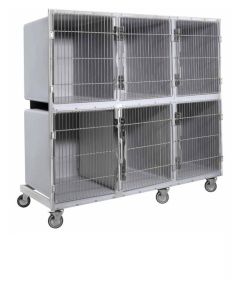
6-place PVC veterinary hospitalization cage, with removable dividers, easily sanitizable. Dimensions 1960×735×1800 mm.
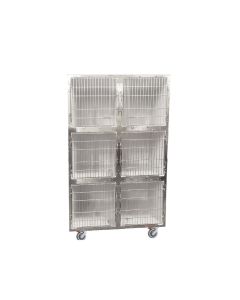
PVC recovery cage for animals, 6 units, with conductive wheels and brakes. Dimensions W.121 x D.72 x H.198 cm. Ideal for post-operative recovery of dogs and cats.
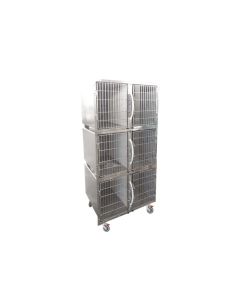
Hospitalization cage for veterinary use, robust structure with 6 places, removable non-toxic PVC dividers, conductive wheels with brakes, dimensions W90 x D72 x H198 cm.
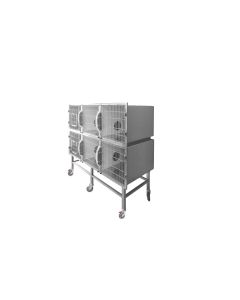
Recovery cage for cats and small dogs, 6 units, removable PVC dividers, doors and small access doors, conductive braking wheels. For veterinary clinics.
Veterinary hospitalization cages are a fundamental element in the organization of clinics, veterinary hospitals, and animal shelter facilities. These containment systems are designed to ensure the animal's well-being during the convalescence period, providing safe, hygienic spaces that are easily manageable by medical-veterinary personnel. Choosing the correct cage directly impacts the quality of post-operative care and the speed of the animal's recovery, as an adequate structure facilitates cleaning operations, therapy administration, and clinical monitoring. Modern cages combine corrosion-resistant materials, such as stainless steel and non-toxic PVC, with ergonomic designs that allow practical access to the animal by operators.
A professional veterinary hospitalization cage offers numerous advantages that go beyond simple animal containment. The quality structure ensures the animal's safety during hospitalization, preventing accidental escapes and injuries, while biocompatible and easily sanitizable materials significantly reduce the risk of secondary infections. Veterinary staff benefit from simplified access to the animal for dressing operations, drug administration, and vital monitoring, thus reducing time and stress for the animal itself. Modern cages are also designed to promote rest and recovery, with comfortable surfaces, good air circulation, and protection from excessive light when necessary.
In clinics and veterinary practices, the availability of cages of different sizes allows for optimizing space and accommodating animals of different sizes, from small species like cats and rabbits to large breed dogs. Investing in dedicated structures also communicates professionalism and care towards clients, increasing trust in the facility. Configuration versatility, with removable dividers and solutions on wheels, allows for rapid adaptation of spaces to the clinical needs of the moment and facilitates internal transport operations.
The market offers several categories of veterinary hospitalization cages, each with specific construction and functional characteristics. Painted steel cages represent the entry-level solution, robust and economical, ideal for facilities needing portable and easily movable spaces; however, the painted coating requires regular maintenance to prevent corrosion. AISI 304 stainless steel cages constitute the professional standard for medium-high level veterinary facilities, as they guarantee corrosion resistance, ease of sanitization, and durability over time, although they involve a higher initial investment. Non-toxic PVC cages represent a versatile solution, available in various sizes and with good thermal and acoustic insulation capacity, particularly appreciated in clinics that wish to reduce animal stress through insulation from the facility's noise levels.
Solutions with aluminum structures and galvanized mesh are specifically designed for animal transport, combining lightness and robustness, while fixed cages on a steel base represent the choice for permanent facilities that do not require mobility. Many modern cages integrate options such as removable dividers to manage multiple animals in the same space, doors with different opening systems (longitudinal and transverse), oxygen therapy supports, and acoustic-thermal insulation. The depth and height of the cages vary according to the target species: cages intended for cats generally feature passage holes that allow animals to move between different levels, while those for dogs emphasize horizontal space and overall height to ensure the animal's natural position.
The selection of a veterinary hospitalization cage requires careful evaluation of several technical and organizational parameters. First, it is necessary to clearly identify the animal species the facility intends to accommodate: standard dimensions vary significantly between a cat cage (about 60-70 cm deep) and one for large breed dogs (over 100 cm). The number of simultaneous places the facility needs influences the choice between single-unit, double-unit, or multi-story vertical cages, considering both available space and the average number of hospitalizations. The construction material must be chosen based on the available budget and the facility's sanitization protocols: stainless steel requires higher investment but ensures longevity and reduced maintenance costs, while PVC offers a good compromise between cost and hygienic performance.
Frequent errors include underestimating the space needed for cleaning operations and litter changes, or choosing cages that are too small, compromising the animal's well-being during convalescence. It is advisable to check for the availability of critical options such as oxygen therapy support, especially for facilities managing post-operative or critical animals, and to evaluate if the cage allows for easy administration of intravenous fluids and monitoring of vital parameters. Cages on wheels represent a strategic choice for clinics that frequently require internal transfers or for facilities with space layouts that vary over time. Finally, it is important to consider ease of sanitization: smooth surfaces, minimal joints, and materials resistant to professional disinfectants are non-negotiable requirements for correct hygienic management.
Veterinary hospitalization cages must meet specific regulatory standards that guarantee the safety and well-being of the hosted animal. In Italy and Europe, construction requirements are governed by UNI EN standards relating to materials in contact with food and animals, which prescribe the absence of toxic materials, dangerous protrusions, and sharp edges. The use of AISI 304 or 316 stainless steel represents the consolidated standard for veterinary facilities as it ensures compliance with HACCP regulations and facilitates decontamination according to international protocols. Minimum cage dimensions are indicated by European guidelines and national veterinary associations, which prescribe sufficient space to allow the animal to stand up, lie down, and turn around in spaces appropriate for the species.
From the perspective of construction safety, cages must have reliable locking systems that prevent accidental opening, grids or meshes sized to prevent trapping of limbs or the head, and internal surfaces free of elements capable of causing injury. Doors must be made with robust mechanisms that are easily manageable even in emergency conditions. Hygiene requirements prescribe easily cleanable and disinfectable materials, with the ability to resist alkaline solutions, acids, and chlorinated disinfectants commonly used in veterinary facilities. Cages intended for the hospitalization of immunocompromised animals or those in critical situations must also integrate thermal and acoustic insulation to reduce stress factors. Certification of compliance with international standards (ISO, CE) constitutes an indicator of product quality and reliability.
Explore all products in the category and compare the available solutions to find the one best suited to your operational context.
AISI 304 stainless steel offers greater durability, corrosion resistance, and ease of sanitization with strong disinfectants; PVC is lighter, more economical, and possesses good thermal and acoustic insulation properties, but requires more careful maintenance. The choice depends on the budget and the facility's hygienic protocols.
For small dogs (up to 10 kg), cages approximately 60-70 cm deep and 60 cm high are sufficient; for medium dogs (10-25 kg), a depth of 80-100 cm is recommended; for large dogs (over 25 kg), a depth of at least 100-110 cm is preferable. The space must allow the animal to fully stretch out and turn around.
First remove organic waste, wash with hot water and specific veterinary detergent, disinfect with chlorinated or alkaline solutions according to facility protocols, rinse thoroughly, and dry. Stainless steel cages tolerate more aggressive disinfecting agents than PVC, which can degrade with excessively strong products.
Cages on wheels offer flexibility in organizing internal spaces and facilitate animal transport, but are generally more expensive and require periodic brake checks. Fixed cages are ideal for facilities with defined spaces and allow for savings on purchase and maintenance costs.
Yes, removable dividers allow for customizing the internal space based on the needs of the animal and the facility, facilitating the isolation of animals with different clinical needs or the temporary cohabitation of small animals of the same species, thus increasing the clinic's management efficiency.
Not all cages are prepared for this accessory; it is necessary to verify at the time of purchase if the structure allows for the secure fixing of an oxygen cylinder support. Some cages integrate it during construction, others allow for later addition via specific kits.
Cats are the main species that need passage holes between different levels, as they naturally tend to move vertically; these holes facilitate movement and reduce stress during hospitalization, allowing the animal to adopt natural resting positions.
AISI 304 stainless steel is significantly more resistant over time, as it does not undergo oxidation; painted steel, although initially robust, tends to peel after a few years of intense use and frequent sanitization, requiring expensive maintenance or cage replacement.
 English
  Italian
 French
 German
 Spanish