
mon-fri 9-13 / 14.30-18.30

Pack of 2 pieces
€98.18 VAT incl.Anodized aluminum IV stand with 5-spoke plastic base and wheels. Adjustable height 135-240 cm. Mobile support Made in Italy.
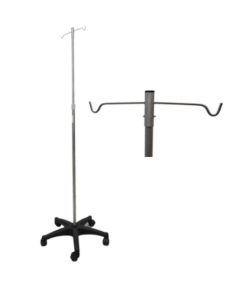
IV stand with five-spoke black plastic base on swivel castors. Adjustable height via knob from 120 to 210 cm. Base diameter: 50 cm.
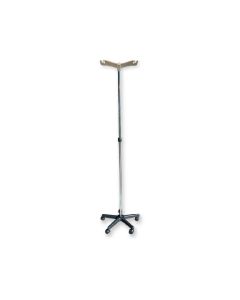
Pack of 2 pieces
€151.63 VAT incl.Chrome-plated steel IV stand, adjustable height 160-210 cm, 2 hooks and 4 wheels. Lightweight and easy to handle for hospital and home care.
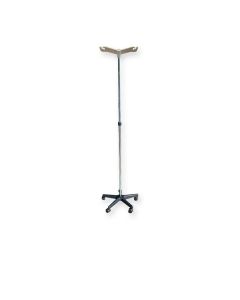
Pack of 2 pieces
€151.63 VAT incl.Aluminum hypodermoclysis stand with adjustable height 165-210 cm, 2 hooks and base on 4 wheels. Lightweight and stable for clinical and home use.
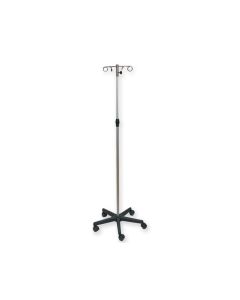
Pack of 2 pieces
€167.59 VAT incl.Chrome-plated steel IV stand adjustable in height (160-210 cm) with 4 metal hooks, ideal for healthcare facilities and home care.

Pack of 2 pieces
€171.19 VAT incl.AISI 304 stainless steel IV drip stand with adjustable height, 4 hooks and 5-wheel base. Ideal for hospital and home care use.
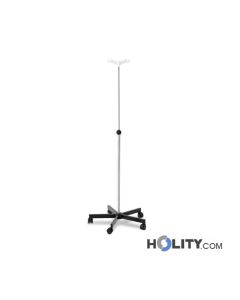
Pack of 2 pieces
€172.58 VAT incl.Painted steel IV stand, adjustable height 160-210 cm, 2 hooks of 5 kg. Sturdy structure for hospital and home use.

Pack of 2 pieces
€191.78 VAT incl.AISI 304 stainless steel IV drip stand with 4 hooks and wheeled base. Height adjustable 160-210 cm for healthcare and home care settings.

Professional chrome-plated steel IV pole with 4 safety hooks, adjustable height (1350-2150 mm) and mobile base on wheels for healthcare use.
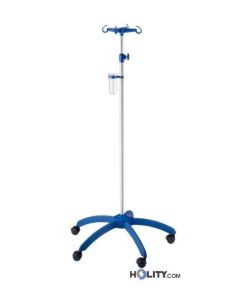
Professional IV stand in stainless steel and plastic, 4 safety hooks, adjustable height and mobile base on 50 mm wheels.

Stainless steel IV pole with adjustable height (1350-2150 mm), 4 hooks of 2 kg and base on twin castors. Complies with DIN EN 60601 standards.

Stainless steel IV pole with 4 safety hooks and 5-leg non-slip base. Adjustable height 506-726 mm for clinical and hospital use.

Dismountable IV stand in aluminum and plastic, adjustable height 830-1780 mm, equipped with transport bag and non-slip base.

Pediatric IV stand in aluminum and multi-colored plastic. Adjustable height 1350-2000 mm, 4 safety hooks and mobile base on 50 mm wheels.
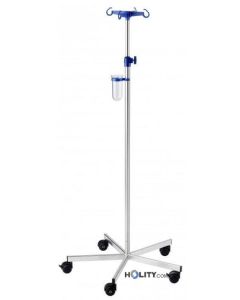
Stainless steel IV pole with 4 hooks and 5-spoke base. Adjustable height up to 2150 mm, compatible with 1.5 Tesla MRI environments.
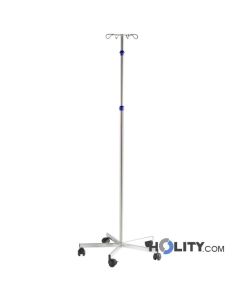
Professional stainless steel IV pole with 5-star base, adjustable height and 4 safety hooks. Ideal for hospital wards and clinics.

Stainless steel IV stand with 4 hooks and quick safety adjustment. Height 150-235 cm, ideal for hospitals and home care.
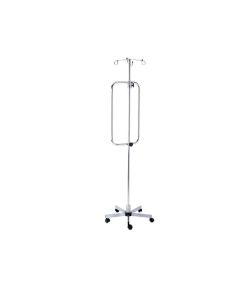
Infusion stand in chromed and stainless steel, height 160-250 cm. Includes 4 hooks and 10 kg pump support. Class I medical device.

Professional chrome-plated steel IV pole, adjustable height 1300-2130 mm, 4 anti-trauma hooks and wheeled base for hospital environments.

Professional IV pole in steel and aluminum with 4 safety hooks, mobile base on 75 mm wheels and telescopic height adjustment.
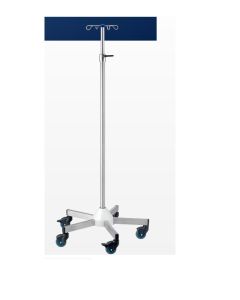
Infusion stand in stainless steel and aluminum with 4 hooks, adjustable height 155-255 cm and safety system for controlled lowering.

Professional IV pole in stainless steel and aluminum, height adjustable up to 2,100 mm, 4 hooks and stable base for intensive medical use.
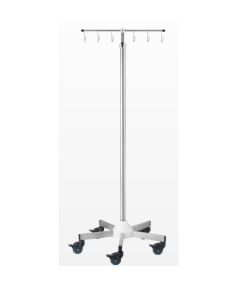
Stainless steel infusion stand with 6 hooks and 80mm wheels. Height-adjustable structure for high-intensity hospital departments.

IV pole h442_16 in stainless steel and aluminum, height adjustable with 6 safety hooks and 125 mm twin wheels for clinical use.
IV stands represent a fundamental element in healthcare, hospital, and home care settings. These are mobile or fixed supports designed to suspend and maintain infusion solution bags in the correct position during intravenous therapies, hypodermoclysis, and transfusions. Available in various configurations, materials, and adjustable heights, these devices guarantee stability, safety, and operational practicality in both clinical and domestic contexts, representing an indispensable investment for healthcare facilities, nursing homes, private clinics, and home care services.
The choice of an IV stand suited to one’s operational needs directly affects the quality of treatment and patient comfort. These supports avoid improvised positioning, reduce the risk of complications due to incorrect placement of the infusion bag, and allow healthcare professionals to operate with greater freedom of movement.
IV stands offer a series of technical and practical advantages essential in the healthcare field. Firstly, they guarantee structural stability that prevents unwanted oscillations and movements of the infusion bag, a critical aspect especially when the patient moves or during procedures requiring manipulation. The correct position of the bag also allows for proper gravitational flow of the solution, an essential element for therapeutic precision. Using a dedicated stand eliminates improvised solutions, such as hanging the bag on doors, furniture, or fixtures, which involve risks of falling, contamination, and instability. In hospital and clinical contexts, this equipment facilitates nursing operations, reduces therapy preparation times, and allows for better observation of the patient’s condition during infusion.
From an organizational point of view, mobile IV stands allow the patient to be moved without interrupting therapy, a crucial aspect for diagnostic tests, internal transfers, and mobilization during hospitalization. Height adjustability ensures ergonomic positioning that reduces patient fatigue and facilitates venous access by medical staff. For home care services, the use of a stable and professional support conveys a sense of security and reliability to the patient, improving therapeutic compliance and reducing anxiety related to treatment.
The IV stand catalog includes several construction variants, each responding to specific operational needs. Fixed stands with a heavy base are ideal for permanent environments such as hospital rooms, where mobility is not a priority and absolute stability is fundamental; often made of chromed or painted steel, they guarantee robust and long-lasting structures. Mobile stands on wheels, available with both five-star and four-legged bases, allow complete mobility and are preferred in contexts where rapid patient transfer is necessary; the wheels can be braking or swivel, with varying diameters to adapt to different flooring. Telescopic stands represent a modern solution that allows the height to be adjusted over a wide range, generally from 130 to 250 centimeters, offering maximum flexibility in environments with patients of different builds.
From a material standpoint, versions in AISI 304 stainless steel stand out, particularly suitable for contexts where hygiene and corrosion resistance are critical, such as infectious disease wards, operating rooms, and intensive care units; chromed steel represents a compromise between cost and durability and is widely used in hospitals and conventional facilities; anodized aluminum offers lightness while maintaining structural rigidity, useful where staff must frequently move the stand. The variability in the number of hooks (from two to four) determines the capacity for simultaneous suspension of multiple bags, an important aspect for complex or multi-channel therapies. Some solutions include foldable or plastic hooks, which reduce the risk of accidental damage to the bags and facilitate insertion.
Selecting an IV stand requires careful analysis of several parameters related to the specific operational context. The first element to consider is the environment of use: fixed structures like hospitals and nursing homes may prefer stationary chromed steel models with a heavy base, while home care services and facilities requiring frequent transfers need mobile and compact solutions. Adjustable height represents a decisive criterion, especially in contexts where the device must adapt to patients of different sizes or different hospital bed positions; widely adjustable ranges (for example from 110 to 250 centimeters) increase the versatility of the tool. The number of hooks must correspond to actual therapeutic needs: a patient on a single drug may require two hooks, while complex polytherapies or concomitant transfusions require four supports; choosing fewer hooks than needed leads to operational complications, while choosing an excessive number represents economic waste.
Material choice is strictly linked to hygiene protocols and internal regulations of the facility. Stainless steel is recommended for environments where biological risk is high or where sterilization procedures are frequent; chromed steel provides good corrosion resistance at lower costs and is appropriate for most ordinary contexts. The mobile wheeled base must be evaluated in terms of diameter and type: braking wheels guarantee safety once positioned, while swivel wheels facilitate maneuverability in tight spaces; the diameter affects the ease of passing over obstacles like thresholds. Common mistakes consist in underestimating the stability of the base, choosing non-adjustable models for heterogeneous environments, or excessively prioritizing the economic factor at the expense of durability: a quality IV stand has a useful life of ten or more years if properly maintained, easily amortizing the initial investment.
IV stands must comply with a series of national and international regulations that ensure the safety of the patient and medical staff. The EN 60601-1 standard and its amendments define general safety requirements for medical electrical equipment, while for mechanical stands, standards such as the DIN EN 60601 standard apply, specifying structural stability criteria, hook load capacity, mechanical stress cycles, and corrosion resistance requirements. The CE marking represents the mandatory requirement for marketing within European territory and testifies to the product’s compliance with medical device safety directives. Stands intended for hospital use must also pass dynamic load resistance tests, base stability checks under non-symmetrical load conditions, and material fatigue tests.
Critical aspects concern the load capacity of the hooks, generally expressed in kilograms per single support (common values range between 2 and 5 kilograms): this parameter must never be exceeded, otherwise structural collapse and the fall of the infusion bag may occur. The stability of the base is subject to verification for transverse and longitudinal impediments, especially when the load is positioned asymmetrically; regulations prescribe that the base must not tip over even under maximum load conditions applied to a single hook. The surface finish must guarantee the absence of sharp edges, cutting elements, or rough surfaces that could damage infusion tubes or cause injuries; for sensitive healthcare applications (operating rooms, sterile wards), materials must be sterilizable without loss of structural integrity. Finally, maintainability represents an implicit requirement: components such as wheels, hooks, and adjustment mechanisms must be easily checkable and replaceable in order to keep the stand in optimal condition throughout its operational life.
Explore all the products in the category and compare the available solutions to find the one best suited to your operational context. Whether it is a large hospital facility, a specialized nursing home, or a home care service, the catalog offers diversified configurations capable of satisfying specific clinical, regulatory, and organizational needs.
An IV stand is a structured support used to suspend and maintain infusion solution bags in the correct position during intravenous therapies, hypodermoclysis, and transfusions. It is used in hospitals, clinics, nursing homes, and home care services to ensure stability and proper gravitational flow of the infusion solution.
The fixed stand is intended for permanent placement in a single location, such as a hospital room, and guarantees maximum stability; the mobile stand on wheels allows the patient to be transferred without interrupting therapy, facilitating diagnostic tests and mobilization during hospitalization. The choice depends on the organizational needs of the facility.
AISI 304 stainless steel is the preferable choice for high biological risk contexts such as infectious disease wards, operating rooms, and intensive care units, as it resists corrosion and repeated sterilization procedures; chromed steel is appropriate for conventional environments and is more economical.
For standard hospital use, two or four hooks are sufficient, depending on the therapeutic complexity. Two hooks are enough for single-channel therapies; four hooks are necessary for simultaneous polytherapies, concomitant transfusions, or multi-channel therapies in intensive care or surgery departments.
An adjustable height range of 120 to 210 centimeters is generally considered suitable for ordinary hospital facilities. However, telescopic models reaching 250 centimeters offer greater flexibility, especially in contexts with larger patients or in different hospital bed positions.
Compliance is certified by the CE marking on the product and the accompanying technical documentation certifying adherence to EN 60601 and DIN EN 60601 standards. It is also important to check the manufacturer’s declaration of conformity and, if necessary, request the structural and stability test certificate.
The typical load capacity per single hook generally varies from 2 to 5 kilograms, depending on the model. Never exceeding this limit is essential to guarantee the structural safety of the stand and prevent the collapse of the support and the fall of the infusion bag during treatment.
Yes, many models are suitable for both contexts, especially those with a mobile wheeled base and adjustable height. However, in home care, it is often preferable to choose compact and lightweight models that do not occupy excessive living space, while in hospitals, robust solutions with greater structural stability are preferred.
 English
  Italian
 French
 German
 Spanish