
mon-fri 9-13 / 14.30-18.30
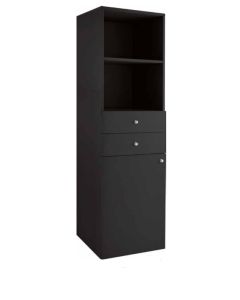
Space-saving service unit for restaurant dining rooms in melamine-faced wood (45x49x144h cm). Vertical column design with cutlery drawer, open drawer, and bottom door. Ideal for small spaces.
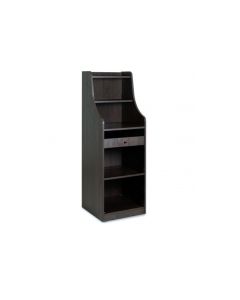
Space-saving service cabinet for restaurant dining rooms (48x48x145h cm). Equipped with a 2-shelf riser, 1 closed cutlery drawer with dividers and open compartment with adjustable shelf. On wheels.
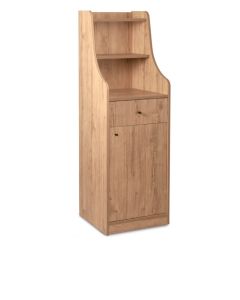
Space-saving service cabinet for restaurant dining rooms in melamine wood (48x48x145h cm). Column configuration with closed cutlery drawer, door with adjustable shelf and 2-shelf riser. On wheels.
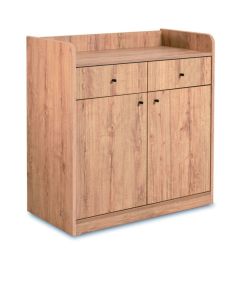
Low service cabinet for restaurant dining rooms in melamine. Equipped with 2 closed cutlery drawers with dividers, 2 doors with adjustable shelves and wheels.
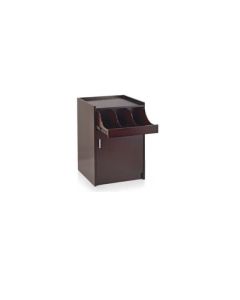
Elegant compact cutlery cabinet for restaurant room (55x55x81.5h cm). Made of veneered and painted wood, it is equipped with a pull-out drawer, hinged door and fixed central shelf. Robust 35 kg structure, delivered already assembled.
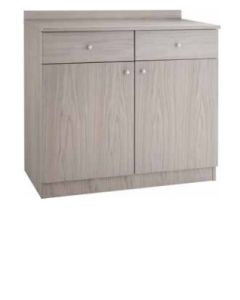
Low dining room service cabinet in melamine-faced wood (90x48x95h cm). Equipped with 2 cutlery drawers, 2 doors and multi-directional wheels. Available in Walnut, Carbon and Ash.
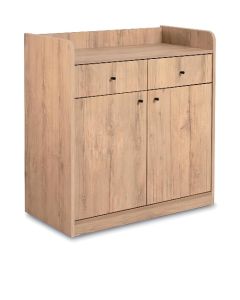
Low service cabinet for restaurant dining rooms in Oak finish (94x48x98h cm). Equipped with 2 cutlery drawers with dividers, open compartment, and door with adjustable shelf. On wheels.
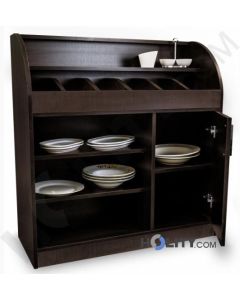
Professional service cabinet for restaurant dining room in Wengè finish (1000x400x1065h mm). Equipped with 6 cutlery compartments, open compartment, closed compartment with doors and upper shelf.
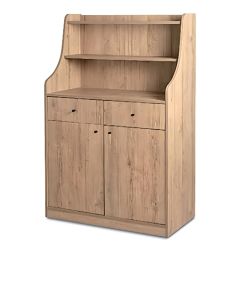
High service cabinet for restaurant dining rooms in melamine-faced wood (94x48x145h cm). Equipped with a two-shelf riser, 2 cutlery drawers with dividers, open compartment and door. Protected edges and integrated wheels.
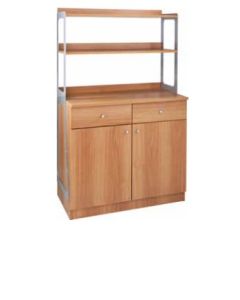
Service cabinet for restaurant dining room in melamine-faced wood. Dimensions 90x48x155h cm, 2 cutlery drawers, 2 doors and wheels. Available in Walnut, Carbon and Ash.
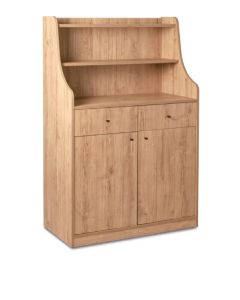
High service cabinet for restaurant dining room in melamine (94x48x145h cm). Equipped with a two-shelf riser, 2 cutlery drawers with dividers and 2 lower doors. Protected edges and integrated wheels.
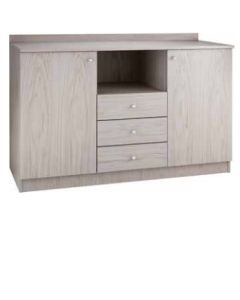
Professional service station for dining rooms with three compartments (136x48x95h cm). Melamine structure with 3 cutlery drawers, 2 doors and multidirectional wheels. Available in Walnut, Carbon and Ash.
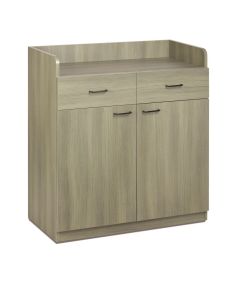
Low service cabinet for restaurant dining room in laminated wood (103.1x47x94.5h cm). Equipped with 2 cutlery drawers with dividers, 2-door compartment with adjustable shelf and swivel wheels. Available in various finishes.
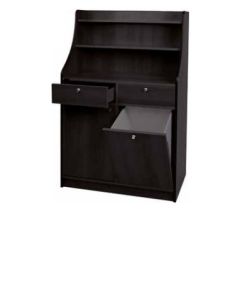
High service cabinet for restaurant dining rooms in melamine wood. Dimensions 95x49x144h cm, with 2 drawers, door, waste hopper and 2 open shelves. Carbon or Walnut finishes.
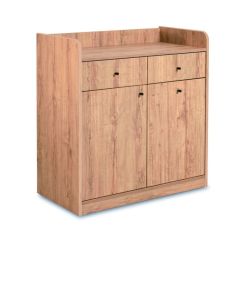
Low service cabinet for dining rooms in Oak melamine (94x48x98h cm). Equipped with 2 closed cutlery drawers, 1 door with adjustable shelf and 1 tilting hopper. On wheels.
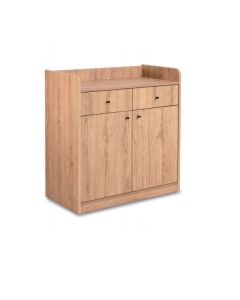
Low service cabinet for restaurant dining room (94x48x98h cm). Equipped with 2 cutlery drawers with dividers, 1 door with intermediate shelf and 1 tilting hopper. Melamine structure on wheels.
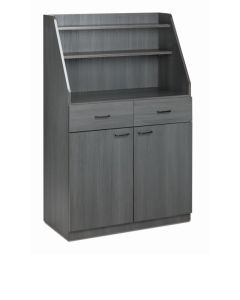
Tall service cabinet for restaurant dining room in laminated wood (94.8x47x150.8h cm). Equipped with a 2-shelf riser, 2 cutlery drawers, a bottom 2-door compartment with an adjustable shelf, and swivel wheels. Available in various finishes.
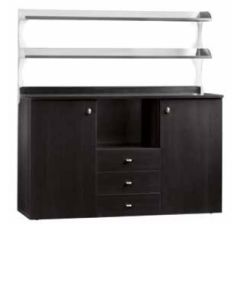
Extra-large service unit for restaurant dining rooms (136x48x155h cm). Melamine structure with 2 upper shelves, 3 cutlery drawers, 2 doors and wheels. Available in Walnut, Carbon and Ash.
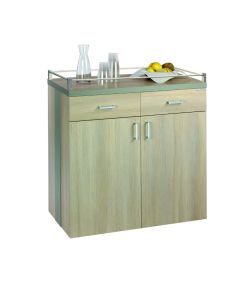
Elegant waiter station for dining rooms with a modern design. Laminated wood structure with refined aluminum-colored details, equipped with 2 drawers with adjustable dividers, 2 lower doors, and hidden wheels for a clean aesthetic.
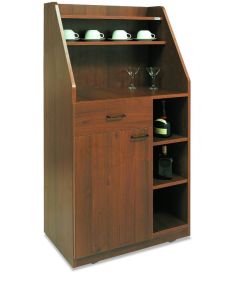
Service unit for restaurant dining room in laminated wood (75x47x144.7h cm). Column design with riser featuring 2 adjustable shelves, 1 cutlery drawer with dividers and lower compartment with one door. On wheels.
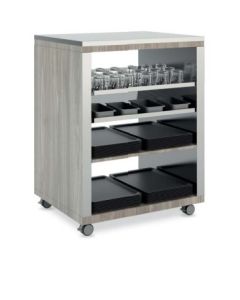
Professional service unit for meal distribution (93x74,7x124,7h cm). Designed with two slanting internal stainless steel shelves, ideal for organizing trays, plates, cutlery and glasses in self-service lines or canteens.
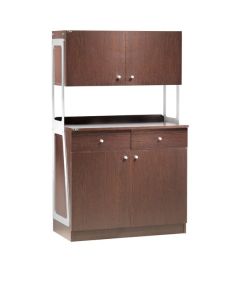
High service unit for restaurant dining room in melamine. Dimensions 92x48x153h cm, equipped with 2 upper wall units, 2 cutlery drawers, 2 doors and multidirectional wheels. Walnut finish.
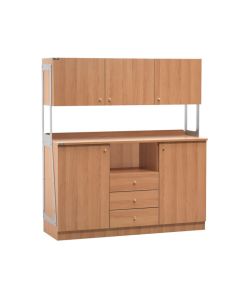
High service unit for restaurant dining room with three compartments (137x48x153h cm). Melamine structure with 3 upper wall units, 3 cutlery drawers, 2 doors and wheels. Available in Walnut, Carbon and Ash.
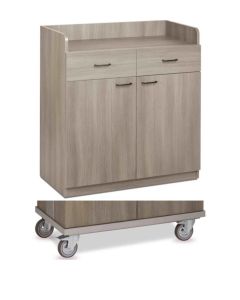
Professional service cabinet with reinforced base and oversized wheels (94.5x47x103.1h cm). Made of laminated wood, equipped with a push handle, 2 cutlery drawers with dividers and a 2-door compartment with an adjustable shelf. Ideal for frequent movement.
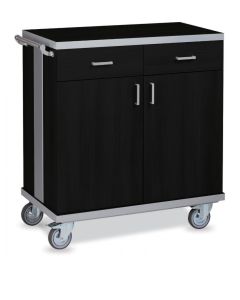
Elegant professional waiter station for dining rooms (compact 2-module version). Laminated wood structure with aluminum-colored details, reinforced base and oversized 125 mm wheels. Includes 2 drawers with adjustable dividers and a 2-door compartment.
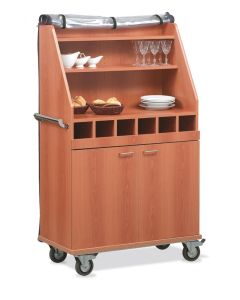
Professional high service cabinet for restaurant dining rooms (94.8x47x150.8h cm). “Heavy Duty” version with reinforced base, oversized 125 mm wheels and push handle. Includes 2-shelf riser, 2 cutlery drawers and 2-door compartment.
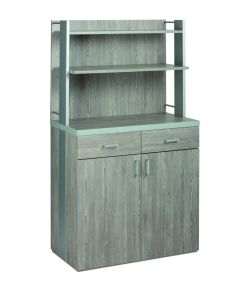
Extra-luxury service cabinet for restaurant dining rooms with a modern design (95.1x51x171.5h cm). Made of laminated wood with refined aluminum-colored details, it features 3 doors, 3 cutlery drawers with adjustable dividers, and an adjustable top riser. Impeccable aesthetics thanks to the hidden wheels.
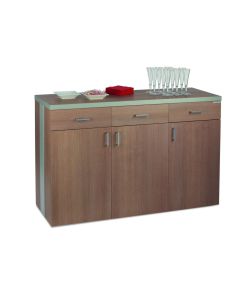
Elegant service unit for restaurant dining rooms with a modern design (waiter station). Made of laminated wood with refined aluminum-colored details, it features 3 drawers with adjustable dividers and 3 lower doors. Hidden wheels included for a clean aesthetic.
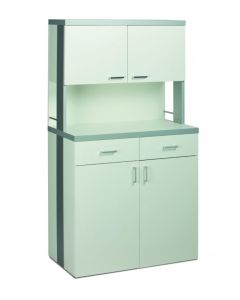
Service cabinet with a modern and elegant design (95.1x51x175.3h cm). Made of laminated wood with aluminum-colored details, it features 3 drawers with adjustable dividers, 3 lower doors, and a top section closed by doors. Hidden wheels included.
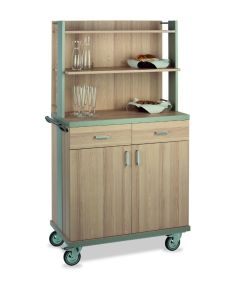
Large-sized professional waiter station (96.5x53.3x178.2h cm) with reinforced base and oversized wheels. Made of laminated wood with aluminum-colored details, it features 3 doors, 3 drawers with adjustable dividers, and an adjustable upper backsplash. Ideal for heavy loads and frequent movements.
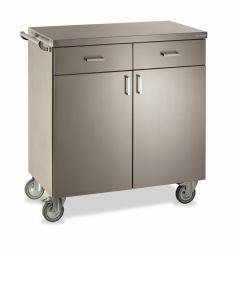
Low "Outdoor" service cabinet in AISI 304 stainless steel (96.5x53.3x105.2h cm). Designed for outdoor use in patios, terraces and catering, with 2 cutlery drawers, lower 2-door compartment and reinforced 125 mm wheels.
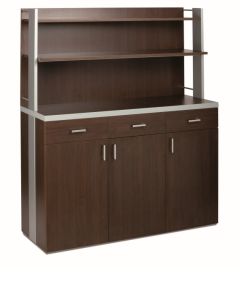
Service cabinet with a modern and elegant design for restaurant dining rooms. Made of laminated wood with aluminum-colored details, it features 3 doors, 3 cutlery drawers with adjustable dividers and an upper riser. Equipped with hidden wheels.
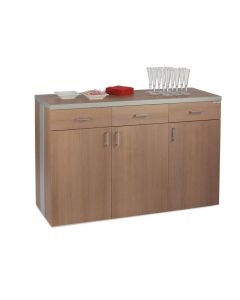
Professional service unit for restaurant dining rooms with a modern design (waiter station). Laminated wood structure with aluminum-colored details, equipped with a reinforced base, oversized Ø 125 mm wheels, 3 doors and 3 drawers with adjustable dividers.
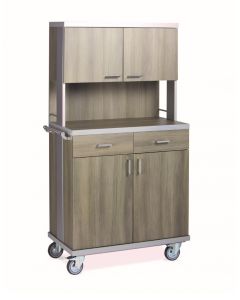
Elegant large professional waiter station (96.5x53.3x182h cm) with reinforced base and wheels Ø 125 mm. Laminate structure with aluminum details, equipped with 3 adjustable drawers, 3 lower doors and upper compartments closed by flaps.
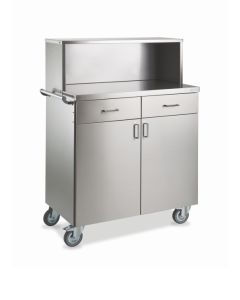
Professional outdoor service cabinet in AISI 304 stainless steel (96.5x53.3x140.7h cm). Ultra-resistant structure with 2 cutlery drawers, lower compartment with 2 doors, and oversized wheels for smooth mobility on patios and terraces.
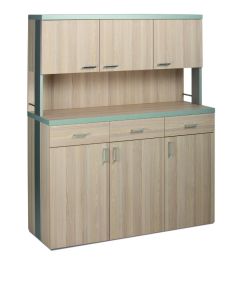
Elegant professional waiter station in laminated wood with refined aluminum-colored details. Modern structure equipped with 3 cutlery drawers with adjustable dividers, 3 lower doors and upper part closed by doors. Hidden wheels included.
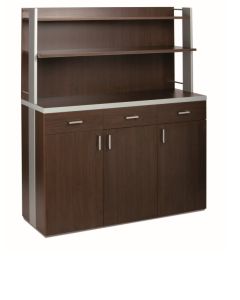
Professional waiter station with reinforced base and oversized Ø 125 mm wheels. Laminated wood structure with 3 doors, 3 cutlery drawers with adjustable dividers and adjustable top backsplash. Ideal for heavy loads and frequent movements.
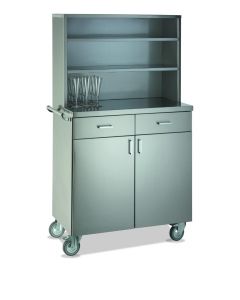
Professional "Outdoor" service cabinet in AISI 304 stainless steel (96x52x176h cm). Designed for outdoor use, catering and alfresco dining, with 2 upper shelves, 2 cutlery drawers, lower 2-door compartment and reinforced wheels.
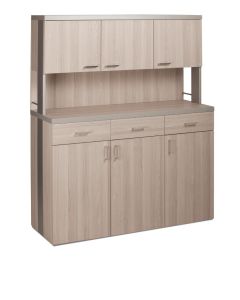
Professional high-resistance waiter station for dining rooms. Made of laminated wood with aluminum-colored details, equipped with a reinforced base, Ø 125 mm wheels, 3 doors, 3 adjustable cutlery drawers, and upper compartments closed by doors.
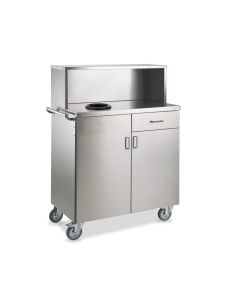
Professional service cabinet on Ø 125 mm wheels entirely made of AISI 304 stainless steel. Equipped with two open upper shelves, two cutlery drawers, a lower compartment with two doors featuring adjustable shelves, and a waste collection hole.
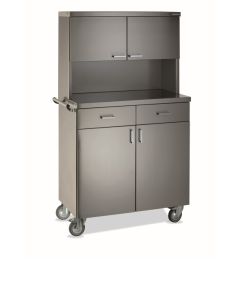
Professional "Outdoor" service cabinet in AISI 304 stainless steel (96x52x176h cm). Featuring a completely enclosed structure with 2 upper doors, 2 drawers, and 2 lower doors. Ideal for catering and outdoor dining areas.
Dining room service cabinets are a fundamental element in organizing a restaurant's space, combining operational functionality with professional aesthetics. These furniture items are designed to optimize the workflow of front-of-house staff, facilitating access to cutlery, glasses, napkins, and other accessories during customer service. Choosing the right cabinet directly impacts service quality and operational efficiency, reducing movement times and improving the overall organization of the dining area.
Available in various configurations, sizes, and materials, service cabinets adapt to every type of establishment, from trattorias to Michelin-starred restaurants, from hotels to bars with food service. Their versatility allows them to be integrated into small spaces without functional compromises, thanks to vertical and compact designs that maximize storage while maintaining a minimal footprint. Each model features construction details designed for durability in high-traffic environments, such as drawers with specific cutlery dividers, adjustable shelves, legs on swivel casters, and protected edges.
Dining room service cabinets ensure a rational organization of workspaces, allowing staff to quickly access everything needed for table service. A well-organized cabinet significantly reduces movement times and improves the perception of service quality by customers, who notice staff moving with greater agility and confidence. Furthermore, these furnishings protect delicate materials such as cutlery, glassware, and porcelain, keeping them safe from accidental bumps and preserving their quality over time. The robust structure and professional construction guarantee long-term durability, even in high-use environments where frequent replacement would result in significant operational costs.
From an aesthetic point of view, service cabinets contribute to defining the atmosphere and style of the restaurant, as they are visible and characteristic elements of the space. Melamine-faced materials, veneered wood finishes, and careful construction details convey a professional image that reflects the overall quality of the establishment. The availability of different colors and styles allows the cabinet to be coordinated with existing furniture, creating visual coherence and maintaining the stylistic identity of the room. For businesses requiring operational flexibility, the presence of swivel casters allows the cabinet to be quickly repositioned according to the organizational needs of the service.
Service cabinets are mainly divided into three size categories: low models (height 95-98 cm), ideal for tight spaces and services where staff need quick access; medium models (height 144-148 cm), which offer a balance between capacity and ease of access; and high models (height 155 cm and above), designed for large rooms where vertical space can be exploited without compromising visibility. Each category is available in different internal configurations, combining cutlery drawers with fixed dividers, closed doors with adjustable shelves, open compartments, and tilting hoppers for waste disposal. Construction materials range from melamine-faced wood (oak, wenge, walnut, carbon, ash) to painted veneered wood, through to mixed solutions with stainless steel elements for environments requiring higher hygiene standards.
The width of the models varies from 45 cm (single-front space-saving solutions) to over 100 cm (models covering large service sectors), allowing them to adapt to any room geometry. Some models feature a top riser with two shelves, useful for displaying trivets, bread baskets, or other service accessories, while others opt for a minimalist design with only drawers and doors. Depth is generally around 48 cm, a standard that allows the cabinet to be placed in wall niches without protruding excessively into circulation areas. Multi-directional wheels are a frequent option, sometimes paired with locking systems to ensure stability during intense service periods.
Selecting a dining room service cabinet must start with an analysis of the available space and the restaurant's layout. Before any purchase, it is essential to measure the wall or niche intended for the cabinet, considering not only width and depth but also the height of the room and any obstacles such as wall sconces, paintings, or other installations. A common mistake is choosing dimensions without considering staff circulation paths, which could be compromised by a cabinet that protrudes too much. At the same time, it is necessary to evaluate the volume of items to be stored during service: a room with 30-40 covers can rely on a compact cabinet with 2-3 drawers, while larger rooms may require double configurations or models with a riser. The number of cutlery items served, the type of glassware used, and the quantity of napkins in use during service must guide the choice of drawers and internal compartments.
Secondly, the overall decor style of the room and the message to be communicated to customers must be considered. Dark finishes (wenge, carbon) convey elegance and modernity, suitable for luxury restaurants or steakhouses; light tones (oak, ash) provide brightness and freshness, preferable in contemporary environments or Mediterranean cuisine; solid wood or painted veneer offers stylistic versatility. Another decisive element concerns the frequency of movement: if it needs to be moved daily, swivel casters with a locking system are essential; if the cabinet will remain fixed, versions without wheels can be chosen, which are more stable and less exposed to wear. Finally, it is crucial to verify if the cabinet must meet specific hygiene or regulatory requirements (such as daily cleaning under the cabinet); in such cases, solutions with legs on wheels are preferable to fixed feet, which make under-surface access more difficult.
Service cabinets for professional use must comply with European safety standards, particularly the EN 1729-1 standard for work furniture with stability and mechanical strength requirements. Every cabinet must feature rounded edges and smoothed corners to prevent staff injury during movement in tight spaces, an aspect often underestimated but fundamental in high-traffic environments. The construction must guarantee stability even when drawers are fully extended, a frequent situation during service preparation: drawers must have stop systems that prevent accidental extraction. Internal shelves must be sized and constructed to withstand the concentrated weight of cutlery, glasses, and plates without excessive bending that could cause deterioration or failure over time.
Regarding materials, the melamine-faced wood used must come from FSC-certified suppliers or equivalents, ensuring environmental sustainability and construction quality. Painting must use non-toxic and formaldehyde-free finishes, particularly important given the direct contact with service items. If the cabinet is equipped with wheels, these must be certified for food environments (as required by the REACH directive) and equipped with bearings capable of supporting loads up to 150-200 kg without wobbling. Dividers in cutlery drawers, often made of plastic or composite wood, must be removable or adaptable to different cutlery sizes to keep the cabinet functional as the establishment's equipment changes. Finally, all metallic components (hinges, handles, sliding guides) must be made of satin or chrome-plated steel to resist humidity and cleaning agents used in daily sanitization.
Explore all products in the category and compare the available solutions to find the one best suited to your operational context. Our service cabinets combine professional functionality, construction durability, and stylistic versatility, representing a solid investment for any restaurant or bar.
Dimensions vary according to needs: low models typically measure 45-94 cm in width, 48 cm in depth, and 95-98 cm in height; medium models reach 144-148 cm in height; high models exceed 155 cm. The choice depends on available space and the volume of items to be stored during service.
The open drawer with dividers allows quick access to cutlery during fast service, improving operational efficiency; the closed drawer better protects items from dust and humidity, keeping them cleaner over time. The choice depends on the service style and the pace of the dining room.
No, modern cabinets with swivel casters and locking systems guarantee stability equivalent to fixed ones. Wheels allow the cabinet to be moved for cleaning and reorganization without compromising safety during service, provided the locking system is always activated.
Dark finishes (wenge, carbon) suit luxury and contemporary restaurants; light tones (oak, ash) provide brightness and adaptability to multiple styles; painted solid wood offers versatility. We recommend coordinating the cabinet with the overall color palette of the room for visual coherence.
A well-constructed professional cabinet can support loads between 150-200 kg uniformly distributed, considering both the weight of the structure and the content. However, it is important not to overload drawers individually; distributing the weight among multiple drawers and shelves is the correct practice.
Yes, most of our models feature removable and adjustable dividers, allowing the space to be adapted to different cutlery and service item sizes. Some dividers are made of easily removable composite plastic, others are made of wood and require more specific adjustments.
It is advisable to leave at least 60-80 cm of free space in front of the cabinet to allow full drawer extraction and safe movement for staff. If the cabinet is placed in a corner, also consider lateral access for cleaning and routine maintenance.
Painted solid wood requires more attention in daily cleaning compared to melamine-faced wood, which is more resistant to humidity. Stainless steel components (hinges, handles) require regular cleaning with specific detergents to avoid streaks and dulling, but they maintain superior durability over time.
 English
  Italian
 French
 German
 Spanish