
mon-fri 9-13 / 14.30-18.30
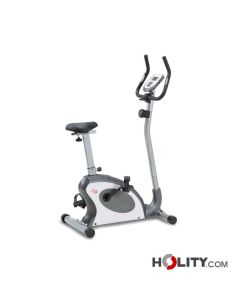
Rehabilitation exercise bike, ideal for daily home exercises, with training computer, magnetic braking system, and seat adjustment in height and depth. Dimensions: L 86 × D 50 × H 136 cm.
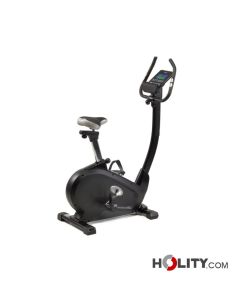
Professional exercise bike with advanced computer for monitoring training parameters, magnetic braking system, handlebar and saddle adjustment, and 12 kg flywheel mass. Dimensions: L 108 × W 56 × H 137 cm.
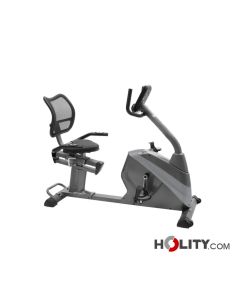
Professional recumbent exercise bike for muscular and cardio-respiratory rehabilitation, equipped with an advanced computer, magnetic braking system, and seat depth adjustment for optimal ergonomics. Dimensions: L 150 × W 60 × H 116 cm.
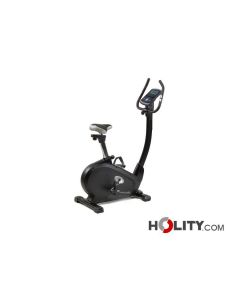
Professional ergometer with magnetic induction braking system, customized programs for beginners and athletes, and advanced training computer. Dimensions: L 103 × W 56 × H 137 cm. Maximum capacity: 150 kg.
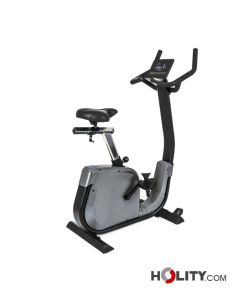
Professional ergometer for advanced rehabilitation with magnetic induction braking system, 16 kg flywheel mass, customized programs and advanced heart rate monitoring. Dimensions: W 96 × D 56 × H 143 cm.
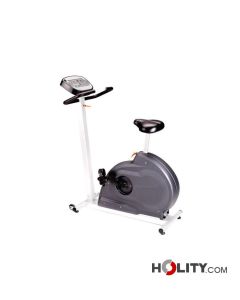
Cycle ergometer with electrodynamic brake and easy access. Dimensions: L 110 x D 53 x H 130 cm.
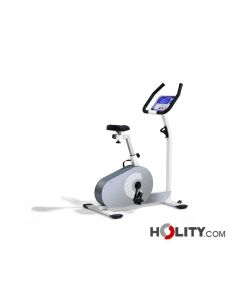
Advanced upright cycle ergometer for professional rehabilitation, equipped with a multicolor backlit LCD display, bio-feedback function, preset programs and resistance from 25 to 300 W. Dimensions: L 100 × D 65 × H 145 cm.
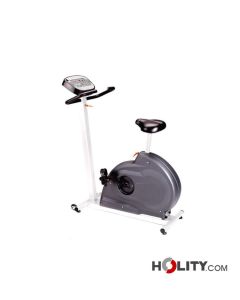
Cycle ergometer with electrodynamic brake and 10.1” touch monitor. Dimensions: L 110 x D 53 x H 130 cm.

0 – 1400 W cycle ergometer with RPM-independent brake, ideal for rehabilitation. Dimensions: L 110 x W 53 x H 130 cm.

Cycle ergometer with electrodynamic brake and power up to 1400 Watts. Dimensions: W 110 x D 53 x H 130 cm.
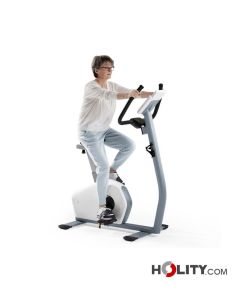
Vertical cycle ergometer for advanced rehabilitation, equipped with a 7” color touch screen display, adjustable resistance from 15 to 500 W and wide easy access. Ideal for medical and physiotherapeutic use. Dimensions: L 119 × W 65 × H 145 cm.
Rehabilitation exercise bikes and ergometers are fundamental tools in functional recovery paths following trauma, surgery, or prolonged periods of immobility. These devices, used in hospitals, specialized clinics, physiotherapy centers, and home settings, allow the intensity of the exercise to be measured in a controlled and measurable way, promoting the restoration of joint mobility and muscle strengthening with safety margins recognized by clinical practice. The technology integrated into modern ergonomic bikes allows for the monitoring of crucial physiological parameters, adapting the workload to the patient's actual capabilities at every stage of recovery.
The difference between a traditional exercise bike and an ergometer lies in the precision of the measurement: while exercise bikes offer an intuitive progression of resistance levels, ergometers quantify the power output in watts, allowing for scientific training programming and objective comparison of progress over time. Both solutions minimize joint impact, a decisive feature for those recovering from knee, hip, or ankle injuries, ensuring smooth and natural movements without the mechanical stress typical of running or free weights.
The use of exercise bikes and ergometers in the rehabilitative context offers therapeutic benefits proven by decades of clinical practice. The circular motion of pedaling stimulates blood circulation, facilitates lymphatic drainage, and mobilizes joints with a progressive load, aspects particularly relevant in post-infarction or post-bypass cardiac rehabilitation, where measured training is critical for the patient's functional recovery. The stable seated position reduces the risk of falls, an essential element when working with frail, elderly patients or those with compromised balance. Furthermore, the ability to adjust resistance and speed independently allows the physiotherapist to intervene in real time, modifying the protocol based on the patient's reactions, reported symptoms, and biophysiological data detected by integrated monitors.
From a psychological point of view, performing exercise on quantifiable and self-controllable devices increases patient compliance, as they can visualize their progress in real time through concrete metrics such as distance, calories, and reached resistance. This immediate feedback reduces demotivation and favors adherence to long and demanding protocols, a decisive factor for the success of rehabilitation. In home settings, ergonomic bikes become tools of therapeutic autonomy, allowing patients to continue recovery outside the healthcare facility according to precise medical indications, monitorable through digital storage of training parameters.
The range of rehabilitation exercise bikes and ergometers is divided into different configurations, each optimized for specific clinical contexts and patient profiles. Traditional upright bikes maintain a natural pedaling posture, with pedals positioned under the pelvis and a seat adjustable in height and depth; this geometry favors balanced muscle activation between quadriceps, glutes, and calves, making it ideal for post-operative hip and knee recovery. Recumbent bikes, equipped with a reinforced backrest and pedals forward of the pelvis, distribute the load over a larger surface and protect the lumbar area, representing the preferred choice for patients with vertebral problems, discopathies, or simply for the elderly who need more postural support. Professional ergometers, characterized by touch screen displays, electrodynamic braking systems, and power ranges up to 1400 watts, represent the top of the range, used in advanced clinical settings, in cardiological stress tests, and in specialized centers where high diagnostic precision is required.
Construction differences reflect specific intended uses: while home exercise bikes emphasize ease of use and compactness, medical ergometers include bio-feedback systems, pre-programmed protocols for cardiovascular, joint, and metabolic pathologies, as well as interfaces for integration with management software and telemedicine platforms. The flywheel mass, measured in kilograms, affects the fluidity of movement: values above 12 kg guarantee a more homogeneous and controllable pedaling, preventing unwanted accelerations that could create joint stress. Braking systems vary from magnetic, simple and silent, to electromagnetic and electrodynamic, the latter offering granular control and the ability to load customized protocols for the specific recovery of the individual patient.
Selecting a rehabilitation exercise bike or ergometer requires a careful analysis of clinical and logistical parameters. The first criterion is identifying the context of use: if for home use, the focus is on compactness, simplicity of programming, and sufficient load capacity; if for clinical-hospital use, measurement precision, compatibility with management software, medical certification, and structural robustness for intensive use become central. The target patient profile is determining: age, body weight, underlying pathology, present motor limitations, and cognitive level. A frail elderly person with widespread osteoarthritis requires a recumbent bike with a wide backrest, pedals with fixing straps, and low, gradual resistance; a patient in post-operative rehabilitation from an Achilles tendon injury needs an upright ergometer that allows calibrated and measurable week-by-week progression.
Frequent errors include purchasing excessively complex equipment for home settings, where the elderly user is discouraged by incomprehensible displays and laborious configuration menus, or underestimating the importance of structural stability, risking vibrations and oscillations that compromise safety during exercise. The declared maximum weight capacity must not be underestimated, nor the footprint in terms of square meters: an upright exercise bike occupies on average 1.5–1.8 m², a recumbent one up to 2.5 m². The noise level of the braking system is relevant in shared hospital and home environments. Ensuring that the saddle, handlebars, and pedals are finely adjustable guarantees the ergonomic adaptation crucial for therapeutic adherence and the prevention of asymmetrical overloading.
Exercise bikes and ergometers intended for medical-rehabilitative use are subject to regulatory frameworks that vary depending on the application context. In the European territory, devices classified as medical devices fall under Directive 93/42/EEC (now aligned with the medical-health GDPR), involving the need for CE marking, complete technical documentation, maintenance manual, and multilingual instructions for use. Ergometers for cardiological stress tests are subject to specific technical standards defined by the guidelines of the American Heart Association (AHA) and the European Society of Cardiology (ESC), which prescribe power measurement precision, controlled increase ramps, and emergency stop safety systems. The UNI EN 957-5 standard governs the safety requirements for gym and home fitness equipment, including rehabilitative tools, covering construction aspects, mechanical resistance tests, and safety information.
In the Italian hospital context, cycle ergometers and exercise bikes must be included in the Medical Device Registry of the Medicines Agency, with health registration and batch traceability; the medical and physiotherapeutic staff using them must follow specific training courses, particularly for high-power ergometers or functional tests on patients at cardiovascular risk. Periodic maintenance is mandatory: annual calibration of heart rate sensors, verification of mechanical integrity, chain lubrication, control of braking systems, with registration on maintenance sheets. In the case of home use, although the context is less rigid, it is advisable to follow the manufacturer's instructions regarding periodic checks and keep the health documentation relating to the medical prescription that guided the purchase, also useful for any insurance reimbursements.
Explore all the products in the category and compare the available solutions to find the one best suited to your operational context, whether it is a professional clinical facility, a physiotherapy center, or a personalized home rehabilitation path.
An exercise bike measures resistance in gradual levels without precise power quantification; an ergometer measures the energy delivered in watts, allowing for repeatable scientific protocols. Ergometers feature advanced displays, electrodynamic braking systems, and specialized medical programming, ideal for stress tests and precise clinical monitoring.
Yes, the upright exercise bike is recommended post-knee surgery because the circular movement controls the joint load and mobilizes the joint safely. The adjustable resistance allows for gradual progression: initially low intensity with just the weight of the leg, then a progressive increase according to physiotherapeutic indications.
The recumbent bike is particularly indicated for lumbar problems: the reinforced backrest supports the lower back, the reclined posture reduces disc tension, and the load is distributed over a larger surface. Recommended also for those with discopathies or herniated discs in the recovery phase.
The declared maximum weight capacity should exceed the actual body weight by 20–25% to ensure structural stability and long-term durability. For an 80 kg patient, choose a device with a minimum capacity of 100–110 kg. Insufficient capacities compromise safety and accelerate structural wear.
Yes, medical cycle ergometers for cardiac stress tests must be used by trained healthcare operators (cardiologists, specialized physiotherapists), as they involve simultaneous monitoring of ECG, heart rate, and blood pressure. Medical certification and appropriate emergency preparation are required.
A standard recumbent bike occupies about 150 cm in length, 60 cm in depth, and 116 cm in height, requiring a total space of at least 2–2.5 m². It is advisable to add 30 cm on each side for ease of access, maintenance, and safety during use.
Magnetic braking is quiet and reliable, ideal for home environments and basic rehabilitation; the electrodynamic system offers granular resistance control, high resistance up to 1400 W, and is essential for functional tests and advanced clinical protocols. The choice depends on the required measurement level and the available budget.
Many modern ergometers have internal memory or Bluetooth/USB connections to export training data (heart rate, power, duration, calories). Some integrate with dedicated apps, allowing the physiotherapist to remotely monitor compliance and the patient's progress in the home path.
 English
  Italian
 French
 German
 Spanish