
mon-fri 9-13 / 14.30-18.30

Bedside table for patient rooms with framed top and 2 shelves. Dimensions: W 46 x D 44.4 x H 50 cm.

Bedside table for patient rooms with 1 drawer and framed top. Dimensions: W 46 x D 44.4 x H 50 cm.

Open bedside table for patient rooms with high drawer, 18 mm thick structure. Dimensions: W 44 x D 47 x H 55 cm.

Open bedside table for patient ward with lower drawer, structure thickness 18 mm. Dimensions: W 44 x D 47 x H 55 cm.
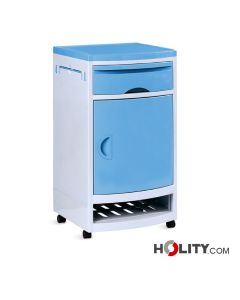
Hospital bedside table with integrated shoe rack. Dimensions: W. 48 x D. 48 x h. 87 cm.

Nursing home bedside table with 2 drawers and framed top. Dimensions: W 46 x D 44 x H 50 cm.
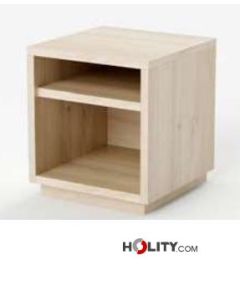
Hospital bedside table for clinics and nursing homes. Material: PVC melamine. Dimensions: W.50 x D.38 x h.50 cm.

Bedside table for use in clinic and hospital rooms. Dimensions: W.42 x D.40 x h.80 cm. Material: painted steel.
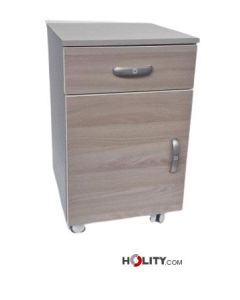
Hospital bedside table made of melamine. Dimensions: W. 45.5 x D. 48 x h. 78 cm.
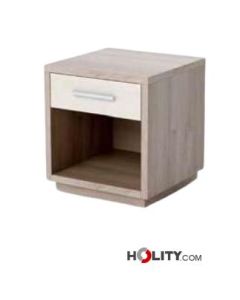
Bedside table for hospital and nursing home patient rooms. Dimensions: W.50 x D.38 x h.50 cm. Material: PVC melamine, 22 mm.
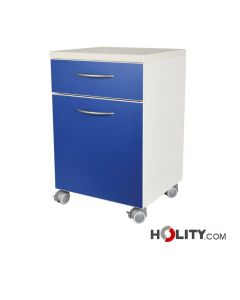
Hospital bedside table. Dimensions: W.45 x D.4 x h.75 cm. With 1 drawer and 1 compartment.
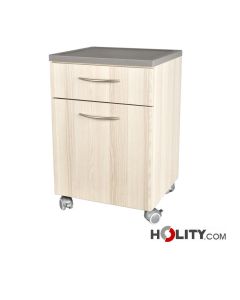
Hospital room bedside table. Dimensions: W.45 x D.40 x h.75 cm. Material: wood.
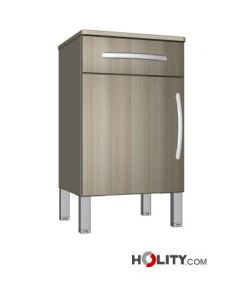
Hospital bedside table with 1 drawer, 1 door and bottle holder. Dimensions: W.45 x D.46 x h.80 cm.
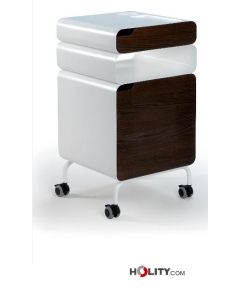
Bedside table for patient rooms with metal structure, door, drawer and bottle holder support. Front and back in melamine available in beech or cherry color.
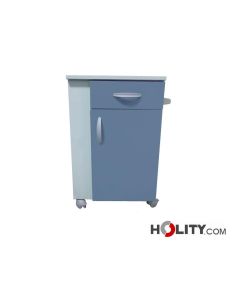
Bedside table for hospital room furniture. With towel holder and bottle holder. Dimensions: W.52.5 x D.42 x H.80 cm.
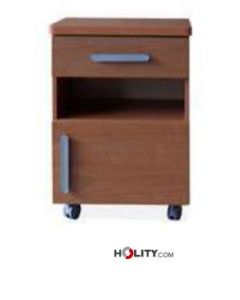
Hospital bedside table with drawer, door and open compartment. Dimensions: W.50 x D.40 x H.73.4 cm. Material: melamine.
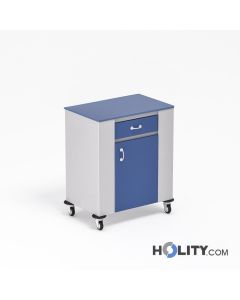
Hospital bedside table with drawer and one door. Dimensions: W.41xD.41xH.81 cm
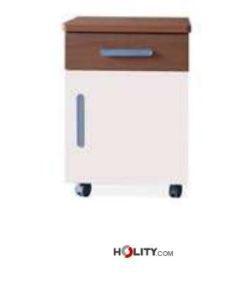
Bedside table with wheels for nursing homes. Dimensions: W.50 x D.40 x h.73.4 cm. With 1 drawer and 1 door.
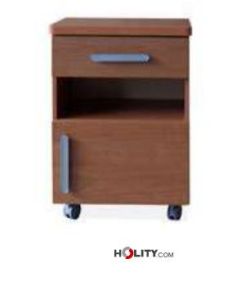
Hospital bedside table for patient rooms. Dimensions: W.40 x D.40 x h.73.4 cm. With 1 drawer, 1 open compartment and 1 compartment with door.

Hospital bedside table with lateral bottle holder compartment. Dimensions: W. 49 x D. 41 x h. 81 cm.
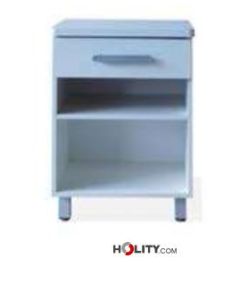
Bedside table for hospital patient room furniture. Dimensions: W.50 x D.40 x h.73.4 cm. With 1 drawer and 2 open compartments.
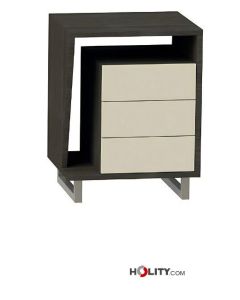
Bedside table for patient care with melamine structure and wooden corners. Equipped with 3 drawers, an open shelf and side space. Dimensions: W. 450 x D. 400 x H. 582 mm.
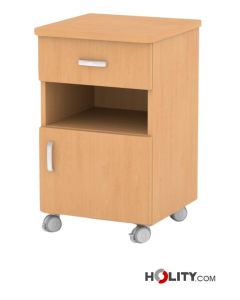
Geriatric fiber bedside table with drawer and hinged door, equipped with 4 swivel wheels, 2 of which with brakes. Robust, easy to clean, and resistant to oils and acids.
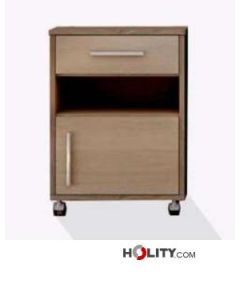
Hospital bedside table with wheels for hospital room furnishing. Dimensions: W.45 x D.40 x h.70 cm. With 1 drawer, 1 open compartment and 1 compartment with door.
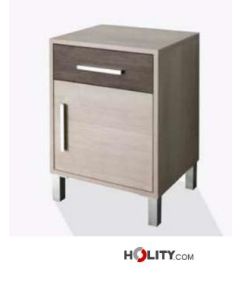
Bedside table for nursing homes. Dimensions: W.45 x D.40 x h.70 cm. With 1 drawer and 1 compartment with door. Metal feet at the base.
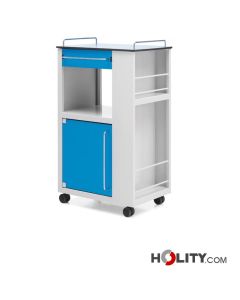
Hospital bedside table. Dimensions: W. 53 x D. 38.5 x h. 87 cm.

Bedside table for hospital use with overbed table. Finish: beech. Total width: 119.5 cm.
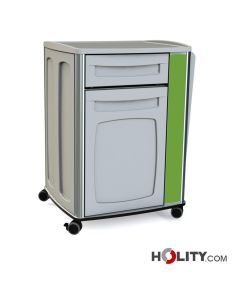
Hospital bedside table in ABS. Dimensions: W. 53 x D. 47 x h. 74 cm
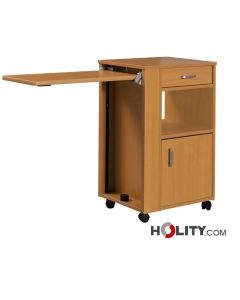
Bedside table for hospitals and nursing homes. Material: laminated wood. Dimensions: W. 50 x D. 33 x h. 85 cm.
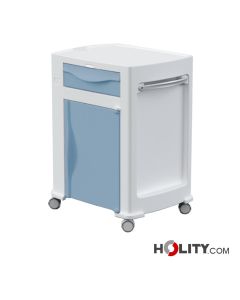
Hospital bedside table with plastic towel rail, two cup holders, two bottle holders. Dimensions: W. 61.5 x D. 48.5 x H. 75 cm.
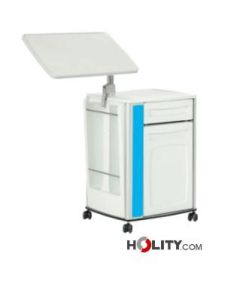
Bedside table for nursing homes. Steel structure and ABS coatings.
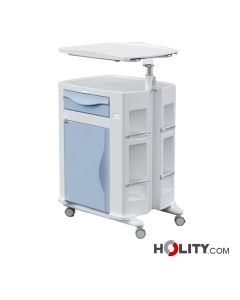
Bedside table with double-sided polyethylene overbed table. Dimensions: W. 61.5 x D. 48.5 x h. 91 cm.

Hospital bedside table with built-in overbed table. Made with HPL panels, aluminum columns and metal structure.

Single-sided bedside table with side bottle holder and adjustable tilting overbed tray. Dimensions: L.125x D.41x h.110 cm
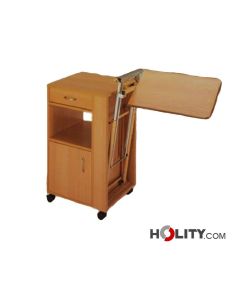
Hospital bedside table for clinics and nursing homes. Material: laminated wood. Dimensions: W. 50 x D. 33 x H. 85 cm.
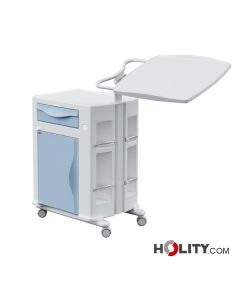
Bedside table for nursing homes with reclining overbed table. Dimensions: W. 61.5 x D. 48.5 x h. 91 cm.

Hospital bedside table including a tilting table. Finish: beech. Wheels Ø 50 mm, 2 of which are lockable.
Hospital bedside tables represent an essential component of hospital and residential healthcare facility furniture. These furniture pieces, designed specifically for medical environments, combine practical functionality with rigorous hygiene requirements, responding to the daily needs of patients and nursing staff. A hospital bedside table must ensure ease of access to the patient’s personal belongings, facilitate medical assistance maneuvers and maintain high standards of cleaning and sanitization. The choice of an appropriate bedside table affects the quality of the patient’s stay, safety and comfort during hospitalization, fundamental elements in hospitals, nursing homes, residential care facilities and continuous care facilities.
A hospital bedside table performs multiple functions within the patient’s room. It facilitates access to personal belongings, drinks, medications and medical devices needed during the hospital stay. Strategic placement next to the bed allows the patient to independently reach everyday objects, reducing the need for continuous intervention by nursing staff and preserving the inpatient’s independence. At the same time, a well-designed bedside table supports caregivers’ work by offering support surfaces for portable diagnostic equipment, saline solution bottles and dressing materials. The hygienic structure of the furniture ensures that all materials are easily sanitizable, a critical aspect in environments where infection control is a top priority.
From an ergonomic point of view, the height of the top surface must match that of the hospital bed to allow safe transitions and reduce the risk of falls. Numerous healthcare facilities find that certified quality bedside tables help improve patient safety indices, especially those in the geriatric range or with reduced mobility. Structural stability and load capacity are parameters that cannot be compromised, as the bedside table must withstand not only the weight of the objects placed on it, but also the weight of a patient who might use it as a support point during transfer maneuvers. A robust and reliable bedside table significantly reduces maintenance times and replacement costs in the long run, representing a sustainable investment for healthcare facilities.
Hospital bedside tables are primarily distinguished by construction materials and design solutions. ABS plastic bedside tables represent an economical and hygienic solution, particularly suitable where frequent sanitization and the use of aggressive detergents are required. These models combine lightness with resistance, facilitating cleaning and maintenance operations. Alternatively, melamine bedside tables with PVC coating offer a compromise between hygienic performance and aesthetics, with finishes that simulate natural wood, creating a less “hospital-like” and more welcoming environment for the patient. Bedside tables in solid wood or laminated wood guarantee superior structural solidity and a warmer atmosphere within the room, although they require more careful maintenance. Finally, painted steel models represent the most durable and resistant solution, ideal for high-traffic environments or where the bedside tables are subjected to intense mechanical stress.
Construction variants include bedside tables with wheels, which allow easy movement and adjustment of the position to the changing needs of the patient, and models on fixed feet, which offer greater stability when mobility of the furniture is not a priority. Some bedside tables include a single drawer for storing clothes and personal items, while others provide two or three, increasing storage capacity. More advanced models integrate open compartments for quick access to frequently used objects, or side bottle holders specifically designed for infusion fluids. The height generally varies between 50 and 87 centimeters, allowing adaptation to different bed heights and patient movement capabilities.
The choice of a hospital bedside table must start from the analysis of the room’s space constraints and the need to ensure that the furniture does not obstruct assistance operations. The footprint dimensions, usually between 40 and 50 centimeters in width and depth, must be proportionate to the available spaces, also considering the need to leave free passages for the hospital trolley and bed maneuvers. A common mistake is underestimating the space needed to open drawers and doors: if the room is narrow, a model with open compartments represents a superior solution to one with hinged doors. The height of the surface is a critical factor: in most hospital standards, the bedside table must be at the height of the bed to facilitate the transfer of personal belongings and assistance maneuvers. Facilities housing patients with very limited mobility might prefer slightly higher bedside tables, while geriatric wards might require height-adjustable models.
Material evaluation must take into account the expected sanitization frequency: environments where cleaning is intensive, such as intensive care units or infectious disease wards, require materials that resist strong disinfectants without deteriorating. Melamine and ABS plastic are preferable in these contexts, while wood, although aesthetic, is less suitable. Another often overlooked aspect is the weight of the bedside table: models that are too light risk tipping over if a patient leans on them heavily, while excessively heavy bedside tables complicate maintenance and cleaning operations. The declared load capacity must exceed 150 kilograms to ensure an adequate safety margin. Finally, checking if the model has certifications of compliance with international standards (UNI, ISO) is essential to document that the structure respects the safety and hygiene requirements applicable in the medical sector.
Hospital furniture, including bedside tables, must comply with rigorous regulatory standards that guarantee patient safety and the hygienic quality of the environments. The UNI EN 60601-1 standard establishes the electrical and biological safety criteria for medical devices, while UNI EN 1021 concerns the fire resistance of materials used in hospital furniture. In Italy, the Ministerial Decree of July 5, 1975 defines the technical specifications for the furniture of healthcare facilities, requiring that the materials used be easily sanitizable and free of sharp edges that could cause injury. Compliance with Directive 93/42/EEC (now Medical Device Regulation 2017/745) classifies bedside tables as Class I medical devices, requiring the application of the CE marking and complete technical documentation.
Specific compliance aspects include the minimum load capacity of 150 kg, measured according to standardized protocols that simulate actual loads during use in the hospital. Materials must pass resistance tests to chemical agents commonly used for disinfection, such as alcohols, chlorine and ammonium quaternaries. Surfaces must be free of porosity that could allow the nesting of bacteria and pathogenic microorganisms. If the bedside table is equipped with wheels, these must have reliable braking systems and must meet the ergonomics and sliding specifications defined by international standards. The management of the material life cycle, including the use of recyclable plastics and low-VOC (Volatile Organic Compounds) coatings, increasingly represents an expected requirement from healthcare facilities sensitive to environmental sustainability.
Explore all the products in the category and compare the available solutions to find the one best suited to your operational context. Each bedside table is selected according to criteria of quality, regulatory compliance and suitability for different types of healthcare and residential facilities.
The standard height varies between 50 and 87 centimeters, but it must correspond to that of the hospital bed to facilitate safe transitions. Geriatric environments prefer slightly higher heights, while wards with patients with very limited mobility might require adjustable models. Always check the facility’s specifications before purchasing.
ABS plastic, melamine with PVC coating and painted steel offer the best compromise between hygiene and durability. These materials resist aggressive disinfectants and allow frequent sanitization without deteriorating. Wood is aesthetically pleasing but requires more careful maintenance and is not recommended in high-contamination environments.
No, it depends on the needs. Wheels allow easy movement and position adjustment, but require periodic brake checks. Fixed feet offer greater stability and are ideal in confined environments where mobility is not a requirement. The choice depends on the room configuration and the facility’s operational protocols.
A bedside table with at least one drawer is standard. Models with two or three drawers offer greater storage capacity for clothing and personal items. Open compartments facilitate quick access to frequently used items. The choice depends on the room size and the facility’s storage needs.
Bedside tables must have the CE marking and comply with the Medical Device Regulation 2017/745. Relevant certifications include UNI EN 60601-1 for biological safety, UNI EN 1021 for fire resistance and ISO 9001 for quality management. Always check the technical documentation and the certificate of conformity.
Yes, hospital bedside tables are fully compatible with nursing homes and care homes. In fact, many models are specifically designed for these facilities, with an emphasis on stability, ease of cleaning and elderly patient comfort. Verify that the dimensions and height are appropriate for the context of use.
The minimum load capacity must be at least 150 kilograms, measured according to international standards. High-quality models guarantee loads exceeding 200 kilograms. Adequate load capacity is fundamental for patient safety and the longevity of the furniture throughout its life cycle.
Bedside tables must be cleaned daily with detergents approved for hospital environments and disinfected according to the facility’s protocols. Materials such as plastic and melamine resist alcohols, chlorine and ammonium quaternaries. Verify that the surface is free of porosity and that there are no cracks where bacteria and pathogenic microorganisms can hide.
 English
  Italian
 French
 German
 Spanish