
mon-fri 9-13 / 14.30-18.30
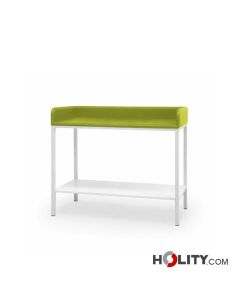
Pediatric changing table H919_43 in steel with padded top 1200x600 mm, lower shelf, load capacity 50 kg. Ideal for hospitals and pediatric clinics.
Pediatric examination tables and changing tables represent fundamental elements in healthcare environments dedicated to childhood, from pediatric clinics to hospital wards, from outpatient facilities to vaccination centers. These medical furnishings respond to specific functional and safety needs, designed to guarantee comfort for small patients during clinical examinations, diaper changes, and ordinary medical procedures. The choice of quality pediatric equipment represents a strategic investment in the quality of care, as it directly affects the child’s well-being and the operational efficiency of the healthcare staff. Painted steel structures, coverings in easily sanitizable materials, and ergonomic details characterize modern solutions, which combine practicality with high standards of decontamination.
Changing tables, in particular, have evolved from simple support surfaces into true complex systems, often integrated with sinks, storage drawers, and safety systems for the prevention of accidental falls. Pediatric examination tables, on the other hand, require particular attention to the adjustability of height and inclination, allowing the doctor to work in ergonomic postures during the visit and the child to feel safe during the procedure.
The selection of professional pediatric beds and changing tables significantly influences the experience of the pediatric patient and the productivity of the medical team. Appropriate pediatric furniture reduces anxiety in the child, facilitates clinical access to body regions, and allows the healthcare provider to perform diagnostic maneuvers safely. The materials used, predominantly stainless or painted steel with padding in eco-leather and synthetic fabrics, allow for frequent disinfection cycles without compromising structural integrity. Height adjustment, whether manual or electromechanical, represents a crucial aspect: it allows the work surface to be adapted to the operator’s height, preventing muscle fatigue and incorrect postures during prolonged shifts.
In modern pediatric environments, functionality intertwines with psychological elements: soft surfaces and neutral colors reduce the perception of “cold” and medicalized environments, factors that affect the child’s compliance during non-invasive procedures. Changing tables equipped with integrated drawers offer organizational practicality, keeping sterile materials, diapers, and protective devices within reach. The maximum load capacity is a frequently underestimated but essential parameter: beds with capacities of 130 kg allow for even older children or adolescents to be accommodated, ensuring versatility over time and a better economic return on investment.
The pediatric equipment market offers differentiated solutions based on specific outpatient and hospital needs. Fixed-structure pediatric examination tables represent the most economical and stable solution, suitable for medical offices with limited space; these models have a standard height (around 85-90 cm) and a partially adjustable backrest to facilitate access to the chest during auscultation. Multiple-section tables (usually three), with independently adjustable backrests and footrests, offer greater flexibility and lend themselves well to more complex clinical evaluations, allowing the child various resting positions. Electric tables, equipped with foot controls or remote control, represent the top of the range, ideal for hospital centers where the workload is high and reducing staff fatigue is a priority.
Regarding changing tables, the catalog includes basic models with a simple padded surface and a lower shelf for storing materials, up to integrated solutions with acrylic stone sinks and hot water delivery systems. Changing tables with self-closing drawers guarantee order and hygiene, preventing objects from falling during the infant’s change. Some models include wall reinforcements, reducing the footprint on the ground and increasing structural stability. The choice between stainless steel (for very high decontamination environments) and epoxy-painted steel (commonly used) depends on the number of sterilization cycles planned and the available budget.
Optimal selection requires a preliminary assessment of actual operational needs and available space. The first criterion to consider is the maximum load capacity: beds for 80 kg are appropriate for pediatric offices that mainly welcome infants and children up to 6-7 years, while capacities of 130 kg prove indispensable in clinics that follow the entire extended pediatric range up to adolescence. The square footage of the office influences the choice between fixed-structure models and mobile ones equipped with wheels; in small spaces, changing tables and fixed beds anchored or wall-mounted maximize the operating space. Adjustable height, especially in examination tables, represents an investment in the ergonomic health of the staff: healthcare workers of different heights will appreciate the possibility of adapting the work surface, avoiding forced postures.
A frequent error is underestimating the importance of ease of disinfection: irregular surfaces, exposed seams, and porous materials complicate decontamination procedures and favor the proliferation of microorganisms. Before purchasing, it is advisable to test the robustness of the padding during repeated pressure, verify that the drawers close silently and safely, and ensure that the structure does not have dust accumulation points. Compatibility with the facility’s sterilization protocols (autoclave, cold disinfection) must be confirmed with the manufacturer. Finally, consider delivery times and the availability of technical assistance in the area: a competitive price loses value if after-sales support is absent.
Pediatric medical furniture must comply with European and national standards that guarantee user safety and structural reliability. The EN 60601-2-52 standard (medical devices for pediatric applications) and the EN ISO 9237 series (hygiene and surface properties) represent the main references for the design and construction of beds and changing tables. All materials in direct contact with the patient must be dermatologically tested, free of allergenic substances, and certified according to European directives on medical devices (MDR 2017/745). The padding must be fire-retardant, with minimum fire reaction behavior complying with fire safety regulations applied in healthcare buildings. Corners and possible crushing zones must be rounded and protected, according to the dictates of the EN ISO 13732-1 standard on thermal safety.
Structural stability is subjected to dynamic load tests, where the product must maintain integrity after repeated pressure cycles equivalent to accidental object drops or blunt impacts. Changing tables with drawers must pass tear and vibration resistance tests, while height adjustment systems (manual or motorized) are tested for durability and safety in case of malfunction. The CE declaration of conformity must be provided at the time of purchase, along with maintenance and disinfection manuals written in Italian. Public healthcare facilities often require additional certifications and supply chain traceability: these aspects must be clarified in advance with the supplier.
Explore all products in the category and compare the available solutions to find the one best suited to your operational context. From basic versions to models integrated with complex systems, the catalog covers every outpatient and hospital need, guaranteeing professional quality and regulatory compliance.
The pediatric examination table is designed for clinical exams and has an adjustable backrest for auscultation and inspection; the changing table, however, is used for diaper changes and infant hygiene, with a soft padded surface and often integrated with drawers or sinks. Functions and working heights differ significantly.
If you treat children up to 6-7 years old, 80 kg is sufficient. For clinics that welcome older children or adolescents, choose 130 kg. Evaluate the maximum age of the population you visit and add a safety margin for future organizational needs.
Eco-leather resists alcohol-based disinfectant sprays and diluted chlorine-based solutions. Avoid prolonged soaking or high-pressure direct steam. Always consult the manufacturer’s manual: it often recommends disinfection cycles and maximum frequency to preserve the integrity of the material.
Yes, models with wall reinforcement legs (usually two) significantly reduce the footprint on the ground. Ensure that the wall structure is capable of supporting the maximum planned load and that the anchorings are performed according to the manufacturer’s instructions. Correct installation guarantees maximum stability.
Pediatric examination tables have a fixed height of around 85-90 cm, which represents an ergonomic compromise for healthcare workers of average stature. Electrically controlled tables allow adjustment between 48 and 88 cm, adapting to different individual needs and reducing muscle fatigue during clinical practice.
Changing tables with acrylic stone sinks require connection to hot and cold water and a drain. Verify in advance that the pipes are accessible behind the installation point. Some models are supplied with standard connection kits, but it is advisable to involve a plumber for compliance with local regulations.
Check the CE declaration of conformity, the instruction manual in Italian, the durability of the padding under repeated pressure, the absence of sharp corners, and the stability of the structure when subjected to load. Ask yourself if the capacity is sufficient for your user base and if the height (fixed or adjustable) corresponds to your ergonomic needs.
Generally yes, as long as it is indicated for healthcare environments and compatible with the specific materials (steel, eco-leather, acrylic stone). However, some coverings require specific solutions: always consult the technical instructions of each product to avoid deterioration and ensure disinfectant efficacy over time.
 English
  Italian
 French
 German
 Spanish