
mon-fri 9-13 / 14.30-18.30
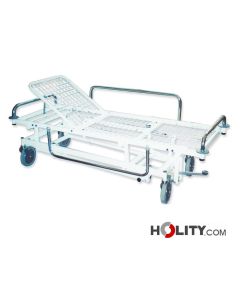
Hospital stretcher with adjustable height. Capacity: 120 kg. Trendelenburg system up to 9°, Anti-Trendelenburg up to 14°.
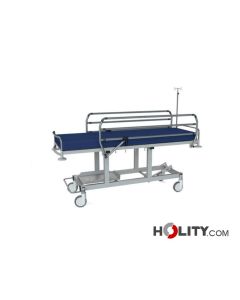
Hydraulic emergency stretcher with mattress, steel structure and side rails. Dimensions: approx. L 204 × W 73.8 × H 64 to 112.5 cm.
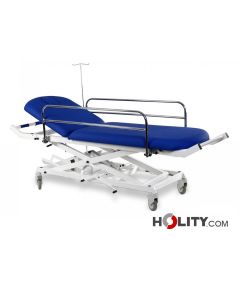
Hospital stretcher for patient transport. Height adjustable by hydraulic motor. Dimensions: L.190 x W.62 x h.59/109 cm.
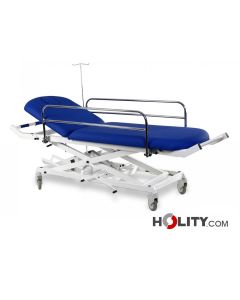
Hospital ward stretcher with 1 hydraulic motor for height adjustment. Dimensions: L.190 x D.70 x h.59/109 cm.
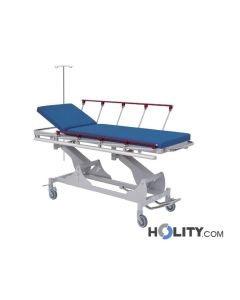
Emergency stretcher for patient transport with adjustable height load capacity 225 Kg. L.210 x D.66 x h. 60-98 cm.
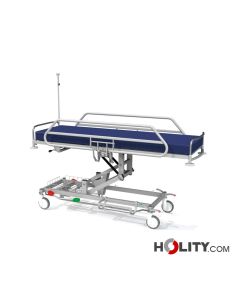
Emergency hydraulic stretcher with mattress, steel structure and two-section configuration. Dimensions: approx. W 204 × D 73.8 × H 64 to 112.5 cm.
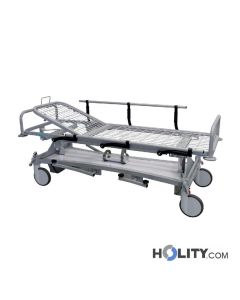
Patient transport stretcher with height-adjustable and tiltable structure in TR/RTR position. Dimensions: L198 x D76 x H58/88 cm
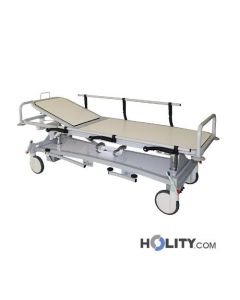
Hospital stretcher for patient transport. Adjustable height and reclining cushion. Dimensions: L198 x D76 x H58/88 cm
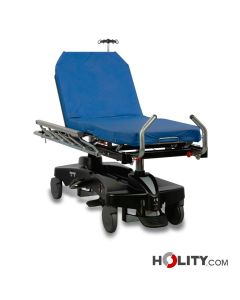
Hydraulic hospital stretcher, variable height 55-85 cm. Dimensions: 210 x 80 cm. Robust and multifunctional structure.
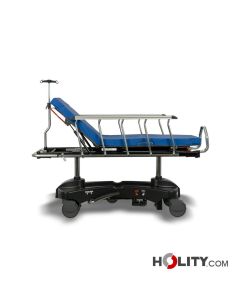
2-section stretcher with adjustable backrest, hydraulically variable height (55-85 cm) and radiotransparent HPL platform. Dimensions: L 207.5 x D 87 x H from 55 to 85 cm.
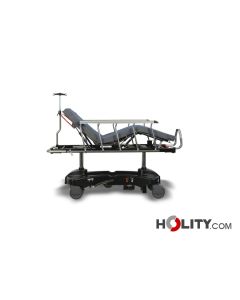
Stretcher with backrest and femoral sections adjustable via gas springs. Dimensions: L.2090 x W.820 x H.550-850 cm.
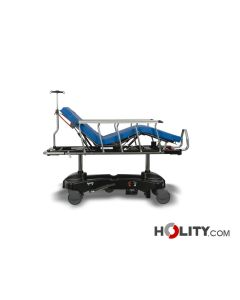
4-section stretcher with adjustable backrest and leg section, hydraulically variable height from 55 cm to 85 cm and radiotranslucent HPL top. Dimensions: L 207.5 x W 87 x H from 55 to 85 cm.
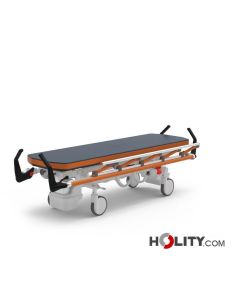
Patient transport stretcher with variable height. Max capacity 200 kg. Dimensions: L226.3 x W74.2 x H70.8 cm
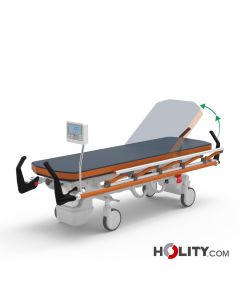
Patient transport stretcher with weighing system. Capacity: 200 kg. Motorized variable height.
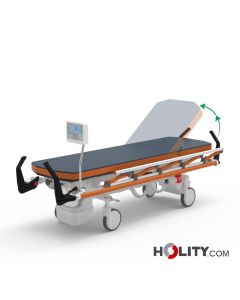
Hospital stretcher with integrated scale. Capacity: 300 kg. Electrically adjustable height.
Hospital ward stretchers represent one of the fundamental elements of the logistical infrastructure of any healthcare facility. These medical devices ensure the safe and comfortable transport of patients within departments, from wards to diagnostic laboratories, from patient rooms to operating theaters. The choice of the correct stretcher directly affects the quality of care, the prevention of back-lumbar injuries for nursing staff, and compliance with international safety regulations. Ward stretchers available on the market vary significantly in terms of configuration, adjustment mechanisms, construction materials, and load capacity, adapting to different organizational needs and patient types.
A high-quality hospital stretcher represents an essential investment to guarantee efficient mobility and safety for both patients and healthcare personnel. Intra-hospital transport represents a critical phase of the diagnostic-therapeutic path, during which the choice of an inadequate stretcher can compromise patient stability, increase the risk of falls, and generate muscular tension in the assigned staff. Modern ward stretchers offer ergonomic solutions that significantly reduce operator fatigue, limit transfer times, and contribute to keeping the patient in comfortable conditions during movements. Furthermore, height-adjustable devices facilitate the transfer from bed to stretcher and reduce traumatic maneuvers, particularly important for elderly patients, those with reduced mobility, or those suffering from degenerative pathologies.
Healthcare facilities benefit from the adoption of standardized and multifunctional stretchers, which integrate into hospital spaces and ward pathways with greater flexibility. A well-sized fleet of stretchers, with various specialized configurations, allows for the optimization of operational flows, reduction of waiting times, and improvement of the overall patient experience. Construction durability and ease of sanitization represent further significant benefits, especially during periods characterized by epidemics or when hygiene is a critical factor for the prevention of healthcare-associated infections.
The catalog of hospital ward stretchers includes a diverse range of solutions, each designed to respond to specific clinical and organizational needs. Fixed-height stretchers constitute the entry-level solution, characterized by simple construction, low cost, and reliability over time; however, they present significant limitations in the patient transfer phase and can generate considerable physical effort for nursing staff. Height-adjustable stretchers, available with manual mechanisms (crank or push) or motorized ones (hydraulic or electric), represent the ideal compromise between functionality and economic management, allowing real-time adjustment of the platform height. Motorized solutions, although with a higher initial cost, guarantee reduced effort and greater precision in adjustment, fundamental in contexts of high patient turnover.
Some specialized categories deserve particular attention: non-magnetic stretchers, made with non-ferrous and composite materials, are indispensable for MRI (Magnetic Resonance Imaging) environments, where the presence of metals constitutes a critical risk; bariatric stretchers, with capacities up to 300 kg, are specifically designed for patients with a high body mass index and guarantee superior structural stability; radiolucent stretchers, equipped with HPL platforms or special materials, allow for radiological examinations without the need for transfer; finally, stretchers with multi-position reclining backrests facilitate Trendelenburg and anti-Trendelenburg maneuvers, essential in emergency situations and interventional procedures. The variety of useful lengths, platform widths, and construction configurations allows the choice to be adapted to the dimensions of the available spaces and the specific needs of the facility.
The selection of the most appropriate hospital stretcher requires a systematic evaluation of multiple technical and organizational parameters. The first decision criterion concerns the required load capacity: most standard ward stretchers support capacities between 120 and 180 kg; however, facilities that accommodate patients with high body weight must necessarily move towards bariatric solutions with capacities of 225-300 kg. The morphology of hospital spaces is a determining factor: access widths to departments, corridor depths, and elevator shapes limit the maximum dimensions of the stretcher; a stretcher that is too wide leads to maneuvering difficulties, while an excessively long stretcher compromises transport in crowded elevators. The type of adjustment represents a strategic choice: for high-turnover facilities with limited human resources, motorized mechanisms guarantee superior operational efficiency, even if with a more significant initial investment; conversely, manual mechanisms prove sufficient in low-volume transport contexts.
A frequent error involves underestimating the needs for compatibility with specific diagnostic procedures: in the case of departments that frequently perform X-ray or CT scans, radiolucent stretchers are essential to avoid repeated patient transfers and optimize diagnostic times. The material composition deserves special attention: 18/10 stainless steel offers superior resistance to corrosion in humid environments and facilitates sanitization, albeit with higher construction costs; epoxy-painted steel represents a compromise solution between cost and durability. For facilities operating in contexts where infectious risk is high, easily sanitizable and chemical-resistant materials become critical factors. The headboard configuration—fixed, manually adjustable, or motorized—affects the versatility of the stretcher: multi-position headboards expand the possibilities for clinical use, while fixed headboards reduce maintenance costs.
Hospital stretchers are medical devices subject to rigorous regulation, classified as Class I medical devices according to European Directive 93/42/EEC and subsequent amendments. Compliance with current regulations is not optional but constitutes a mandatory requirement for marketing and use in healthcare facilities. The primary reference technical standard is UNI EN 60601-1, which establishes general safety and performance requirements for medical devices; more specifically, UNI EN ISO 7165 defines the criteria for structural resistance, stability, and durability for hospital stretchers and trolleys. These standards prescribe static and dynamic load tests, lateral stability checks, checks on the resistance of connection materials, and assessments of duration in simulated use cycles. Each stretcher must be subjected to brake slip tests, checks on the effectiveness of locking systems, and accelerated corrosion tests for metallic materials.
Additional regulatory requirements concern ergonomic aspects and injury prevention: the Machinery Directive 2006/42/EC establishes obligations for safe design, clear labeling, and the provision of complete technical documentation. Italian legislation, through the Privacy Code and anti-corruption regulations, requires that devices be subjected to periodic metrological checks and documented preventive maintenance. For accredited healthcare facilities, regional agencies require the entry of stretcher and trolley data into management inventories, with tracking of serial numbers and technical revision deadlines. Certified notified bodies guarantee compliance through periodic audits and traceability checks. Particular regulatory attention is paid to stretchers intended for specific areas: for MRI environments, non-magnetic compatibility must be certified according to the ASTM F2052 standard; for radiolucent stretchers, radiological transparency must meet contrast specifications defined by medical radiology.
Explore our complete catalog of hospital ward stretchers and compare the available solutions to identify the most appropriate device for the organizational, clinical, and spatial needs of your healthcare facility. Consult the detailed technical sheets, verify the compliance certifications, and evaluate the specialized configurations based on the specific diagnostic-therapeutic procedures practiced in your reality.
The fixed-height stretcher has a platform positioned at a standard height, usually between 75 and 85 cm, ideal for facilities with a limited budget. An adjustable-height stretcher allows for varying the platform height through manual or motorized mechanisms, significantly reducing nursing staff fatigue during patient transfers and improving overall maneuverability.
Non-magnetic stretchers are specifically designed for MRI environments, where the presence of metals constitutes a critical risk. Made with plastic, composite, and non-ferromagnetic materials, they ensure patient safety during the examination. However, for use in standard wards, traditional metal stretchers remain the most suitable choice from a structural and cost perspective.
Standard hospital ward stretchers support capacities between 120 and 150 kg, sufficient for the general population. However, facilities that accommodate patients with high body weight must move towards bariatric stretchers with capacities of 225-300 kg, characterized by reinforced structures and enhanced adjustment mechanisms to ensure stability and operational safety.
Manual mechanisms (crank or push) are economical and require minimal maintenance, suitable for low patient turnover contexts. Motorized mechanisms (hydraulic or electric) ensure reduced effort, precision in adjustment, and less staff fatigue, recommended for departments with a high workload despite a higher initial cost.
A radiolucent stretcher, equipped with an HPL platform or special materials, allows for radiological examinations to be performed directly without the need for patient transfer. This reduces diagnostic times, minimizes traumatic maneuvers, and improves patient comfort, particularly important in critical situations or for patients with limited mobility.
Hospital stretchers require a weekly visual inspection to verify structural integrity and brake operation. Scheduled preventive maintenance must be carried out annually, including testing of adjustment mechanisms, checking component wear, and deep sanitization. Motorized stretchers require more frequent technical checks according to the manufacturer’s specifications.
Standard ward stretchers are designed for maximum capacities of 150-180 kg and do not guarantee adequate structural stability for patients with high body weight. For these cases, it is mandatory to use specialized bariatric stretchers, with certified capacities up to 300 kg and a reinforced structure, avoiding risks of breakage or loss of stability.
 English
  Italian
 French
 German
 Spanish