
mon-fri 9-13 / 14.30-18.30
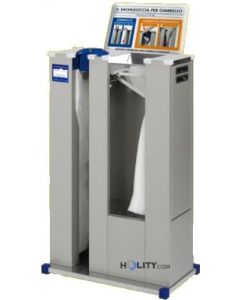
Easy-to-use bagging machine for traditional and folding umbrellas. No power supply required.
The wet umbrella bagging machines represent a fundamental technological and logistical solution for managing hospitality in high-traffic environments during rainy days. These devices, designed to automate the insertion of umbrellas into specific waterproof plastic sleeves, were created from the need to preventively solve problems related to constant dripping inside public and private structures. Adopting a professional system is not just a matter of courtesy towards the guest, but is configured as a real investment in building maintenance and in the active prevention of risks related to slippery walking surfaces.
Thanks to a design that integrates with existing furniture, these machines transform a potential logistical inconvenience into a fluid and immediate service, drastically reducing the need for continuous cleaning interventions and preserving the integrity of delicate materials such as marble, parquet, or industrial resins. The mechanical operation, requiring no power supply in most standard models, guarantees impeccable operational continuity even in emergency conditions or in transit areas without power outlets, making them versatile tools for hotels, museums, offices, and shopping centers.
Integrating an umbrella bagging machine at the entrance of a professional facility responds to a logic of operational efficiency that goes far beyond simple courtesy. The primary benefit lies in the drastic reduction of moisture brought inside buildings: a single wet umbrella can release enough water to make an entire entrance area dangerous in just a few minutes. Through the use of protective sleeves, water is instantly confined, eliminating the risk of accidental falls and the resulting legal burdens that could arise. Furthermore, the absence of standing water prevents the formation of streaks and the premature deterioration of floor finishes, optimizing the management costs of cleaning staff who no longer have to constantly monitor the lobby.
From the user experience perspective, using these systems eliminates the inconvenience of having to carry a dripping object through corridors or having to deposit it in common umbrella stands where the risk of loss or exchange is high. The customer or employee can take their umbrella with them in total safety, keeping their clothes and documents dry. In contexts such as luxury hospitality structures, executive offices, or healthcare institutions, the presence of a bagging station signals meticulous attention to detail and a high standard of hospitality, improving brand perception and ensuring a healthy and orderly environment even in the most adverse weather conditions.
The landscape of umbrella bagging solutions is mainly divided based on load capacity and input configuration. There are single-bay models, optimized for standard-sized umbrellas, and double-bay models, which allow for the separate management of both classic long umbrellas and small foldable ones. This distinction is crucial because the insertion dynamic differs significantly: telescopic umbrellas require shorter sleeves and a traction mechanism that does not damage the fragile structure of the object. Construction materials range from brushed stainless steel, ideal for modern environments and for resisting corrosion caused by constant humidity, to painted metal versions that offer greater aesthetic flexibility to coordinate with corporate colors.
Beyond the format distinction, it is possible to identify variants equipped with wheels for rapid movement, allowing the machinery to be positioned only when weather forecasts require it, freeing up valuable space on sunny days. Some advanced models also integrate rapid drying systems with microfibers or absorbent mats at the base to collect excess water even before bagging. The choice between a mechanical gravity system and an assisted one depends exclusively on the expected traffic volume: for large shopping centers or railway stations, robust structures with high-capacity refills are preferred to reduce the frequency of maintenance interventions by ground staff.
The selection of the ideal umbrella bagging machine must start with an accurate analysis of visitor flow and the architectural features of the entrance. A common mistake is underestimating the storage capacity of the refills: in high-traffic contexts, a machine that contains few bags risks running out during peak hours, canceling the benefit of the service. It is essential to evaluate the stability of the base, especially if the device is to be positioned in areas subject to strong air currents or rapid passage, to avoid accidental tipping. Another fundamental technical criterion concerns the ease of refilling the bags; an intuitive system allows non-specialized personnel to restore service in seconds without the aid of special tools, ensuring continuity of use during sudden storms.
One must also consider sleeve compatibility: opting for machinery that uses universal bags or bags easily available on the market is a strategic choice to avoid being tied to exclusive suppliers with high management costs. The choice of the machine body material must be consistent with the environment: stainless steel is imperative for entrances directly exposed to the outside or in coastal areas where salt spray could quickly compromise finishes. Finally, aesthetic integration should not be overlooked; a sober and elegant design avoids the “industrial bulk” effect in prestigious office halls, transforming the tool into a functional piece of furniture that communicates efficiency and care for the end user, solving the problem of slippery floors at the root.
Although there are no specific regulations requiring the use of umbrella bagging machines, their adoption falls directly within compliance strategies for occupational safety and accident prevention laws (such as Legislative Decree 81/08 in Italy). Managers of spaces open to the public have a legal obligation to ensure the safety of walking paths, eliminating slipping hazards. In this sense, the implementation of a system that prevents water accumulation on the floor is considered a “technical prevention measure” of high evidentiary value in the event of legal disputes related to accidental falls. The plastic materials used for the sleeves must also comply with current environmental directives, preferably moving towards 100% recyclable or biodegradable products, to align with corporate sustainability policies.
Regarding the technical compliance of the machinery, if it does not have electrical components (as in most mechanical traction versions), it does not require specific CE certifications for electrical machines, but it must still be free of sharp edges or exposed mechanical parts that could pose a danger to the user, especially children. It is essential that the dispensing system be tested to withstand thousands of usage cycles without jamming, ensuring that functional compliance remains constant over time. The required maintenance is minimal but essential: periodic cleaning of water residues inside the collection compartment and checking the bag hooking mechanisms ensure that the device always operates in total safety and hygiene, meeting the standards required by the most rigorous health protocols.
Explore all products in the category and compare available solutions to find the one best suited to your operational context.
The operation is based on a mechanical gravity traction system. When the user inserts the umbrella into the upper compartment, the tip of the umbrella hooks the upper edge of the plastic sleeve. Continuing the movement downwards and then outwards, the bag slides off the loader, completely wrapping the umbrella without the need for power supply or manual intervention.
The capacity varies significantly depending on the model chosen. Compact single-bay machines usually hold between 200 and 600 bags, while high-capacity double stations for large flows can hold up to 1000 sleeves per side, ensuring long autonomy even on days of persistent rain without requiring frequent refills.
Modern professional systems use sleeves made of high-density polyethylene (HDPE), a completely recyclable material if disposed of correctly in plastic containers. Many manufacturers now also offer bag options made of compostable bioplastic or post-consumer recycled materials to reduce the ecological impact of the service offered to users.
Maintenance is extremely minimal. It is sufficient to periodically empty the water collection tray located at the base to avoid stagnation and bad odors. For the external structure, using a soft cloth with a neutral steel detergent maintains the shine and prevents the formation of limescale or water spots, preserving the professional aesthetics of the device.
Certainly. Many painted metal models can be ordered in specific colors from the RAL scale. Furthermore, the large surfaces of the dispensers are perfectly suited for applying vinyl adhesive graphics or screen printing, allowing a functional object to be transformed into a brand communication tool or hospitality signage.
Yes, double-bay umbrella bagging machines are specifically designed for this need. They feature two distinct inlets: a longer one for classic umbrellas and a shorter one optimized for telescopic folding models. This system avoids plastic waste by using smaller sleeves and ensures correct bag application even on short objects.
The ideal placement is immediately after the first entrance door or in the entrance vestibule, before the user steps onto the main floor surfaces of the lobby. It is essential that it be clearly visible and accessible, preferably accompanied by an information sign inviting its use, to ensure that water is blocked at the source of the internal pedestrian path.
Yes, the device is extremely safe as it has no exposed blades or live electrical mechanisms. The bagging process requires minimal force and occurs in a controlled manner. The self-supporting structure and low center of gravity are designed to prevent tipping, ensuring stability even if accidentally bumped in high-traffic areas.
 English
  Italian
 French
 German
 Spanish