
mon-fri 9-13 / 14.30-18.30
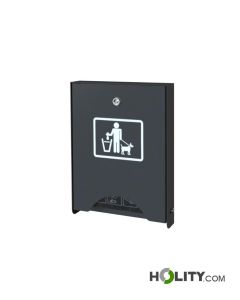
Dog waste dispenser in hot-dip galvanized steel, pole mounting, dimensions W30xD6.5xH40 cm, triangular lock, compliant with DIN EN ISO 1461.
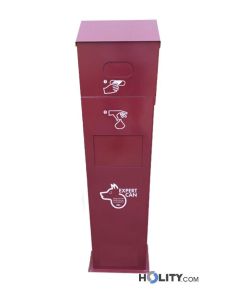
Galvanized steel dog waste container, with lockable bag dispenser and inner bucket. 28.5×18×120 cm, weight 23 kg. Burgundy red.
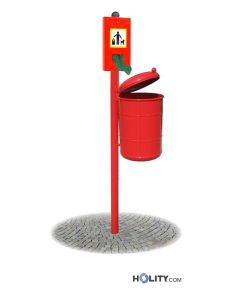
Galvanized steel dog waste bin, 32 lt, with integrated bag dispenser and protective lid. Height 170 cm, installation on sidewalks and parks.
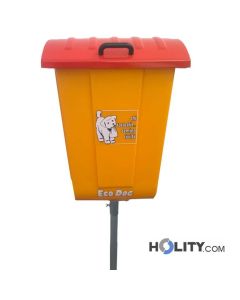
50-liter HDPE container for dog waste collection. Truncated cone base, ABS lid, galvanized pole, removable bag emptying.
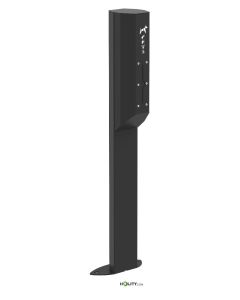
Wall-mounted dispenser in UV-resistant painted steel for dog waste bags. Dimensions 25.3×17.9×95.6 cm, pole mounting, silk-screened label, available in multiple colors.
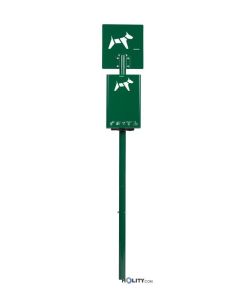
Painted steel dog station with bag dispenser, 500 pcs, modern design, UV resistant, for parks and public gardens.
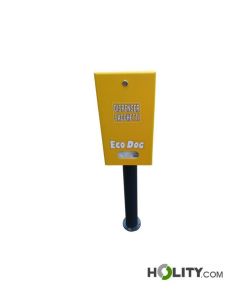
ABS dispenser for dog waste bags, 350-piece capacity, polyethylene post H.105 cm, triangle lock, ground fixing.
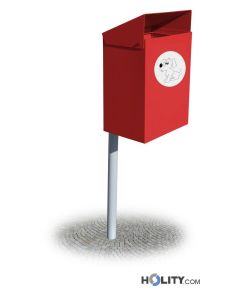
Dog waste bin in red galvanized steel, pole mounting, triangular key opening, 28 liters capacity.
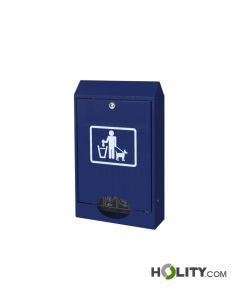
Pole-mounted dog waste dispenser, galvanized steel 31.5×10.5×51 cm, triangular lock, universal mounting included.
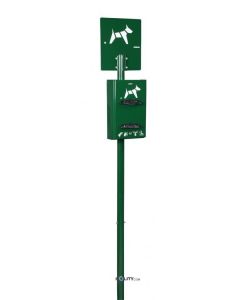
Painted steel dog waste bag dispenser with key lock, 400-bag capacity, complete kit with pole and label.
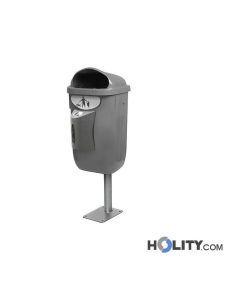
Plastic dog waste collection dispenser and container with bags, complete with anchoring pole. For parks, gardens, and residential areas. Available in grey and green.
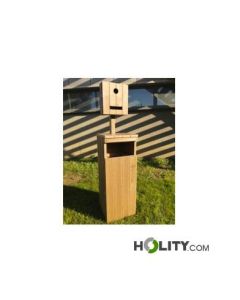
Dog waste bin made from 100% recycled plastic, height 1474 mm, width 352 mm. Weather-resistant, designed for sustainable urban furniture with an ergonomic slot and easy maintenance.
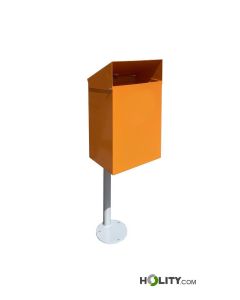
Galvanized steel dog waste bin with rain hood lid, 30 L capacity, for parks and green areas. Triangular key opening, Ø50 mm post, underground anchoring.
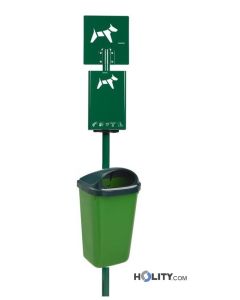
Painted steel dog station with bag dispenser (500 pcs), 50L polypropylene bin and information sign. Elegant design for public areas.
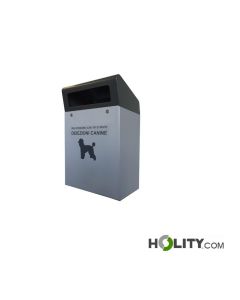
Rectangular dog waste container in galvanized steel with sloped roof, locking door and removable PE bag holder. 430x310x680 mm, 60 liters.
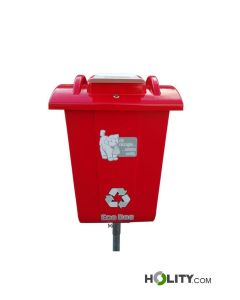
50L polyethylene dog waste collection container, 30x45 cm base, ABS lid with lock, H.75 cm galvanized post.
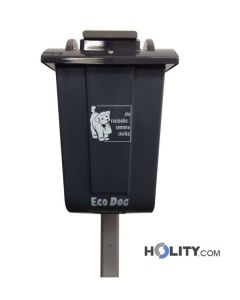
Underground dog waste bin in ABS with oval aluminum tube, rotational lid and anti-intrusion opening. Dimensions 47x40x105 cm, 10 kg.
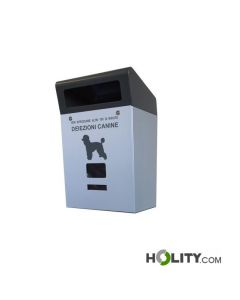
Dog waste container in galvanized steel with integrated bag dispenser, 60-liter capacity, wall or ground installation, with washable internal bucket.
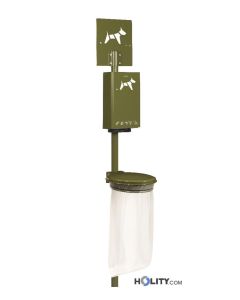
Dog station in painted steel with bag dispenser (500 units), information sign and dog waste bin. Height 2280 mm, diameter 420 mm. Ideal for parks and public spaces.
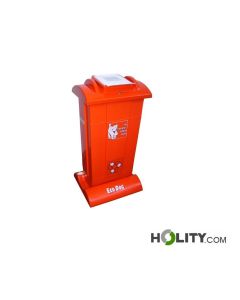
ABS dog waste container with swivel lid, triangular lock, 18.5×16 cm anti-tamper opening, ballastable polyethylene base.
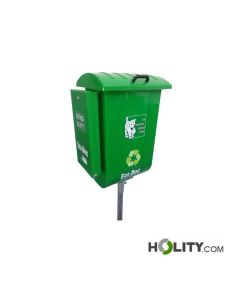
Dog waste collection bin in HDPE with integrated ABS bag dispenser, mounted on galvanized pole, capacity 350 bags.
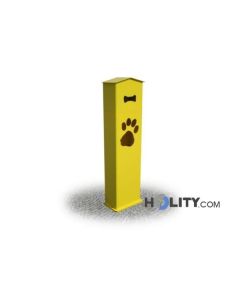
Dog waste container in galvanized steel with bag dispenser. Structure 35x25x130 cm, rear opening, internal bag holder, ground anchoring.
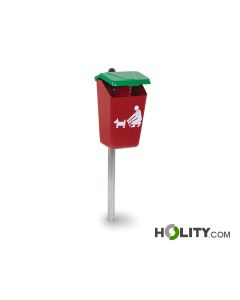
High-density fiberglass dog waste bin with lid and Ø60 mm galvanized steel post. Dimensions 34x28x54 cm, total height 123 cm.
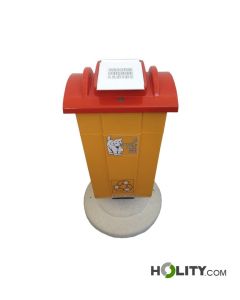
Dog waste collection container in HDPE polyethylene and ABS, capacity 65L, equipped with a concrete base and anti-intrusion system.
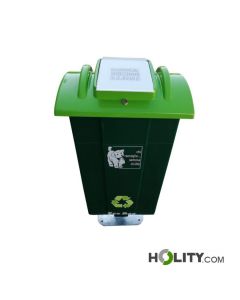
Dog waste bin in ABS, 65L capacity, 175 cm height, fixed base with 4 holes, thermoformed lid with triangular lock and anti-intrusion accessory.
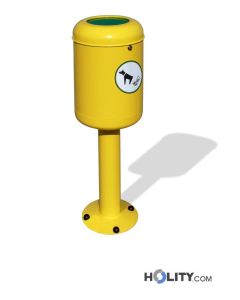
Urban container in galvanized steel, 36 cm cylindrical drum, total height 102 cm, lid with uniquely keyed lock, spring flap, ground fixing with anchor bolts.
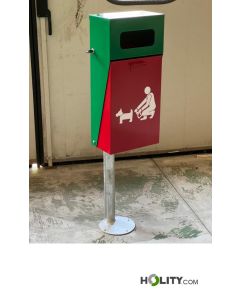
Dog waste bin in galvanized steel with key-locking tilting bin, 21 L capacity, height 123 cm, ideal for public spaces.
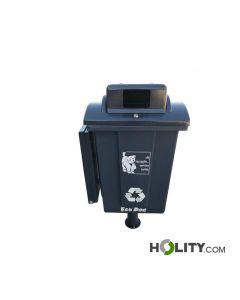
High-density polyethylene dog waste collection container with integrated lateral bag dispenser. Rectangular base, ABS lid with slot. Pole mounting with metal support.
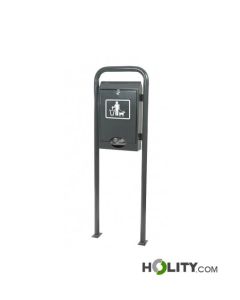
Hot-dip galvanized steel dog waste dispenser, dimensions W 43.5 x D 10.5 x H 134 cm, capacity 1,000 bags, triangular lock, installation on solid surfaces.
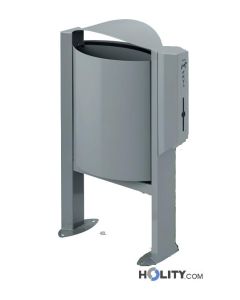
Dog waste bin in treated steel with integrated 200-bag dispenser. Linear design, floor fixing, controlled dispensing.
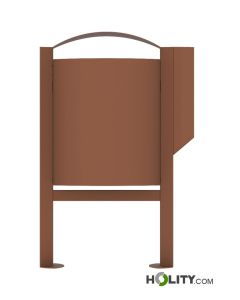
40L dog waste collection container in Corten metal, with 200-bag dispenser, ground fixing, tilting opening, ideal for public spaces.
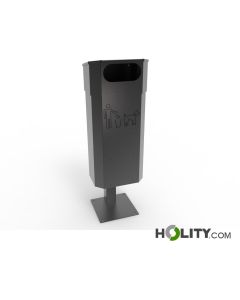
Galvanized steel dog waste collection bin, 60 liters, ground fixing, front opening, 36x34x112 cm, CE certified, Italian product.
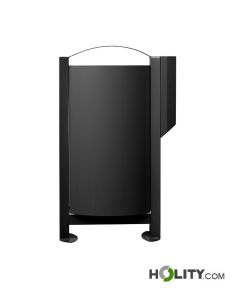
Dog waste collection bin with 200-bag dispenser, anti-corrosion steel, linear design, 4 fixing points, 60L capacity.
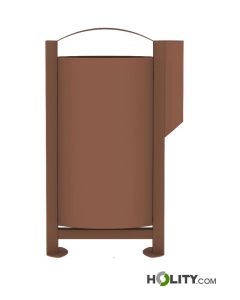
Dog waste collection container 60 liters, Corten metal, 200-bag dispenser, floor anchoring.
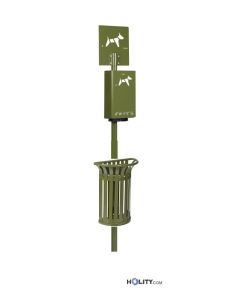
Painted steel dog station with bag dispenser, signage, and 35 L bin for parks and residential gardens.
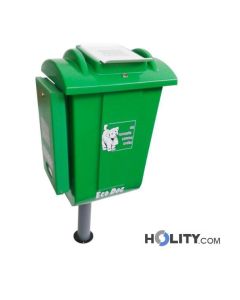
Dog waste container in ABS with rotating locking lid, integrated bag dispenser and polypropylene pole, for public and residential areas.
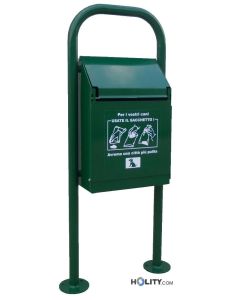
Urban furniture bin in sheet metal for dog waste collection, 35 lt, swivel lid and rear door, Italian production.
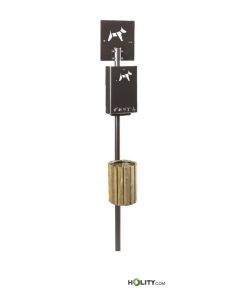
Pressure-treated wood dog station for canine waste collection with integrated bag dispenser and signage. 20L capacity, ideal for parks and municipal gardens.
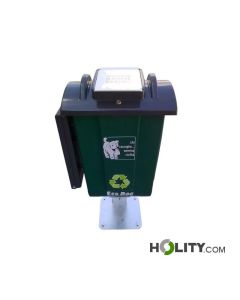
HDPE dog waste container with integrated bag dispenser. Rotational molded, impact and fade resistant. Metal base, ABS lid, triangle locks.
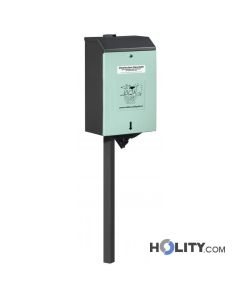
Column dispenser for dog waste collection bags, painted galvanized steel, 160 cm h., 750 bags capacity, tubular lock.
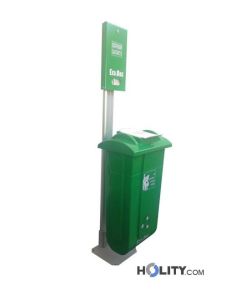
Rotational HDPE dog station with 50L bin and 350-bag dispenser. Ground-fixed metal structure, ideal for public and residential spaces.
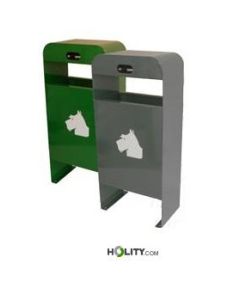
Steel dog station for dog areas and parks. Key-locked bag dispenser and container, 85 lt, h.100 cm. Vandal-proof.
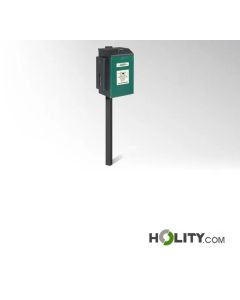
Galvanized and painted metal urban furniture container with integrated tear-off bag dispenser, tubular lock, 60° inclined lid. Complete with 250 bags.
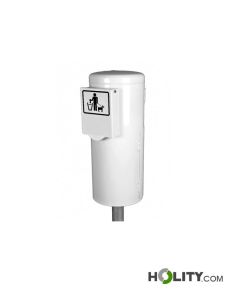
Dog waste bin in galvanized and painted steel (31.5x36x176 cm). Includes bag dispenser and safety lock.
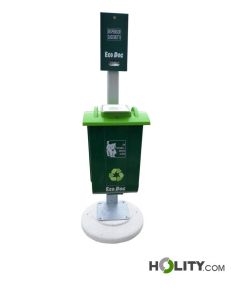
Dog waste collection container in polyethylene with ABS lid, 65-liter capacity, height 185 cm, equipped with integrated bag dispenser.
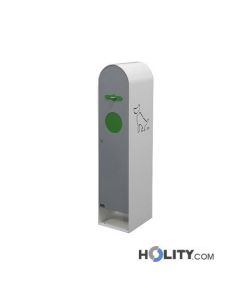
Galvanized steel dog waste bin with spring-loaded door, removable drawer and lock. 27x35x130 cm. Three colors available.
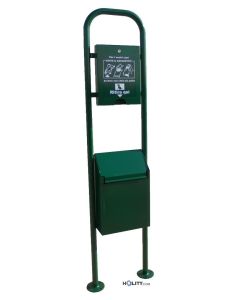
Dog waste collection totem with sheet metal bag dispenser (286x369x53 mm) and bin (340x502x250 mm). Total height 180 cm, capacity 35 lt, ground fixing.
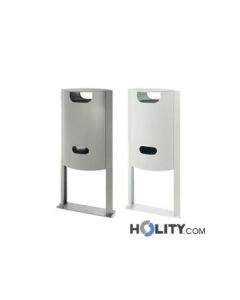
Dog waste container with integrated bag dispenser, painted galvanized sheet metal, 40 liters, for parks and common areas.
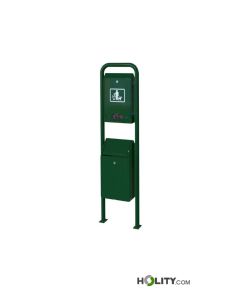
Dog waste bin with integrated bag dispenser, tilting lid, and triangular locks. Structure 170×43.5×25.5 cm with screw-on round tube support.
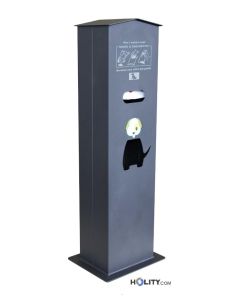
Galvanized and painted steel dog waste totem container, 30 lt capacity, with bag dispenser and internal bin. Ground fixing, polyester finish, customizable colors.
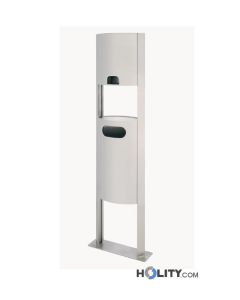
Modern dog station in painted galvanized steel with integrated bag dispenser, 40-liter capacity, 1900 mm height, ideal for public spaces.
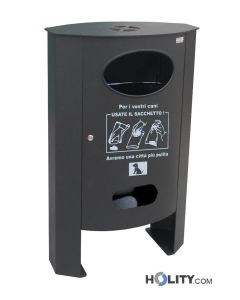
Elliptical dog waste bin with bag dispenser, locking door, bolt fixing, galvanized and painted steel. H.925x580x352 mm.
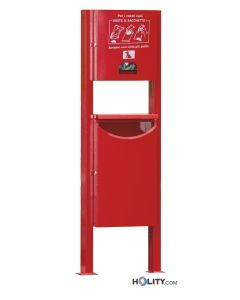
Elliptical totem in painted galvanized steel for dog waste collection with integrated bag dispenser and welded bin, ground fixing, height 1900 mm.
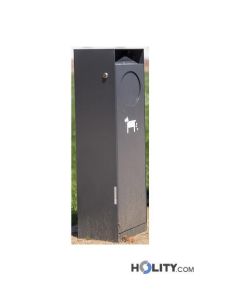
Dog waste bin in painted steel with integrated bag dispenser. Capacity 32 l, columnar shape, h. 985 mm. For public spaces.
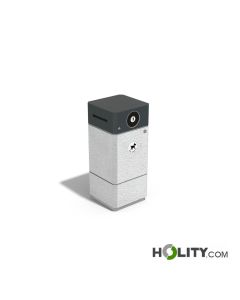
Concrete bin with natural mosaic for dog waste collection. Graphite grey metal lid with lock, internal galvanized bin. 30×30×70 cm, 15L.
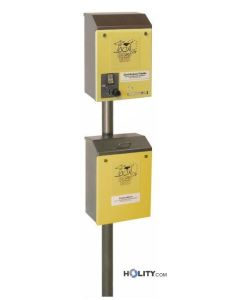
DogStation in galvanized steel with coin-operated dispenser and underlying container for dog waste collection. Modular structure made in Italy, 155 cm height, 35-kit capacity.
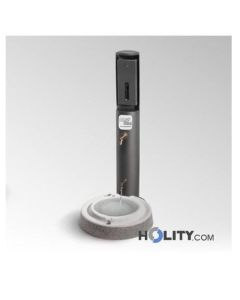
Dog drinking fountain in steel and concrete with integrated basin, two taps (automatic and manual), bag dispenser. Dimensions 560x750x1350 mm.
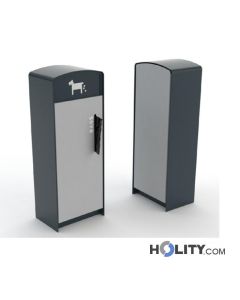
Powder-coated steel dog waste collection container, 45L, 350x250x930mm, with internal frame for plastic bags.
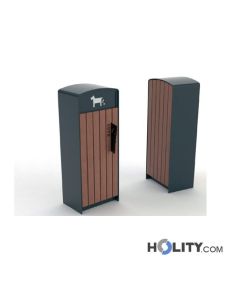
Dog waste collection container in painted steel with wooden door. 45 liters, internal bag dispenser, dimensions 350x250x930 mm.
Dog waste bins represent an essential structural solution in the management of urban hygiene and in public spaces where the presence of dogs is frequent. These systems combine bag dispensers, collection containers, and anchoring structures, designed to facilitate owners in the correct disposal of biological waste and to maintain order and cleanliness in common areas. The choice of the right bin depends on the expected volume of use, local climate conditions, and the intended use, whether it be city parks, beaches, rural paths, or residential complexes. Urban maintenance operators and managers of hospitality facilities find in these products a practical tool to reduce improper behavior and ensure hygiene standards in compliance with environmental regulations.
The installation of bins dedicated to dog waste significantly reduces the uncontrolled accumulation of biological waste in public spaces, decreasing hygiene-sanitary risks and nuisances for residents and visitors. These systems encourage responsible behavior by providing ease of access to bags and an immediate space for disposal, thus eliminating common excuses for failing to dispose correctly. In urban contexts with high dog traffic—such as parks, coastal areas, and recreational zones—the bins pay for themselves quickly in terms of reducing extraordinary cleaning costs and the perceived degradation of spaces. From a management point of view, models with integrated dispensers centralize the supply of bags, limiting waste and facilitating periodic replenishment. Furthermore, a strategic positioning of these elements in the urban territory generates an invisible mapping of “pet-friendly zones”, improving the experience for pet owners and mitigating conflicts with those who do not own dogs.
The practical benefits also extend to the economic and environmental aspects of municipal management. Variable capacity bins allow for modulating the frequency of emptying based on actual use, optimizing waste collection resources. Many modern models integrate recyclable materials or come from sustainable production processes, aligning with circular economy goals. For private facilities—residences, farmhouse complexes, veterinary facilities—the installation of a dedicated bin communicates management seriousness and attention to hygiene, factors appreciated by customers and guests. Variants with visible and well-marked dispensers also reduce the risk of complaints and disputes among residents, creating a more orderly and welcoming environment.
The market offers three main macro-categories: standalone bag dispensers, pure collection bins, and integrated systems (dog stations). Standalone dispensers, frequently made of painted steel, ABS, or plastic, are characterized by compact dimensions and variable capacity (from 100 to 600 bags), ideal for spaces with limited dog traffic or where space is constrained. These models are fixed to the wall or on a pole and represent the least invasive solution from an aesthetic point of view. Pure collection bins, usually in polyethylene (HDPE) or galvanized steel, offer greater capacity (from 28 to 60 liters) and are intended for facilities with more significant accumulation. Sheet steel guarantees greater durability in outdoor environments exposed to climate variability, while rotational-molded plastic reduces weight and simplifies maintenance. Integrated systems (dog stations) combine a bag dispenser with a collection bin in a single structure, representing the most complete solution for high-traffic public areas.
Important distinctions also emerge in the fastening mechanisms and construction materials. Some dispensers allow for anchoring to an existing street pole (standard 50 mm diameter), reducing the need for invasive installation interventions, while others require expansion bolts for wall mounting. The choice between steel, ABS, and plastic depends on the climatic context and vulnerability to vandalism: steel resists physical degradation better but requires paint maintenance; plastic reduces weight and initial costs but may show UV degradation in very sunny environments. Some models are specifically designed for the furnishing of historic centers, with a more discreet design and neutral colors, while others emphasize visibility and readability of the functional purpose. Variants with a protective roof offer shelter from the rain during use, a non-negligible aspect in areas with frequent rainfall.
The first decision criterion concerns the estimated volume of use and the frequency of emptying that the responsible body can manage. A 100-200 bag dispenser is sized for spaces with moderate flow and a weekly emptying cycle, while capacities of 400-600 bags or 50+ liter bins require areas with high dog traffic (urban parks, beaches) and more frequent maintenance cycles. A common error is underestimating capacity, creating a full bin situation that discourages correct use and is counterproductive for public hygiene. The second aspect concerns aesthetic integration with the context: historical spaces or areas with high tourist visibility benefit from discreet dispensers and colors coordinated with the existing urban furniture, while rural or peripheral areas tolerate more functional models. The third factor concerns resistance to environmental factors—coastal areas require materials with high resistance to salt corrosion, while urban areas with high vandalism need robust steel constructions with resistant coatings.
Secondary but relevant aspects include the practicality of refilling and emptying: dispensers with side-loading openings simplify the work of maintainers, reducing the risk of spilling clean bags. Integrated or easily applicable signage improves usage awareness, especially in areas frequented by non-local tourists. Many expert operators suggest preferring integrated systems (dispenser + bin) in high-flow public areas, as they guarantee a complete solution and reduce the visual fragmentation of multiple separate elements. Also evaluate the total cost of ownership (TCO): a higher initial investment in a robust model can translate into lower maintenance and replacement costs in the medium-to-long term. Finally, consulting the experiences of other urban bodies or similar facilities provides valuable information on actual performance, ease of maintenance, and operational duration in similar climatic conditions.
From a regulatory point of view, dog waste bins fall into the broader category of urban waste management and, in some aspects, public health. In Italy, Legislative Decree 152/2006 (Environmental Code) regulates separate collection and waste disposal, requiring that biological waste be managed in accordance with EU directives. Municipal administrations have the power to impose specific ordinances requiring the use of compostable bags and correct disposal, particularly in sensitive areas such as beaches, protected areas, or near water sources. Regarding hygiene-sanitary aspects, Legislative Decree 81/2008 establishes safety obligations for those who maintain these systems, prescribing personal protective equipment (PPE) and hygiene procedures during emptying operations. Dog waste, although destined for composting or controlled incineration, contains pathogens and requires handling according to specific protocols.
At the technical and urban furniture level, the placement of bins must respect accessibility standards (Ministerial Decree 236/1989) when located near frequented public areas, although for these elements regulatory rigidity is lower than for benches or fountains. Many municipalities also require that dispensers and bins respect design standards consistent with local urban furniture guidelines, avoiding dissonant elements. For private structures (condominiums, hotels, farmhouses), the legislation is less prescriptive, but it is advisable to consult the local municipal regulations to check for any specific ordinances on the management of biological waste from pets. Finally, where installed in exposed environments (parks, beaches), the materials must possess non-toxicity and UV resistance certifications, especially if they come into potential contact with water intended for human consumption. Compliance documentation (CE mark, material safety certificates) represents an implicit requirement for professional manufacturers and retailers.
Explore all the products in the category and compare the available solutions to find the one best suited to your operational context. From the management of small private spaces to the complete structuring of urban parks, the catalog offers variants capable of responding to specific needs of capacity, aesthetics, and durability.
A dog waste bin is a collection system that includes a hygienic bag dispenser and a biological waste disposal space. The owner takes a bag from the dispenser, collects the excrement, puts it in the bag, and throws it in the bin. The structure facilitates correct disposal, reducing improper behavior in public spaces.
Dispensers range from 100 to 600 bags depending on the model. In high dog-traffic areas, a 400-600 bag unit requires weekly or bi-weekly refilling. In areas with lower flow, 100-200 bag models allow for monthly or bi-weekly maintenance cycles.
Galvanized and epoxy-painted steel guarantees better resistance to salt corrosion and humidity. Technical ABS, if industrial quality, offers a good compromise between strength and lightness. HDPE plastic is economical but requires additional UV protection in very sunny environments. For humid areas, avoid untreated ferrous alloys.
A standalone dispenser takes up less space and is ideal for areas with low-to-medium flow. The dog station is preferable in high-traffic parks, as it centralizes the dispenser and bin, reducing visual fragmentation. The dog station is also more complete and discourages direct disposal on the ground, improving overall hygiene.
There is no uniform national obligation, but many municipalities have issued regulatory ordinances. Some administrations require dispensers in parks and public areas, sometimes mandating the use of compostable bags. It is advisable to check local municipal regulations before installation.
Rotational-molded polyethylene is lighter, more economical, and easier to maintain, but has a shorter lifespan (5-7 years) in exposed environments. Galvanized steel is more robust (10+ years), resists vandalism and climate variability better, but requires periodic painting checks and has a higher weight during installation.
 English
  Italian
 French
 German
 Spanish