
mon-fri 9-13 / 14.30-18.30
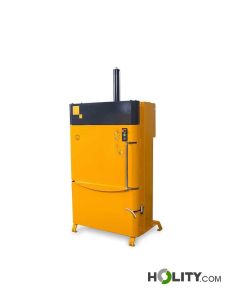
Powerful and compact vertical waste baler, ideal for cardboard and plastic. Thanks to its 3-ton pressing force, it efficiently reduces waste volume. Equipped with a trolley for bale handling. Dimensions: W 97.5 x D 71.5 x H 198.5 cm.
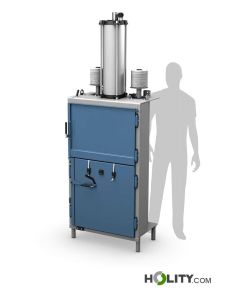
Baler for compressing cardboard and plastic. Dimensions: W. 83.2 x D. 54.1 x h. 229.2 cm.
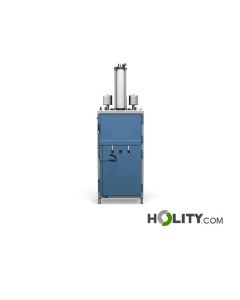
Plastic and cardboard baler. Dimensions: W. 83.2 x D. 54.1 x h. 246.2 cm.
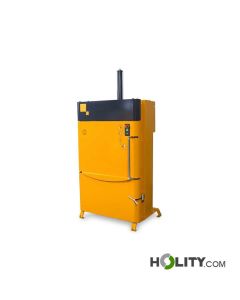
Compact and efficient waste baler, ideal for environments with limited space. Equipped with automatic bale ejection, intuitive control panel and low noise level. Dimensions: W 97.5 x D 71.5 x H 198.5 cm.
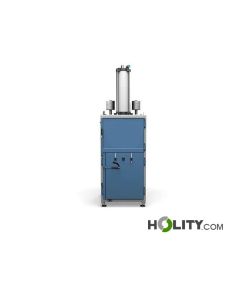
Cardboard and plastic baler. Machine dimensions: W. 82.5 x D. 103.4 x h. 253 cm.
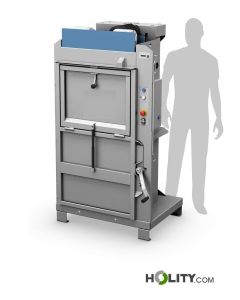
Electric baler ideal for cardboard and plastic. Dimensions: W. 96.5 x D. 78 x h. 178.5 cm.
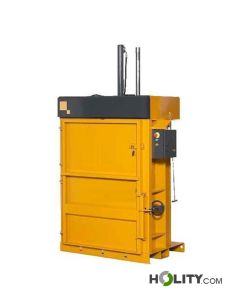
Powerful and compact vertical baler with 5-ton pressing force, ideal for compacting cardboard and plastic. Equipped with a wide 1-meter loading aperture. Dimensions: W 136 x D 89.5 x H 237 cm.
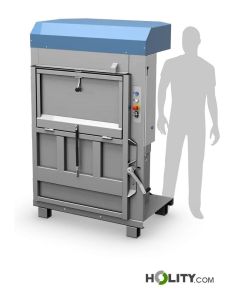
Electric cardboard and plastic baler. Dimensions: W. 116.5 x D. 81 x h. 185.5 cm.
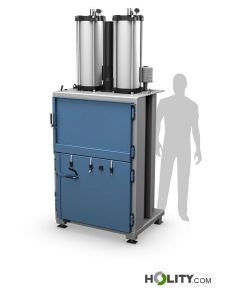
Ideal press for cardboard and plastic. Dimensions: W. 109 x D. 94.1 x H. 253 cm.
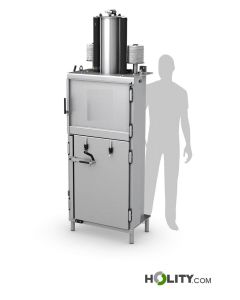
Stainless steel press for cardboard and plastic. Dimensions: W. 77.5 x D. 54 x h. 226 cm.
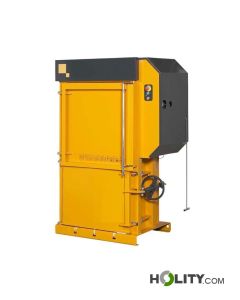
Compact and powerful vertical baler, with a pressing force of 10 tons, ideal for the compaction of cardboard, flexible plastic, paper and PET bottles. Dimensions: W 131.5 x D 104 x H 190 cm.
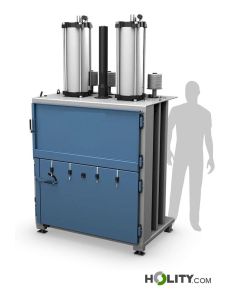
Baler suitable for cardboard and plastic. Dimensions: W. 145 x D. 104 x h. 253 cm.
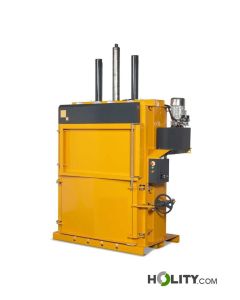
High-capacity vertical press with a pressure force of 20 tons, ideal for compacting cardboard, plastic, and paper. Designed for EURO pallet standard-sized bales. Dimensions: W 177.5 x D 102.5 x H 277 cm.
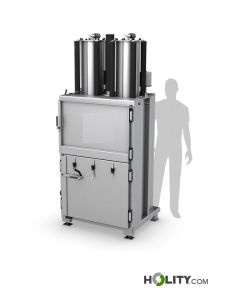
Stainless steel baler for cardboard and plastic. Dimensions: W. 103.5 x D. 93.5 x h. 237 cm.
Waste compacting presses represent an essential technical solution in waste material management, addressing one of the most concrete challenges of modern logistical operations. These systems allow for the transformation of considerable volumes of cardboard, plastic, metals, and other waste into compact bales, reducing bulk by up to 90% and significantly optimizing collection and transport cycles. Their application ranges from small commercial businesses to industrial facilities with high production volumes, representing a strategic investment to contain operating costs and improve the organization of workspaces.
Modern construction technology allows for the management of heterogeneous materials with pressing systems that combine power and control, while simultaneously guaranteeing operator safety through emergency stop systems, protective guards, and intuitive controls. Choosing a waste press means not only optimizing the economic management of waste but also contributing to a more sustainable model of circular economy.
The need to manage increasing volumes of waste with operational and economic efficiency is a constant priority in contexts ranging from traditional commerce to large-scale distribution, and from industrial processing to public facilities. Waste compacting presses concretely solve this problem through a volumetric reduction of up to 90%, transforming bulky materials into standardized, easily handled bales. This direct impact on disposal costs translates into tangible savings: fewer collections required, shorter distances traveled by transport vehicles, and a reduction in the frequency of container emptying. At the same time, the organization of the workspace improves significantly, allowing production or sales departments to keep dedicated areas free from waste accumulation, with direct benefits for safety and the fluidity of operational processes.
Versatility in managing different materials represents a further advantage: the same press can handle cardboard, flexible plastic, paper, PET bottles, and metal sheets, depending on the chosen model and its configuration. This allows companies to maintain a consistent and concentrated investment rather than proliferating specific machines. Furthermore, compaction technology promotes the preparation of materials for subsequent recycling stages, as compact bales facilitate transport to sorting and processing centers, increasing the efficiency of the entire circular economy system. Simplicity of use, highlighted by intuitive control panels and progressive automation systems, allows any operator to use the machine safely, reducing training time and operational errors.
In the landscape of waste compacting presses, a fundamental distinction emerges between vertical and horizontal models, each responding to specific operational needs. Vertical presses, such as the H980_02 vertical waste compacting press and the H980_05 vertical bale press, represent the most compact solution in terms of floor space, ideal when space is limited. These models offer pressing forces ranging between 3 and 20 tons, allowing for the management of materials with different degrees of compressibility: from light papers to more resistant plastics. Feeding takes place from the top through loading apertures of variable width, favoring manual or semi-automatic material insertion. The bales produced by these models have standardized and stackable dimensions, a determining factor for optimizing transport with standard EURO pallets.
Horizontal models, represented by solutions such as the H42010 cardboard and plastic press and the H42012 stainless steel cardboard and plastic press, occupy a larger surface area but are particularly suitable for industrial contexts where the volume of material to be treated is very high or where continuity of work is a priority. These systems allow for side or top loading with pressing cycles that follow one another without interruption, further reducing downtime. The availability of models made of stainless steel, such as the H42011 stainless steel press and the H42012 stainless steel cardboard and plastic press, meets the needs of humid environments or those with chemical contamination, where corrosion resistance and ease of cleaning are critical requirements. Construction variations also extend to dimensions and compaction power, allowing the choice to be adapted to the specific volume of waste and the type of material prevalent in the operational cycle.
Selecting a waste compacting press requires, first and foremost, a realistic analysis of the volume of material to be managed daily or monthly, expressed in terms of weight or cubic meters. A frequent error consists of underestimating this estimate, subsequently leading to the purchase of an undersized machine that cannot keep up with work rhythms, creating bottlenecks and operational frustrations. Correct calculation of the average volume and peak load represents the foundation of an informed choice: a press that constantly works at maximum capacity develops accelerated wear, while an oversized one involves high initial costs and unjustified energy consumption. The commodity composition of the waste is the second decisive element: a press designed for light cardboard is not appropriate for compact metals, just as a universal model might not guarantee optimal compaction of flexible plastics.
Available space influences the choice between vertical models, which offer a reduced footprint but greater height, and horizontal models, which require a larger surface area but allow for greater integration into workflows. Automation represents a further parameter: models with a fully automatic cycle reduce human intervention, improve bale consistency, and increase productivity, but require more sophisticated technical maintenance. Semi-automatic or manual models, while involving greater operational intervention, offer construction simplicity and lower management costs for moderate volume contexts. Finally, consideration of the operating environment is fundamental: humid, dusty, or corrosive environments justify the choice of noble materials such as stainless steel, while dry and controlled facilities allow for less expensive painted steel solutions. Evaluating the availability of maintenance services and spare parts from the supplier or in the geographical area is an often overlooked but critical aspect for operational continuity.
Waste compacting presses fall within the scope of EU Directive 2006/42/EC relating to machinery, for which a declaration of conformity and instructions for use in the local language must be drafted and available. The CE marking, accompanied by the technical construction documentation, represents the minimum legal requirement for placement on the Italian and European markets. In addition to this formal obligation, the construction design must comply with the principles of the ISO 12100:2010 standard, which establishes safety criteria for industrial machinery, including risk analysis, physical protections, emergency stop systems, and visual and acoustic signals. In the context of waste management, regulations on the prevention of accidents at work also apply: the employer must guarantee a specific assessment of the risks related to the use of presses, provide adequate training to operators, and ensure compliance with maximum noise exposure times if the machine exceeds 85 dB(A).
Energy classification represents an increasingly relevant aspect in institutional and private purchasing choices: modern presses, especially those equipped with electronically controlled electric motors, must declare the specific consumption in kWh per ton of processed material. Numerous public administrations and large commercial entities have adopted environmental sustainability standards that favor low energy consumption machines. Local prescriptions regarding vibrations and noise in work environments vary by region and city, making it appropriate to verify the specific values of the chosen machine. Finally, concerning the product life cycle, European legislation on extended producer responsibility (EPR) and the management of waste electrical and electronic equipment (WEEE) entails the producer’s obligation to plan for recovery and recycling at the end of its useful life, an aspect that can be evaluated at the time of purchase by preferring suppliers who offer clarity regarding these commitments.
Explore all the products in the category and compare the available solutions to find the one best suited to your operational context. Every model in our catalog has been selected to combine technical efficiency, manufacturing reliability, and consistency with the sustainability standards required by the contemporary market.
The required pressing force depends on the material’s compressibility. Paper and light cardboard require 3-5 tons, while rigid plastic, metals, and mixed materials need 10-20 tons. Consulting the technical specifications of the chosen product and verifying compatibility with the average composition of your waste is essential.
Vertical presses occupy a small footprint, approximately 1-2 square meters, with a height that can exceed 2.5 meters. Horizontal presses require 5-10 square meters but have a height of less than 2.5 meters, making them more suitable for warehouses with low ceilings or deep spaces.
Typical volumetric reduction varies between 70% and 90%, depending on the press model and the nature of the material. Light and compressible waste such as paper and flexible plastic reach 90%, while denser or mixed materials stand around 70-80%. The economic calculation of disposal must consider these real values.
Stainless steel requires periodic cleaning to maintain corrosion resistance but does not need maintenance painting. Painted steel has lower costs but requires regular inspections to check the integrity of the paint, especially in humid or chemically aggressive environments. The choice depends on the expected duration and environmental conditions.
Consumption varies between 1 and 3 kWh per pressing cycle, depending on the motor power and the duration of the cycle. A press used for 50 cycles a day consumes approximately 50-150 kWh per month. Asking the supplier for the specific data in kWh per ton of material processed facilitates the economic comparison between different models.
Yes, but with preliminary checks. Modern presses range between 80 and 90 dB(A). If the environment has limits lower than 85 dB(A), it is necessary to consider acoustic insulation booths or choose low noise emission models. The standard for work environments often sets the limit at 87 dB(A) as an action value.
Modern presses with electrical components fall under the WEEE category and require specific recycling management. A serious supplier must offer a collection and disposal service compliant with European regulations. Verify in the purchase contract the presence of clauses relating to extended producer responsibility and final recovery costs.
 English
  Italian
 French
 German
 Spanish