
mon-fri 9-13 / 14.30-18.30
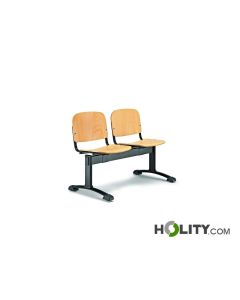
Waiting room bench with 2 seats in multilayer beech wood and steel structure. Dimensions: W.100 x D.58 x H.82 cm.
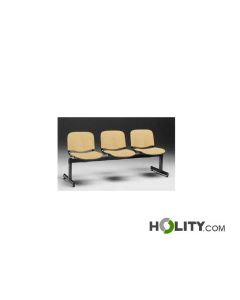
Waiting room bench in beech plywood for 3 people. Dimensions: W.150 x D.58 x H.82 cm.
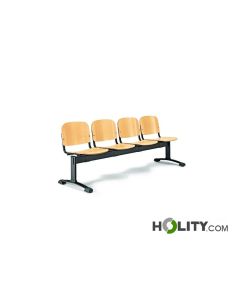
Bench in beech plywood and black steel ideal for waiting rooms. Number of seats: 4. Dimensions: W.200 x D.58 x H.82 cm.
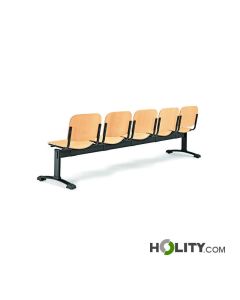
5-seater waiting room bench in black metal and beech wood. Dimensions: W.250 x D.58 x H.82 cm.
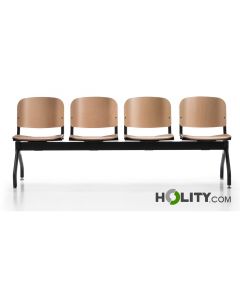
Wooden waiting room bench. Black painted frame finish.
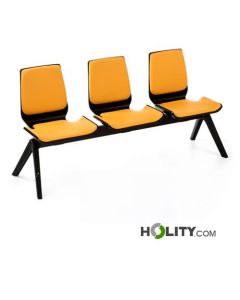
3-seater waiting room bench, base with black nylon V-shaped legs. Dimensions: W. 150 x D. 70 x h. 88 cm.
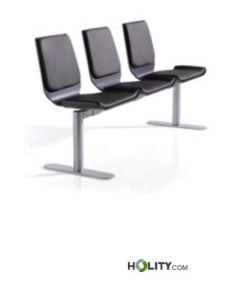
3-seater waiting room bench, base with grey steel T-legs. Dimensions: W. 150 x D. 56 x H. 88 cm.
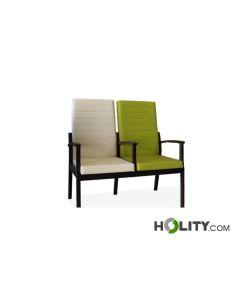
Waiting room bench with 2 seats. Dimensions: W. 117 x D. 64 x H. 105 cm.
Waiting room benches represent a fundamental element in the furnishing of public and professional spaces where visitors spend time waiting for services. These furnishings combine functionality, durability, and comfort, designed specifically for high-traffic environments such as medical offices, dental clinics, corporate receptions, law firms, and healthcare facilities. A conscious choice of the waiting bench directly affects the perception of service quality and customer satisfaction, as it represents one of the first points of physical contact with the space. Modern benches combine contemporary design with wear-resistant materials, while facilitating cleaning and routine maintenance.
The variety of models available allows the furniture to be adapted to the specific needs of each context: from essential and compact solutions for small spaces, to complex configurations with multiple seats, integrated tables, and ergonomic details. The market offers benches made of different materials—plastic, polypropylene, wood, steel—each with its own characteristics of resistance, aesthetics, and practicality of management. The correct selection considers factors such as the number of people to be accommodated simultaneously, the architectural style of the environment, the planned cleaning cycles, and the available budget.
A well-selected waiting room bench significantly improves the user’s experience and reflects the professionalism of the host facility. Dedicated furnishings guarantee ergonomic seating heights (generally between 45 and 50 cm), adequate depth for prolonged comfort, and appropriate lumbar support. The choice of dedicated benches avoids the improvised use of generic furniture, which would lead to accelerated wear and a compromised corporate image. In environments such as medical or dental facilities, where hygiene is critical, benches made of non-porous and easy-to-disinfect materials represent a concrete operational advantage. Modern solutions integrate details such as dividing armrests (useful in post-pandemic contexts), central tables for magazines or digital devices, and painted steel profiles that guarantee stability even with intensive use.
In addition to practical aspects, waiting room benches contribute to the visual identity of the space, conveying messages of order, cleanliness, and attention to the customer. A public facility or a professional studio benefits from aesthetic consistency: benches chosen consciously in terms of color, material, and design integrate with walls, floors, and other furnishing elements, creating a cohesive environment. Furthermore, correctly sizing the number and configuration of seats based on the expected flow of people waiting avoids situations of overcrowding or, conversely, underutilized spaces. Investment in quality benches translates into reduced maintenance and replacement costs in the medium-to-long term, as robust materials and solid constructions better withstand continuous passage and wear.
The waiting room bench market offers a varied range of solutions, differentiated mainly by shell material, supporting structure, number of seats, and configuration. Polypropylene benches represent the most popular choice: lightweight, economical, available in numerous colors, and very easy to clean. Thermoplastic plastic, sometimes self-extinguishing and Class 1 certified for fire safety, is ideal for healthcare environments or where regulations require fire-retardant materials. Alongside these, we find benches with copolymer polypropylene shells (more resistant and durable), padded fabric seats for those who prioritize comfort, and hybrid solutions that combine solid wood (such as multilayer beech) with steel structures, giving a warmer and more natural appearance.
Supporting structures are mainly divided between steel frames painted with epoxy powders (black, white, gray) and anodized aluminum structures, chosen when minimalist design or the environment requires it. Regarding the number of seats, standard configurations range from 2 to 3 seats, although the market offers modular units that allow for longer compositions for large waiting areas. Some models include functional details such as integrated central tables, individual dividing armrests, seats with micro-perforation to promote breathability, and fabric backrests to improve support. Prices vary significantly: from basic plastic benches (around 116-150 euros) to premium models with ergonomic upholstery and refined finishes (over 270-295 euros).
The choice of a waiting room bench begins with an assessment of the context of use and spatial constraints. First aspect to consider: how many people on average stay waiting at the same time and for how long? A waiting room frequented by 15-20 people a day requires a different solution than a studio accessed by appointment with few people. The available space affects dimensions: compact 2-seater benches adapt to narrow receptions (width 100-123 cm), while 3-seater models occupy 150-176 cm. Always check the seat height in relation to the target population: the elderly and people with limited mobility need higher heights (48-50 cm), while for pediatric offices the opposite might be true.
The second criterion concerns the material: environments with high traffic and frequent cleaning (hospitals, clinics) require non-porous and disinfectable plastics or polypropylene, while a law firm or a conference room can benefit from textile coverings. Check if the structure requires fire safety compliance (Class 1) if operating in certain sectors. A third element is style: the minimalist and contemporary design of modern benches fits modern receptions, while solutions with wooden structures fit better into warmer and more traditional contexts. Finally, consider maintainability: benches with completely smooth or micro-perforated seats guarantee simple cleaning, while eco-leather coverings require more attention. A common mistake is to underestimate construction quality: an apparently similar bench may have undersized frames or fragile welds, which manifest after a few months of intense use.
Waiting room benches, like all furniture for public use, must comply with specific regulations that vary depending on the context and jurisdiction. In Italy, furnishings intended for public spaces must comply with Legislative Decree 81/2008 (safety at work) and UNI technical standards relating to stability, resistance, and geometric tolerances. For healthcare environments (hospitals, clinics, medical practices), the choice of self-extinguishing materials certified at least in Class 1 (UNI EN 13823 standard) is often mandatory, as it guarantees that the material does not fuel combustion in the event of a fire. Benches made of self-extinguishing thermoplastic polypropylene meet this requirement. Furthermore, spaces intended for the public in Italy must guarantee accessibility according to DM 236/1989: this involves minimum dimensions for corridors, suitable seat heights, and sometimes maneuvering spaces for wheelchairs, which affects the positioning and configuration of the benches.
A recurring aspect concerns hygiene and cleanliness: in the healthcare sector, contact surfaces must be easy to clean and disinfect, without corners or niches that accumulate dirt. Anti-slip regulations are relevant especially for seating surfaces: some models provide micro-spheres or anti-slip textures to increase safety. Steel structures must undergo epoxy powder coating processes to ensure durability and resistance to corrosion in environments with high humidity. Certifications such as ISO 9001 (quality of processes) and European CE marks certify compliance with construction standards. In specific contexts such as retirement homes or geriatric facilities, it is advisable to verify that the bench passes tests for resistance to lateral thrusts and sagging, given the use of armrests as support by people with mobility difficulties. Finally, the structural guarantee (usually 2-3 years) represents an indicator of the manufacturer’s confidence in the construction quality.
Explore all the products in the category and compare the available solutions to find the one best suited to your operational context. From the essential plastic bench to ergonomic configurations with padded fabric, our catalog offers over 130 variants for every need of space, aesthetics, and budget.
The polypropylene bench has a lighter and more economical monobloc plastic shell, ideal for environments with a limited budget and frequent moves. The model with painted steel and a polypropylene seat offers greater structural stability, better-distributed weight, and superior durability in case of intensive use, recommended for high-traffic reception areas.
A 2-seater bench generally measures 100-123 cm in width, while a 3-seater bench occupies 150-176 cm. Dimensions vary slightly from manufacturer to manufacturer, so always check the technical specifications before purchasing to ensure it fits the available space.
It depends on local regulations and the specifics of your insurance contract. Many dental practices require Class 1 materials for fire compliance. If not mandatory, it still remains a prudent choice for safety and liability insurance, as it demonstrates diligence in preventive measures.
Non-porous plastic is easily cleaned with lukewarm water and a neutral detergent, or with 70% alcohol in healthcare contexts. In the medical field, daily disinfection is standard; in offices, 2-3 times a week is sufficient. Avoid pure bleach which can dull the material over time.
The standard height is 48-50 cm, ideal for the majority of the population. Facilities with elderly or disabled users benefit from heights up to 52-54 cm. Ensure that feet touch the floor easily and that knees form an angle of approximately 90 degrees when seated.
Some manufacturers offer customizations, but they often involve additional costs and longer delivery times. Many standard models already include individual divider armrests; check the catalog specifications before requesting custom variants, as they may not be economically viable for single orders.
The central table in steel or plastic adds a surface to clean, but if integrated correctly, it does not create hard-to-reach corners. Well-designed models allow access to the compartment below. Consider if the table is removable, which significantly facilitates thorough cleaning of the structure.
 English
  Italian
 French
 German
 Spanish