
mon-fri 9-13 / 14.30-18.30
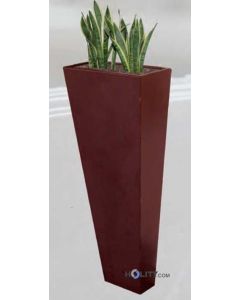
Planter for public spaces with galvanized steel structure. Italian product.
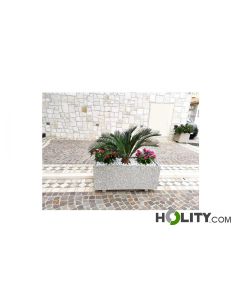
Concrete planter for urban furniture. Dimensions: L.1000xW.400xH.460 mm
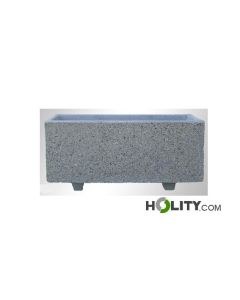
Rectangular concrete planter for historic centers and public gardens. Dimensions: L.80 x D.40 x H.50 cm.
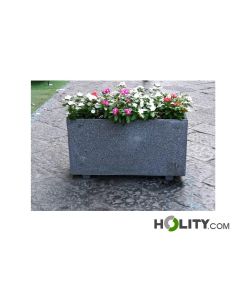
Concrete planter for urban furniture. Dimensions: L.1000xW.400xH.560 mm
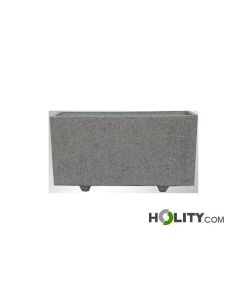
Rectangular concrete planter for public spaces available with light or black aggregates.
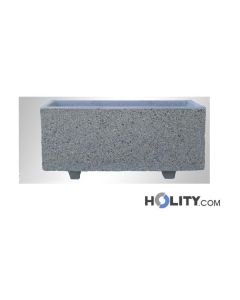
Rectangular light concrete planter, 100x40x50 cm. Made in Italy design for street and condominium furniture with high resistance and stability.
Concrete planter for public spaces. Rectangular shape. Dimensions: W.1000xD.330xH.900 mm
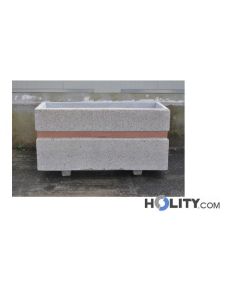
Rectangular planter in concrete and light aggregate with decorative copper band, 100x40x55 cm. Ideal for urban furniture and prestigious public spaces.
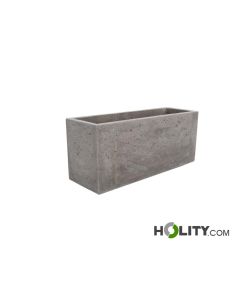
Planter in high-resistance concrete, with internal iron reinforcement and customizable finishes. Dimensions: L 100 x W 40 x H 50 cm.
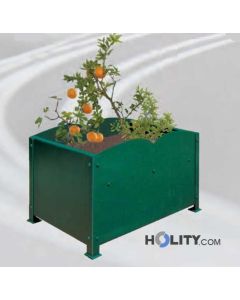
Urban furniture planter with green galvanized steel structure. Italian product. Dimensions: W.70 x D.45 x h.46 cm.
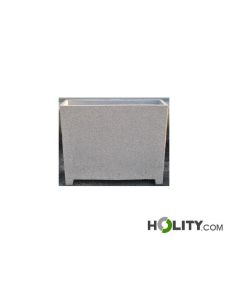
Concrete planter for public spaces. Dimensions: 100x30xh.85 cm
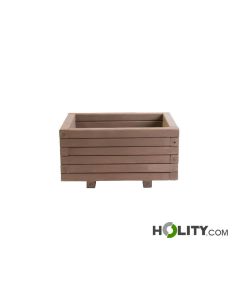
Planter for urban furniture in 100% recycled plastic for outdoors, solid and resistant. Dimensions: W 70 x D 55 x H 35 cm. Weight: 33 kg.
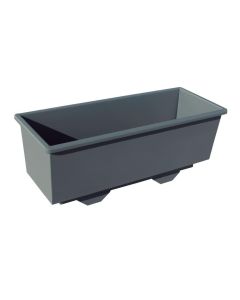
Rectangular planter h939_70 in 2 mm galvanized steel. Forged black oxirón finish, 65-liter capacity and drainage holes. Dimensions: L 83.5 x D 33 x H 34 cm.
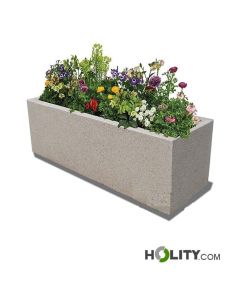
Urban furniture planter in sandblasted white concrete. Weight: 300 Kg. Dimensions: L. 150 x D. 50 x h. 50 cm.
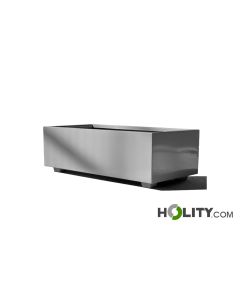
Glossy FRP planter with UV protection, lightweight and weather-resistant. Dimensions: L 120 x D 60 x H 40 cm.
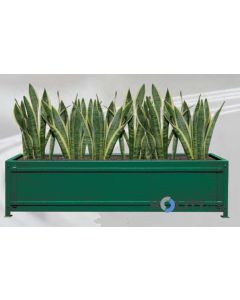
Urban furniture planter with rectangular galvanized steel structure in green. Made in Italy product. Dimensions: W.160 x D.45 x H.40 cm.
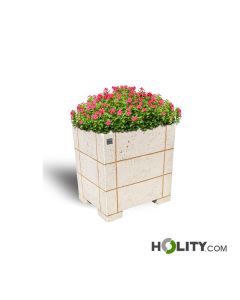
Rectangular planter for public spaces. Dimensions: W. 85 x D. 65 x H. 90 cm.
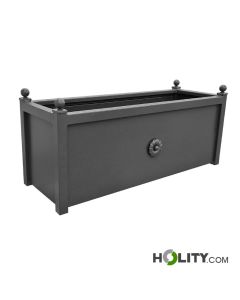
Planter for public spaces. Shape: rectangular. Dimensions: L. 108 x D. 38 x h. 45 cm.
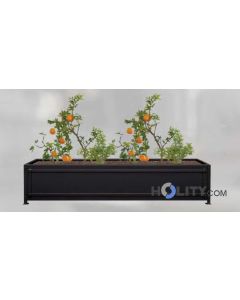
Urban furniture planter with black galvanized steel structure. Italian product. Dimensions: W.190 x D.45 x h.40 cm.
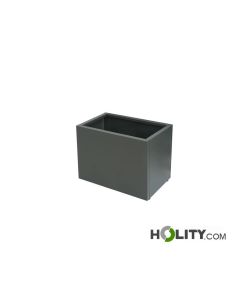
Planter for public spaces in galvanized steel. Rectangular. Capacity: 200 L.
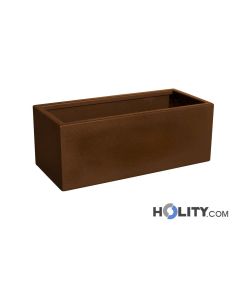
Rectangular planter for public spaces. Material: galvanized steel. Dimensions: L100 x D50 x H45 cm.
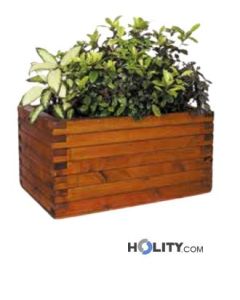
Rectangular planter in Nordic pine (100x60x50 cm). Robust solution for urban furniture and pedestrian area demarcation with a natural aesthetic.
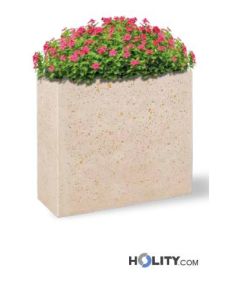
Rectangular concrete planter with internal reinforcement, 100x40x90 cm. Robust 350 kg structure, CAM compliant and equipped with lifting hooks.
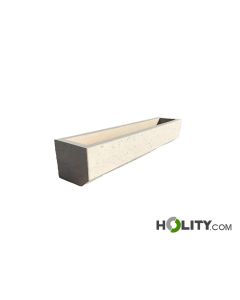
Planter in white concrete with stone effect. Dimensions: L 204 x W 40 x H 39 cm. Weight: 370 kg.
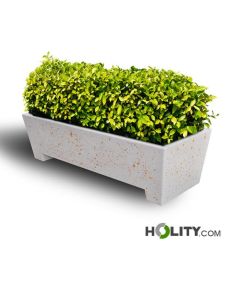
Rectangular concrete planter for furnishing public spaces. Dimensions: L160 x W60 x H45 cm. CAM product.
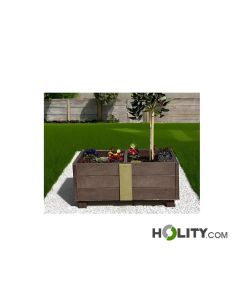
Planter for urban furniture made of CAM-certified recycled plastic, weather-resistant and maintenance-free. Dimensions: L 100 x D 50 x H 52 cm.
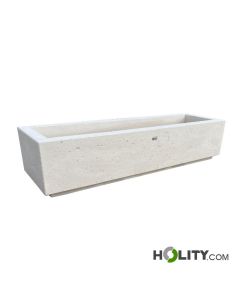
Concrete planter for urban furniture. Dimensions: L. 200 x D. 60 x h. 45 cm. Weight: 570 kg.
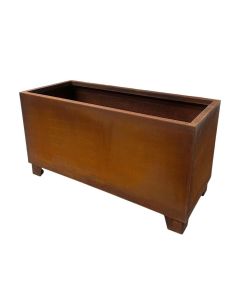
Rectangular h939_69 planter in high-quality Corten steel. Dimensions 1000x420x520 mm, minimalist design and extreme resistance without maintenance.
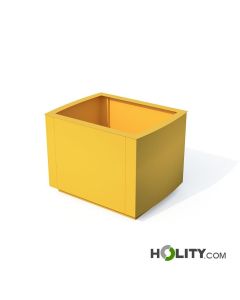
Planter for urban furniture 150 L with a rounded profile in painted steel. Dimensions: W 70 x D 55 x H 53 cm.
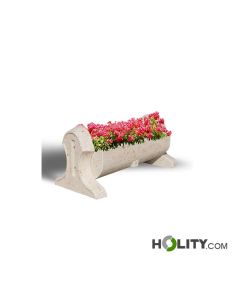
Planter in 52.5 R white concrete with travertine effect. Dimensions: L 130 x D 60 x H 60 cm.
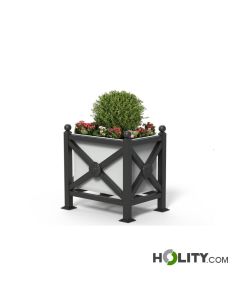
Rectangular planter in galvanized steel with central decorations and internal galvanized tank. Dimensions: W 55 x D 75 x H 72.5 cm.
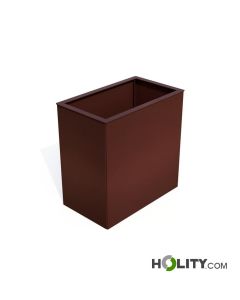
Rectangular painted steel planter, modular and resistant to external agents. Dimensions: L 57 x D 34 x H 57 cm.

Rectangular galvanized steel planter for urban furniture. Dimensions: W.96xD.55xH.72.5 cm
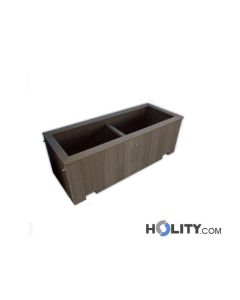
Rectangular planter for public outdoor spaces in recycled plastic. Dimensions: H.500 x D.500 x L.1500 mm.
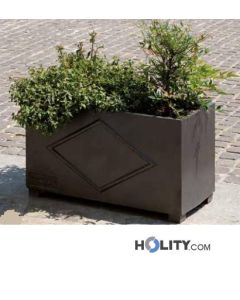
Rectangular cast iron planter 75x35x40 cm, anti-corrosive structure with drainage holes, ideal for urban furniture and prestigious monumental entrances.
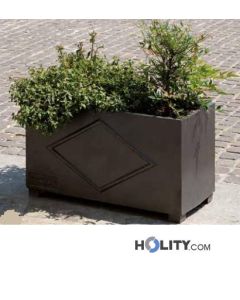
Rectangular iron planter for street furniture (75x35x40 cm), equipped with drainage holes and rhomboid decoration, ideal for public spaces and gardens.
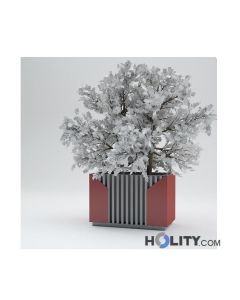
Urban planter in galvanized steel and aluminum, 1000x510x635 mm. Modern slatted design for furnishing commercial areas, offices, and public spaces.
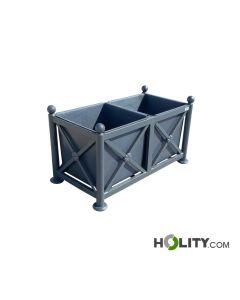
Planter for street furniture in galvanized steel with double fiberglass container. Dimensions: W 130 x D 65 x H 70 cm.
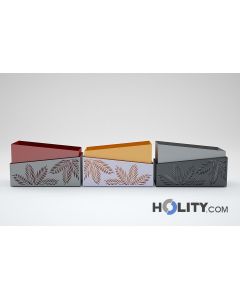
Modern planter in galvanized and painted steel, 990x500x530 mm. Laser-cut structure with ground fixing, ideal for urban and public furniture.
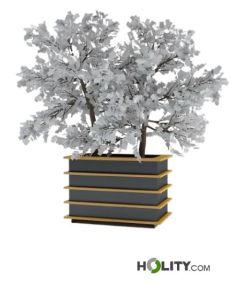
Urban design planter in laser-cut sheet metal, with perimeter ornaments in welded tubular and painted internal container. Dimensions: L. 1060 x D. 610 x h. 690 mm. Weight: 71 kg.
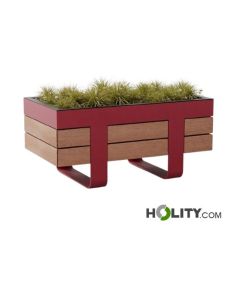
Elegant and functional planter, with painted galvanized steel structure and okumè wood cladding. Dimensions: L. 90 x D. 50 x h. 42 cm.
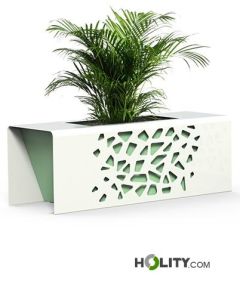
Urban furniture planter with stylized decorative carvings. In galvanized steel sheet. Dimensions: W. 146 x D. 48 x h. 48 cm.
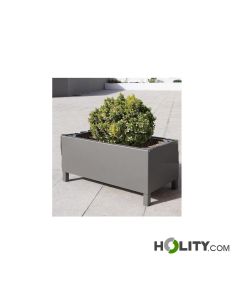
Rectangular planter for urban furniture. Dimensions: L.900 x D.450 x H.420 mm.
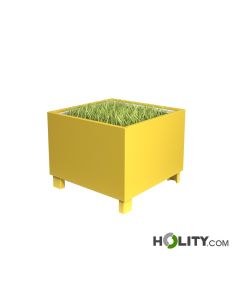
Galvanized sheet steel planter for urban furniture. Dimensions: W.1000 x D.996 x H.800 mm.
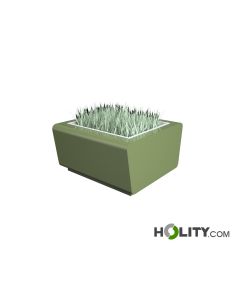
Planter in galvanized steel sheet for urban furniture. Available in various finishes. Dimensions: W.700 x D.635 x H.435 mm.
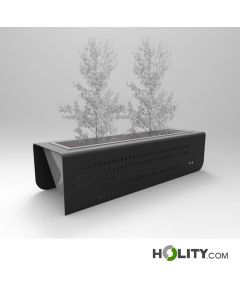
Design planter in galvanized and painted steel, with laser-cut structure. Pot available in different colors. External color: anthracite grey RAL 7016. Dimensions: W. 1490 x D. 500 x H. 400 mm.
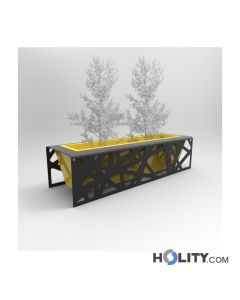
Modern design planter for outdoor spaces. Available in various colors. Dimensions: W.1490 x D.500 x H.400 mm.
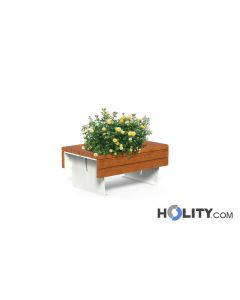
Planter for public spaces in galvanized steel and wooden slats. Dimensions: L.95 x W.65 x H.45 cm.
Planters designed for street furniture represent fundamental structural elements for managing high-traffic public and private spaces, fulfilling functions that go beyond simple floral decoration. These products are designed to withstand mechanical stress, acts of vandalism, and extreme atmospheric agents, while ensuring a healthy environment for the growth of plant species.
The choice of a professional planter requires an in-depth analysis of the installation context, evaluating parameters such as the ground load capacity, the integrated drainage system, and the chemical compatibility of materials with the growing substrate. In metropolitan contexts, these elements often act as physical deterrents or path markers, integrating into the architectural fabric with aesthetic rigor and technical functionality.
The adoption of professional planters in public or commercial environments is not just an aesthetic requirement, but part of a strategy for environmental mitigation and improvement of urban liveability. These containers allow for the introduction of greenery in areas where in-ground planting is impossible due to underground services, historical paving, or structural constraints.
Beyond their biological function, street furniture planters operate as actual flow management tools: their imposing mass and intrinsic stability make them ideal for protecting pedestrian areas from vehicular traffic or for creating natural anti-intrusion barriers in sensitive contexts. The constructive robustness ensures a multi-decade lifespan, drastically reducing the replacement costs typical of hobbyist products.
A further advantage lies in the ability of these structures to regulate the local microclimate through the evapotranspiration of the hosted plants, contributing to the reduction of heat islands in concreted squares. The surface finishes are designed to resist UV rays and freeze-thaw cycles, maintaining their structural and chromatic integrity over time.
Choosing products specific for outdoor use means investing in ideal solutions for intensive use, where every detail, from wall thickness to the configuration of the bottom for rainwater runoff, is optimized to minimize extraordinary maintenance interventions and guarantee maximum safety for passers-by.
The market for street furniture planters is mainly divided based on construction materials, each of which offers specific performance in terms of resistance and style. Concrete and grit planters represent the standard for heavy furniture; their thermal inertia protects the root system from temperature fluctuations, while their high weight acts as a natural deterrent against theft and unauthorized movement.
These variants are often treated with water-repellent and anti-graffiti protectors, making them ideal for public parks and railway areas. Shapes can vary from classic circular or rectangular models to more complex geometries that integrate perimeter seating, transforming the pot into a multifunctional furniture element.
Metal solutions, which include galvanized steel, stainless steel, and the characteristic Corten steel, offer a contemporary aesthetic and superior formal versatility. Corten, in particular, is highly appreciated for its ability to self-protect through an oxidized patina that stops internal corrosion, eliminating the need for periodic painting.
For contexts where visual warmth and integration with the natural landscape are sought, wooden planters (usually pressure-treated pine or exotic woods like Iroko) represent the choice of preference. These structures are almost always equipped with an internal steel or polypropylene tank to avoid direct contact of the moist earth with the wooden walls, preserving the structure from rot and ensuring unexpected longevity even in humid climates.
The selection of the ideal container must start from a careful evaluation of the plant species to be planted, as soil volume and pot depth directly influence the plant’s health. A planter that is too small will cause rapid root overheating and require too frequent watering, while one that is excessively large could retain too much moisture if not properly drained.
It is fundamental to consider the full load weight, which includes the pot, the potting soil, the drainage layer, and the saturation water; this data is critical for installations on slabs, balconies, or underground parking covers, where load limits cannot be ignored. A common error is underestimating the importance of drainage holes: in an urban environment, stagnant water is not only harmful to the greenery but can cause permanent stains on the underlying pavement if not channeled.
Another decision criterion concerns exposure to impacts and vandalism: in nightlife areas or stadiums, vibrated reinforced concrete planters offer guarantees of indestructibility that wood or thin sheets cannot match. Conversely, for restaurant terraces or temporary outdoor areas, the modularity and relative lightness of high-end aluminum or polyethylene planters can facilitate seasonal rearrangement operations.
It is also necessary to foresee if the planter will need to be moved: many professional models include recesses at the base for lifting via pallet truck or forklift, a technical detail often overlooked but vital for urban logistics and extraordinary cleaning of the occupied areas.
The integration of planters into urban projects requires reflection on their spatial arrangement to avoid creating blind spots or architectural barriers that hinder visibility and the passage of strollers and emergency vehicles. Modular configurations allow for the creation of long green walls that separate cycle paths from roadways, increasing the perceived and actual safety of vulnerable users.
Surface cleaning varies based on the material: while concrete can be treated with high-pressure washers, painted metal surfaces require neutral detergents to avoid dulling the protective layer. It is advisable to periodically check that the leveling feet, if present, are correctly adjusted to avoid slopes that compromise the uniformity of irrigation.
Investing in planters equipped with internal insulating layers can make the difference in extreme climates, protecting roots from winter frost and the radiant heat of metal walls during the summer. Attention to these construction details distinguishes a professional product from an inexpensive solution, ensuring that urban greenery remains an asset and does not become an unsustainable maintenance burden.
Explore all products in the category and compare the available solutions to find the one best suited to your operational context.
Vibrated reinforced concrete or marble grit are the safest options for critical urban contexts. Their high mass prevents unauthorized movement and the rough or treated finish discourages illegal billposting and graffiti, ensuring superior resistance to mechanical impacts compared to any other metallic or synthetic material.
Metal is a thermal conductor and can overheat if directly exposed to the summer sun. To overcome this problem, professional steel or aluminum planters should be equipped with an internal insulating lining or a double air chamber, avoiding direct contact of the soil with the overheated walls.
To preserve wood over time, it is essential to use an internal protective tank made of plastic or metal. This physical barrier prevents constant contact between the moist substrate and the wooden walls, preventing the decomposition of fibers and ensuring that the external structure maintains its decorative and load-bearing function.
Movement depends on the model chosen. Many heavy concrete planters are designed with a raised base that allows for the insertion of pallet truck forks. For metal or wood planters, there are versions equipped with retractable industrial wheels with brakes, ideal for restaurant outdoor areas that need to be moved regularly.
Corten steel is particularly appreciated for its zero maintenance. The naturally formed oxidized patina acts as a protective barrier against through-corrosion. Aesthetically, it integrates perfectly into parks and historical centers, offering very high structural resistance associated with reduced sheet metal thicknesses that allow for elegant and modern designs.
For medium-sized shrubs, a minimum depth of 60-80 centimeters is required, while for small ornamental trees, it is advisable not to go below 100 centimeters. Adequate soil volume is essential not only for nourishment but also to ensure the stability of the plant against the action of wind, which acts on the foliage.
 English
  Italian
 French
 German
 Spanish