
mon-fri 9-13 / 14.30-18.30

18 L hotel room safe with LED light. Dimensions: W 35 x D 25 x H 26 cm.
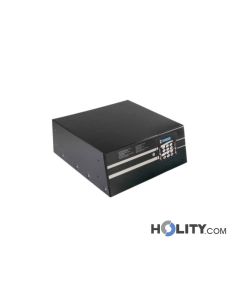
Hotel room safe with drawer opening. Dimensions: W 38 x D 38.5 x H 17.5 cm.
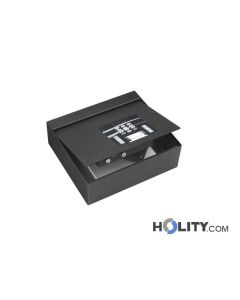
Hotel room safe with top opening and motorized digital lock. Dimensions: W 40 x D 35 x H 13 cm.
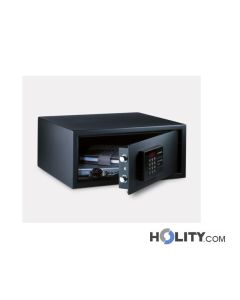
Professional electronic safe "Laptop 15" with motorized spring-loaded opening and 30.4-liter capacity. Equipped with LED display, two 19 mm steel bolts and internal light. Dimensions: W 450 x D 410 x H 200 mm.
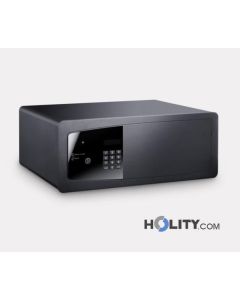
Professional electronic safe "Laptop 17" format with event traceability system and laser-cut door. Equipped with motorized opening, internal LED light, and double security. Dimensions: W 490 x D 370 x H 190 mm.
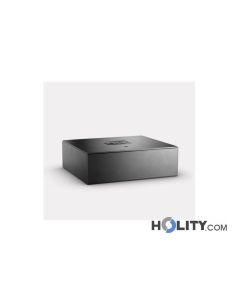
Professional top-loading safe (Top Loading) 9.7 liters, ideal for integration into drawers. Equipped with stabilizer arm, internal LED light, and double security (code/Master key). Dimensions: W 400 x D 350 x H 125 mm.
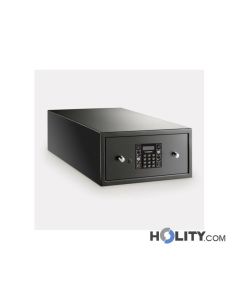
Professional drawer safe (Pull-out) with laser-cut monoblock steel door. Equipped with advanced iAudit system, ADA backlit keypad and alcantara interior. Dimensions: W 400 x D 444 x H 200 mm.
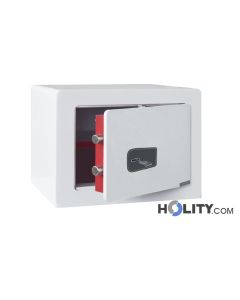
Professional armored safe with high thickness (10 mm door, 6 mm structure) with key lock. Maximum passive security (28 kg) in an elegant white finish. Dimensions: 35 x 25 x H 25 cm.
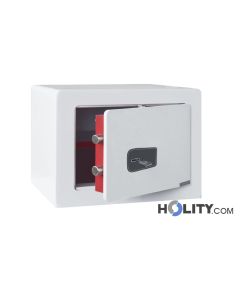
Professional armored safe with high thickness (Door 10 mm, Body 6 mm) with security key lock. Maximum passive protection (37 kg) in white finish. Dimensions: 38 x 30 x H 30 cm.
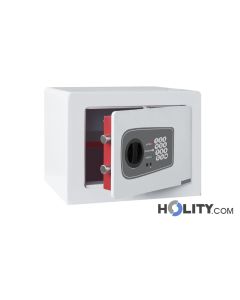
Professional high-thickness armored safe (Door 10 mm, Structure 6 mm) in elegant white finish. Equipped with anti-tear hinge, electronic lock, and internal shelf. Dimensions: 38 x 30 x H 30 cm. Weight: 37 kg.
The protection of valuables, confidential documents, and cash represents a fundamental pillar for the security of any commercial activity, hospitality facility, or executive office. Professional safes are not simple metal containers, but advanced storage systems designed to resist prolonged break-in attempts, expert manipulation, and, in specific contexts, catastrophic events such as fires. The choice of a passive security system must be guided by a rigorous risk analysis, evaluating not only the material value of what is stored, but also the importance of operational continuity and compliance with insurance company requirements.
The current technological landscape offers solutions ranging from floor-standing models, ideal for versatile placement, to wall versions that exploit the building’s load-bearing structure to maximize resistance to uprooting. Understanding installation dynamics and different closing mechanisms, whether electronic or double-bit keys, is the first step in implementing an effective security strategy. Opting for a certified safe means investing in a device that has passed standardized destructive tests, guaranteeing measurable and constant performance over time for the protection of your company or private assets.
Adopting a high-quality safe responds to the primary need to mitigate the risk of theft and unauthorized access to critical assets. In sectors such as HoReCa or retail, daily cash flow management requires containers that not only protect money but also allow secure deposit procedures for staff. A professional safe acts as a psychological deterrent and physical barrier, significantly increasing the time required for a potential break-in, a crucial factor that often induces the attacker to desist or allows for timely intervention by connected surveillance systems.
Beyond mere theft protection, these devices offer essential organizational protection. The ability to manage multiple access codes or track openings via audit trail allows security managers to monitor who accessed the contents and at what times. This level of control is fundamental in offices and hospital facilities, where the custody of sensitive documents or high-cost drugs must follow rigorous protocols. Constructive solidity, guaranteed by the use of special steels and anti-smash rebates, ensures that the investment maintains its functional integrity for decades, making it a cost-amortizable expense in the long term thanks to the reduction of insurance premiums related to valuables custody.
Construction variants of safes adapt to the specific architectural and functional needs of the installation site. Floor-standing safes represent the most common solution for offices and hotels, as they can be anchored to the floor or wall using high-resistance chemical anchors, offering placement flexibility without requiring invasive masonry work. Conversely, wall safes are designed to be embedded within load-bearing walls, making only the front and door visible, which usually feature a higher steel thickness to compensate for the protection provided by the surrounding concrete on the side and back walls.
From the point of view of locking systems, the main distinction is between mechanical and digital locks. Double-bit key locks remain a classic for reliability but require physical key management that can be problematic in multi-user contexts. Digital electronic locks offer superior convenience, allowing for rapid combination changes and the insertion of time locks. There are also specific models such as fireproof safes, equipped with insulating materials that keep the internal temperature below the combustion threshold of paper or magnetic media, and models certified for weapon storage, complying with specific public safety regulations.
Selecting the ideal model must start from a volumetric evaluation of the goods to be protected. A common mistake is underestimating the required space, forgetting that the internal dimensions are significantly smaller than the external ones due to the thickness of the walls and the door mechanism. It is essential to check that the safe can easily accommodate A4 binders, laptops, or cash trays without forcing. Another technical criterion concerns the resistance grade required: if the safe must contain high amounts of cash, it is essential to look for models tested according to the EN 1143-1 standard, which defines increasing resistance classes recognized internationally.
Environmental installation factors must also be considered to avoid durability issues. In humid or coastal environments, for example, it is preferable to opt for corrosion-resistant finishes. An aspect often overlooked by users is the power supply type for electronic locks: it is advisable to choose models with external contacts for emergency power, to avoid being locked out in case the internal batteries run out. Avoiding the purchase of products not certified for professional use is vital; a cheap safe may look sturdy but often hides weak points in the hinges or locking systems that an expert can breach in minutes with rudimentary tools. Preliminary technical consultancy is therefore the best way to balance the budget with the real risk level of the reference sector.
The valuables custody sector is regulated by rigorous European standards that allow for objective comparison of different products on the market. The EN 14450 standard defines the requirements for safes for domestic and small office use (classes S1 and S2), while the more stringent EN 1143-1 applies to high-resistance storage units, divided into grades ranging from 0 to VI and beyond. Each grade corresponds to a specific insurable value, established based on certified resistance times against attacks carried out with thermal, mechanical, and electrical tools. Checking for the presence of the metal certification plate inside the door is the only guarantee for the buyer of being in front of a compliant product.
In addition to physical resistance, regulations also cover the security of locking systems (EN 1300), which classifies locks based on their complexity and resistance to manipulation. For accommodation facilities, there are specific protocols for managing master codes, necessary for emergency opening in case the guest loses the code, while simultaneously ensuring privacy and security. Compliance with these standards is not only a protection against crime but a necessary condition for activating insurance policies that cover the theft of the contained goods, making regulatory compliance an indispensable element of business planning and asset risk management.
Explore all products in the category and compare the available solutions to find the one best suited to your operational context.
A wall safe is embedded directly into the building structure, ensuring lateral protection from reinforced concrete. A floor-standing safe is a self-supporting structure anchored to the floor or wall, ideal for those who cannot perform masonry work or require larger load volumes than those allowed by wall thickness.
Professional safes include emergency systems to manage battery depletion. Many models have external contacts on the keypad to connect an auxiliary battery for temporary power, while others include a physical emergency key. In any case, the stored code is not lost during a power failure.
This is the strictest European standard for valuables storage units. Products that pass the tests required by this standard are classified into Resistance Grades. The higher the Grade, the longer it takes to breach the safe with professional tools, directly influencing the maximum reimbursement limit recognized by insurance companies.
Certainly, but it is necessary to evaluate the floor load capacity if high-security models weighing several hundred kilograms are chosen. In these contexts, it is advisable to consult a technician to verify load distribution and proceed with certified chemical anchoring to ensure maximum stability and resistance to uprooting.
Fireproof safes are designed to protect paper documents or digital media from extreme heat. It is essential to distinguish between models certified for paper, which keep the internal temperature below 170 degrees, and models for magnetic media, which must not exceed 50 degrees to avoid irreparable data loss.
Audit trail is an advanced function of electronic locks that chronologically records all operations performed on the safe. This system allows for downloading an access history, precisely identifying which user code opened the device, the date, and the exact time, offering fundamental control for preventing internal theft.
Anchoring must take place on solid surfaces such as concrete or solid bricks using high-resistance mechanical or chemical anchors. Regulations usually require that fixing takes place both through the bottom and through the back of the safe, making it extremely difficult to forcibly remove the entire unit during a theft attempt.
 English
  Italian
 French
 German
 Spanish