
mon-fri 9-13 / 14.30-18.30
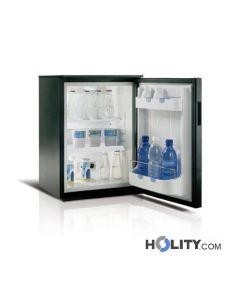
Vitrifrigo 40 lt built-in minibar, LPC silent absorption system, Made in Italy. Dimensions W39xP46xH54.4 cm. Ideal for hotels.
The integration of compact refrigeration systems within accommodation facilities, executive offices, and healthcare settings responds to a fundamental need for comfort and personalized service. Professional minibars and mini fridges are not simply small-scale appliances, but thermal machines designed to ensure the constant maintenance of temperature in limited volumes, operating in often critical environmental conditions such as installation in furniture or niches lacking direct natural ventilation. The selection of such a device requires an analytical evaluation of cooling technologies, which vary significantly in energy efficiency, thermal reduction capacity, and, above all, acoustic impact, a determining factor for guest well-being in environments dedicated to nightly rest.
Investing in high-end equipment means not only elevating the prestige of the facility but also optimizing long-term management costs through the use of durable components and low-environmental-impact refrigerant circuits. In this category, the convergence of aesthetics and functionality allows for the identification of solutions that blend perfectly with existing decor, while offering reliable performance for the preservation of beverages, snacks, or heat-sensitive medications. Understanding heat exchange dynamics and ensuring proper ventilation of the technical compartment remain the pillars for guaranteeing the longevity of the equipment and maintaining the energy class declared by the manufacturer.
The decision to equip a hotel room or a professional studio with a minibar follows a service logic that goes far beyond simple liquid refrigeration. In the HoReCa sector, the minibar represents an ancillary revenue center and, at the same time, an indicator of the level of hospitality offered; its presence conveys attention to detail and decision-making autonomy for the guest. From a technical point of view, choosing professional models ensures internal temperature stability that inexpensive domestic models cannot guarantee, especially when subjected to frequent openings or placed in environments with high external temperatures. Internal components are tested for intensive work cycles, with high-sealing gaskets and precision thermostats that prevent thermal fluctuations harmful to the preservation of the contained products.
Beyond mere functionality, the use of these technologies in industrial or medical fields solves the problem of safe storage in confined spaces, where the millimetric precision of external dimensions must coincide with optimized loading capacity. A professional minibar is designed to operate with almost zero noise emission, thanks to the adoption of absorption or thermoelectric systems that eliminate the vibrations typical of mechanical compressors. This aspect is crucial: a satisfied customer is one who has rested well, and an intermittent hum during the night can compromise the entire stay experience. Therefore, the reliability of these devices translates directly into a better reputation for the facility and a drastic reduction in extraordinary maintenance interventions or premature replacement of the cooling units.
The technological landscape of minibars is mainly divided into three large families, each with specific characteristics suitable for different operating scenarios. Absorption systems represent the choice for luxury hotel rooms, as the total absence of moving mechanical parts guarantees absolute silence during operation. This technology utilizes a solution of water and ammonia heated by an electric resistance, a fluid and constant physical process that does not generate clicks or startup noises. Conversely, compressor refrigeration, although noisier, offers superior cooling performance and greater energy efficiency, making it ideal for offices or common areas where acoustic impact is less critical but rapid reduction of the internal temperature is desired.
There are also models with thermoelectric or semiconductor (Peltier) technology, which are distinguished by reduced weight and the ability to function correctly even if not perfectly level, a useful feature for particular installations or on mobile vehicles. In addition to the cooling mechanics, variants differ in external design: ranging from glass door models, excellent for stimulating impulse purchases thanks to product visibility, to fully built-in models with panel-ready doors, which disappear inside the furniture to maintain the stylistic consistency of the room. There are also specific versions for medical use, equipped with safety locks and certified temperature monitoring systems for the storage of sensitive medicines in medical offices or private clinics.
Selecting the ideal minibar cannot ignore an accurate analysis of the required internal volume compared to the available external footprint. A common mistake is underestimating the importance of rear ventilation: a minibar placed in a cabinet without adequate ventilation grilles will accumulate heat rapidly, leading to disproportionate energy consumption and premature failure of the cooling unit. It is essential to verify that the hosting furniture provides an air passage of at least 200 cm² both at the inlet and outlet. Furthermore, the type of user must be considered: if the target is a business hotel, the presence of a modular internal space to accommodate one-liter water bottles or non-standard containers is a highly appreciated added value.
Another decisive criterion concerns the management of energy consumption, especially in facilities with hundreds of rooms. The latest generation models integrate intelligent control systems that activate the maximum cooling phase only when the guest is present in the room or at pre-set times, reducing waste when the room is empty. Care must be taken when choosing between a solid door and a glass door; while the latter is aesthetically appealing, it requires constant cleaning and offers slightly lower thermal insulation than a full foam door. Avoiding the purchase of models not certified for professional use is essential: electrical safety and refrigerant gas regulations are much stricter for equipment intended for the public, and using domestic products in professional contexts can invalidate insurance coverage in the event of an accident.
Minibars intended for professional use must meet rigorous European compliance standards, starting with the CE marking which certifies compliance with directives on electrical safety and electromagnetic compatibility. Particularly for the hospitality sector, the energy classification regulation is relevant, which was recently updated to provide more realistic parameters on actual energy absorption. It is important that the materials used for thermal insulation are free of CFCs and HCFCs, ozone-depleting gases, in line with international environmental sustainability protocols. Hygienic safety is another pillar: internal surfaces must be made of polymers that are easy to sanitize and resistant to bacterial proliferation, ensuring the healthiness of stored food and beverages.
Regarding installation in public or healthcare environments, devices must guarantee certified noise levels, expressed in decibels (dB), so as not to interfere with the acoustic well-being of the occupants. Units intended for the storage of drugs must also meet specific requirements regarding thermal stability, often requiring the integration of audible or visual alarms if pre-set temperature ranges are exceeded. Compliance with these regulations is not only a legal obligation but a protection for the facility manager, who can thus guarantee a safe environment compliant with the highest quality standards of the HoReCa and medical sectors.
Explore all products in the category and compare the available solutions to find the one best suited to your operating context.
Absorption models are completely silent because they have no mechanical parts and are ideal for bedrooms. Compressor models are noisier but offer higher cooling power and greater energy efficiency, making them suitable for offices or areas where absolute silence is not a priority.
To ensure proper operation, a gap of at least 5 centimeters must be provided on the sides and at the back. It is essential that the cabinet has top and bottom ventilation grilles to allow heat to escape, avoiding overheating of the circuit and increased power consumption.
Consumption varies significantly depending on technology and energy class. A modern absorption model consumes an average of 200 to 300 kWh per year, while high-energy-class compressor models can drop below 100 kWh per year, ensuring significant savings on bills for large facilities.
Standard hotel minibars are not certified for medical use because their temperature can fluctuate slightly. For heat-sensitive medications, it is necessary to use specific medical-grade refrigerators, equipped with constant electronic temperature control, a safety thermostat, and integrated alarm systems.
Many professional built-in models are designed to be panel-ready. This means that a wooden panel identical to the rest of the room’s furniture can be applied to the minibar door using special sliding kits, making the appliance completely invisible from the outside.
Routine maintenance involves periodic cleaning of the door gaskets to ensure a tight seal and vacuuming dust from the rear ventilation grilles. For compressor models, the condition of the fan should be checked periodically, while for all models, regular defrosting is recommended to maintain thermal efficiency.
Yes, generally glass door models have lower thermal insulation than those with solid foam doors. However, internal visibility encourages impulse purchases of beverages, often offsetting the slight increase in energy cost with an increase in snack and drink sales.
 English
  Italian
 French
 German
 Spanish