mon-fri 9-13 / 14.30-18.30
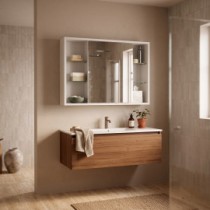
The bathroom does not only consist of sanitaryware, but also and above all of wall coverings, bathroom furniture, and accessories. These items must be chosen carefully, as they must meet the requirements of beauty and functionality, because the bathroom is also and especially a place to relax, and bathroom furnishings are therefore fundamental.
In addition to sanitaryware, the essential bathroom furniture elements are:
Complete bathroom furnishing is composed of:
Harmoniously furnishing the bathroom means choosing not only the furniture but also selecting all the accessories that can make it useful and functional.
Another fundamental aspect is lighting. If the ceiling is more than 3 meters high and the surface area is less than 20 square meters, the pendant light must hang by at least 80 cm. In the case of standard ceilings, i.e., more than 3 meters high, the ideal drop is 50 cm.
It is advisable to place wall lights on the sides of the bathroom mirror, which radiate direct light and are useful for meticulous shaving and applying makeup.
L'arredo classico impiega linee tradizionali, finiture in legno naturale e dettagli decorativi; quello moderno privilegia geometrie pulite, materiali nobilitati, aperture soft-close e una palette cromatica minimalista. La scelta dipende dallo stile abitativo globale e dalla durabilità percepita nel tempo.
L'acciaio inox e i materiali compositi idrofobi offrono la massima resistenza all'umidità costante. Il legno nobilitato con trattamenti specifici resiste in bagni domestici con umidità moderata. Negli ambienti pubblici e ospedalieri è consigliato esclusivamente l'acciaio inox o le resine poliestere.
Misura le lunghezze delle pareti, identifica la posizione di finestre, porte e tubazioni, valuta la necessità di spazi di apertura per ante e cassetti. Uno spazio di almeno sessanta centimetri davanti a vaso e lavabo garantisce movimento agevole e rispetta i criteri di accessibilità.
Applique laterali ai lati dello specchio forniscono luce diretta per radersi e truccarsi. Lampadari a sospensione devono pendere ottanta centimetri in soffitti alti, cinquanta centimetri in soffitti standard. Un'illuminazione ambientale diffusa completa il sistema.
Accessori e complementi non sono strettamente indispensabili ma aumentano significativamente la funzionalità dello spazio. Portasciugamani, pensili e mensole consentono organizzazione ordinata di oggetti quotidiani, riducendo disordine visivo e facilitando la pulizia delle superfici.
Le colonne chiuse con ante nascondono completamente gli oggetti stoccati e sfruttano lo spazio verticale; quelle aperte espongono asciugamani e elementi decorativi, creando un'estetica più leggera. Una soluzione mista, metà chiusa e metà a giorno, rappresenta il compromesso funzionale più diffuso.
Il copriwater deve calzare perfettamente il diametro della tazza del vaso. I modelli soft-close garantiscono abbassamento graduale e silenzioso. In contesti pubblici, i copriwater in materiale composito robusto e igienico sono preferibili a quelli in legno più delicati.
I materiali antimicrobici riducono la proliferazione di batteri e muffe, limitando manutenzioni straordinarie e infezioni. In ospedali, palestre e strutture ad alto traffico, la scelta di sanitari e accessori con trattamenti antimicrobici rappresenta una misura preventiva essenziale per la salute pubblica.
 English
 Italian
 French
 German
 Spanish