
mon-fri 9-13 / 14.30-18.30
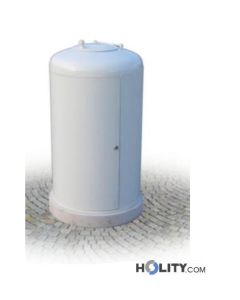
Expired medicine collection container in galvanized steel, unlockable with key. Dimensions: W.50xD.50xH.98cm
Expired medicine containers represent a specialized and regulated solution for the separate collection and safe storage of medications that are no longer usable. These devices meet specific sanitation, traceability, and regulatory compliance needs, finding application in pharmacies, hospitals, medical offices, veterinary clinics, and healthcare facilities of all levels. Choosing the appropriate container is not merely an aesthetic matter, but reflects the ability to guarantee hygiene, prevent unauthorized access to drugs, and facilitate disposal according to current environmental regulations.
Temporary storage of expired medicines requires solutions that combine mechanical resistance, impermeability, ease of sanitation, and secure locking systems. The variety of models available allows the choice to be adapted to the size of the available space, the frequency of use, and the expected volumes of medicines to be collected.
The management of expired medications involves legal and ethical responsibilities that cannot be compromised. A dedicated container allows for the immediate segregation of deteriorated medicines from the rest of the stock, avoiding the risk of accidental administration and reducing environmental contamination. Specialized containers also provide documentable traceability, an increasingly relevant aspect in inspections by health surveillance bodies. From a practical point of view, centralized collection in appropriate containers simplifies disposal logistics and reduces costs associated with the transport of incorrectly segregated special waste.
In addition to regulatory aspects, the use of suitable containers communicates professionalism and attention to safety, factors appreciated by patients and colleagues. The availability of models with a keyed lid or anti-intrusion mechanisms also protects against unauthorized access, preventing the misuse of potentially dangerous medicines. Healthcare facilities that invest in quality solutions demonstrate a conscious approach to risk management and environmental responsibility.
Expired medicine containers differ mainly in construction material, volumetric capacity, and opening system. The proposal includes models in rotational polyethylene, characterized by lightness, impact resistance, and natural thermal insulation, ideal for environments with temperature variations. Alongside these, containers in enameled or galvanized steel are available, which guarantee greater structural rigidity, ease of washing, and deep disinfection using steam or aggressive chemical solutions.
Capacities vary from 59 liters for small businesses up to 150 liters for high-volume hospital facilities. Access systems include simple lids with a flap door, hexagonal openings that reduce manual contact with the waste, key locks to ensure access control, and lids with anti-intrusion mechanisms specifically designed to prevent the extraction of contents. Some models include a concrete or metal base for ground fixing, a particularly useful solution in public or high-traffic environments where stability is a priority.
Selecting the appropriate container begins with assessing the monthly volume of expired medicines generated by the facility. A small pharmacy with a limited customer base may need a 70-90 liter container with a monthly collection schedule, while a hospital facility with various departments might require 120-150 liter models with a weekly emptying frequency. A second fundamental criterion concerns the installation environment: containers intended for public outdoor areas require ground anchoring systems and weather resistance, while those for indoor environments can benefit from lighter solutions.
Ease of sanitation is a decisive factor, especially in medical contexts where the control of biological contamination is critical. Smooth, non-porous materials like enameled steel simplify cleaning procedures compared to polyethylene, which requires more attention to avoid the proliferation of bacteria in the spaces between fibers. Finally, it is appropriate to consider whether the facility has staff dedicated to special waste management and whether the chosen closing system (lock, anti-intrusion) corresponds to the security levels required by administrative management and internal operating procedures.
The collection and temporary storage of expired medicines are regulated by Legislative Decree 152/2006 (Environmental Consolidation Act) and specific guidelines from the EMA (European Medicines Agency), which classify expired medicines as special waste. In Italy, management is also subject to control by the Revenue Agency and the Guardia di Finanza for non-hospital healthcare facilities, while hospitals follow protocols established by local ASLs. Containers must be equipped with clear and legible labeling, indicating the type of waste, the start date of accumulation, and the appropriate hazard symbol according to the ISO 3864 standard.
From a technical point of view, containers must meet requirements for impermeability, structural stability, and ease of handling. Regulations require that expired medicines be stored in a dry place, protected from extreme thermal variations and away from direct heat sources. The maximum duration of temporary storage varies according to the type of waste, but generally must not exceed six months. For critical healthcare facilities, it is advisable to sign contracts with authorized specialized disposal companies, which also provide for the collection of full containers and the supply of empty ones, guaranteeing the documentable traceability required by regulations on hazardous waste.
Explore the complete catalog of expired medicine containers and compare the available solutions to identify the one best suited to the characteristics of your facility, from physical dimensions to volumetric capacities, from locking systems to construction materials most suitable for your operational context.
For a small pharmacy with standard clientele, a capacity of at least 70-90 liters is recommended, which allows for the accumulation of expired medicines for a period of 4-6 weeks before emptying. This size finds a balance between the volume of waste generated and the manageable frequency of collections by authorized companies.
Polyethylene is lighter and offers natural thermal insulation, ideal for environments with variable temperatures. Enameled steel is more rigid, allows for high-pressure washing and aggressive disinfectants, and is more suitable for hospital facilities with high hygienic requirements. The choice depends on the cleaning procedures adopted and the environment of use.
Yes, but it is necessary to choose a model with an anchoring base (in concrete or metal) and a weather-resistant lid. The container must remain in the shade, protected from direct rain and extreme thermal variations, and must be positioned in an area not accessible to the general public for security reasons.
Italian regulation stipulates that pharmaceutical special waste should not be stored for periods exceeding six months. However, it is advisable to organize collections on a monthly or bimonthly basis to minimize risks and maintain an optimal hygienic environment, especially in high-traffic facilities.
The most effective systems include lids with key locks and patented anti-intrusion mechanisms that prevent content extraction even with tools. The latter are particularly recommended for facilities located in public areas or with a risk of tampering.
Yes, expired medicines are classified as hazardous special waste according to Legislative Decree 152/2006. They therefore require tracking documentation (waste forms), transport, and disposal only by authorized companies. The container labeling must clearly indicate this classification.
No, absolutely. Expired medicines require complete segregation from other special medical waste such as syringes, gauze, or vials of non-expired medicines. The use of dedicated containers simplifies documentation, transport, and disposal, avoiding cross-contamination and regulatory non-compliance.
For hospitals with multiple departments, the use of 120-150 liter containers is recommended, possibly in multiple numbers if distributed across various areas of the facility. This ensures orderly management with weekly collections and reduces the risk of overflow, easily maintaining compliance with maximum storage times.
 English
  Italian
 French
 German
 Spanish